The DIY Question
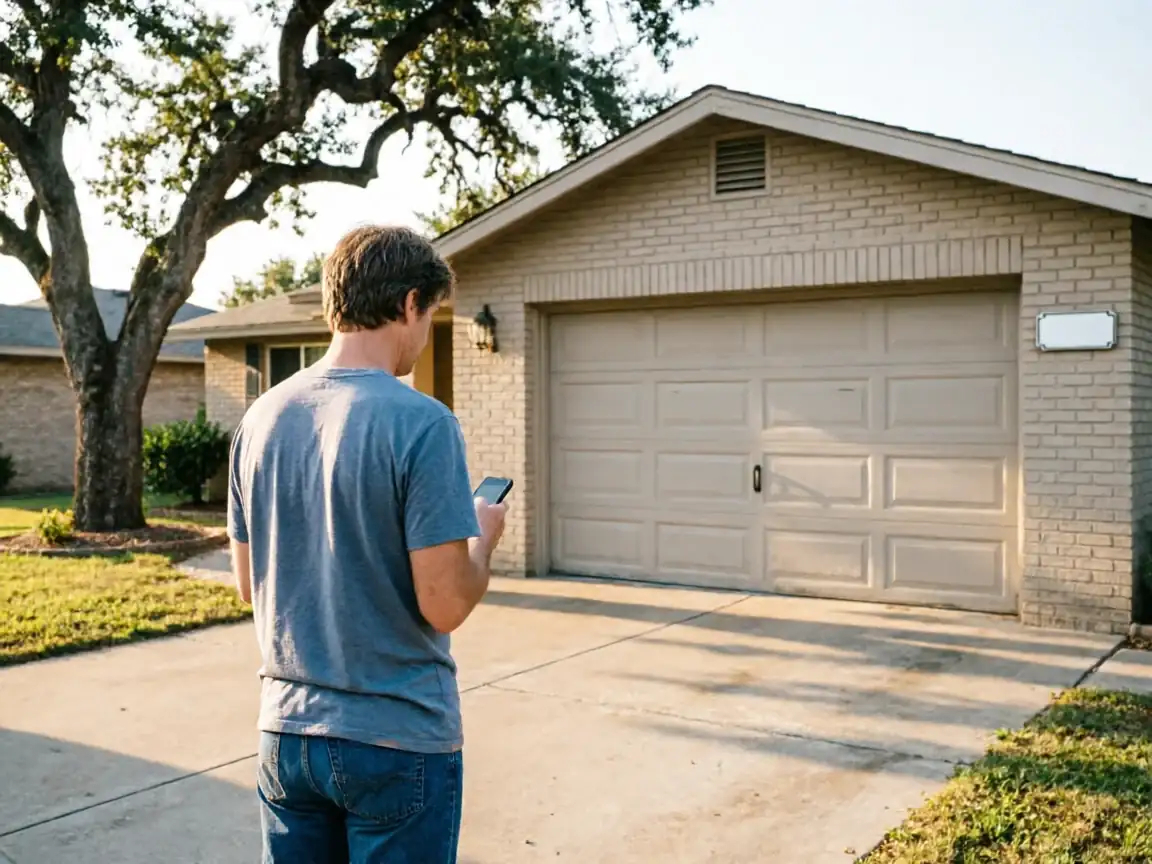
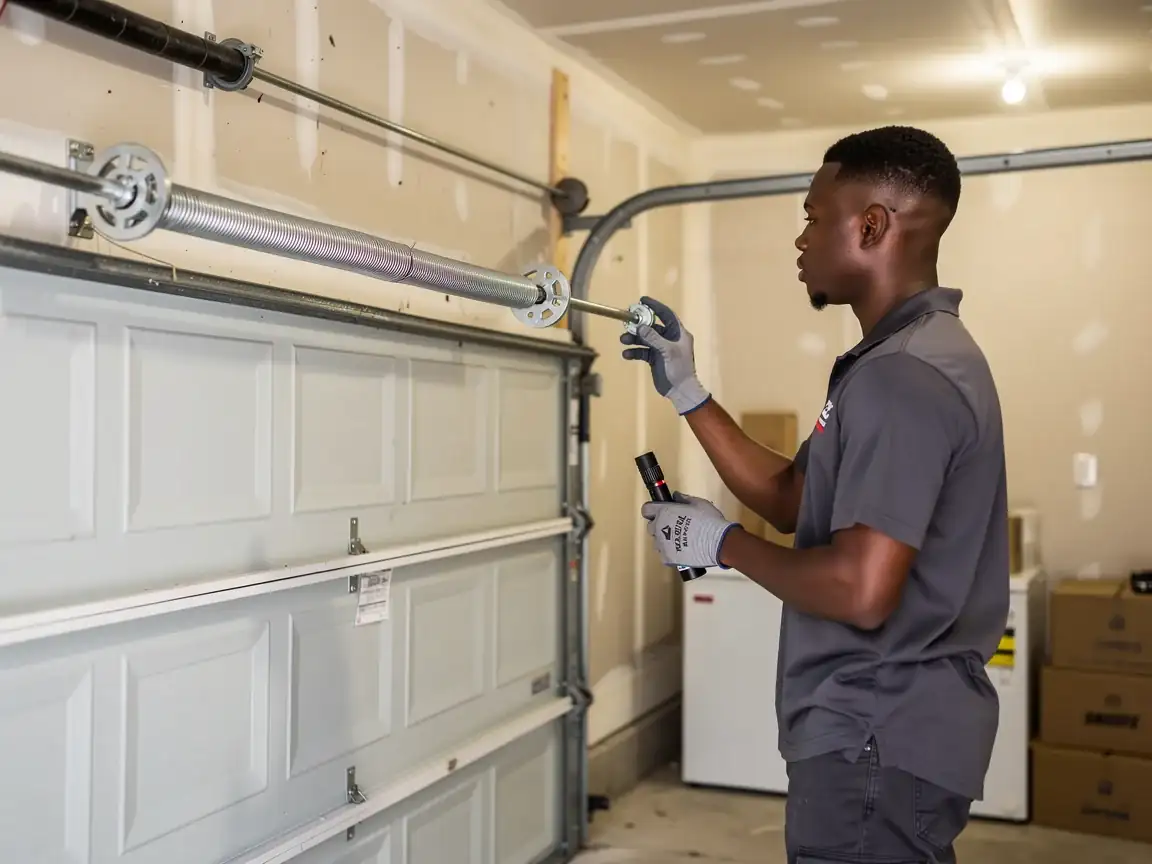
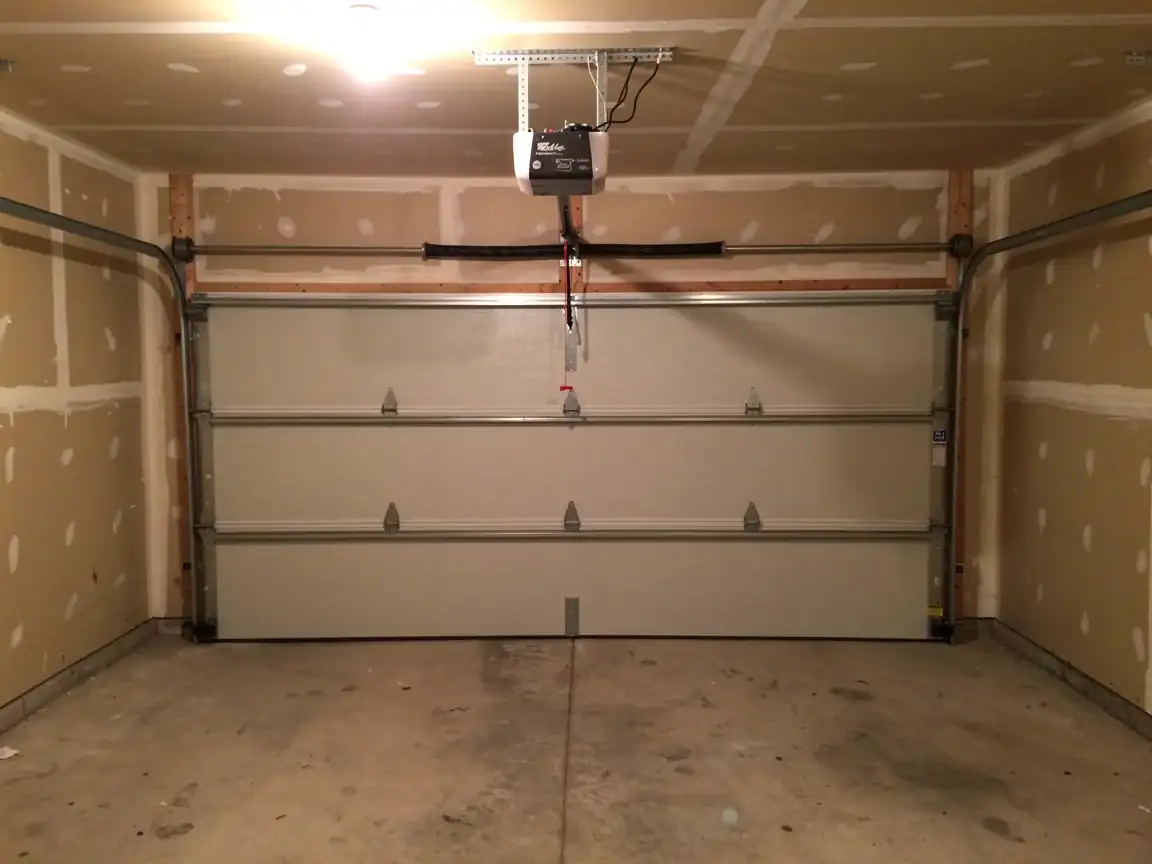
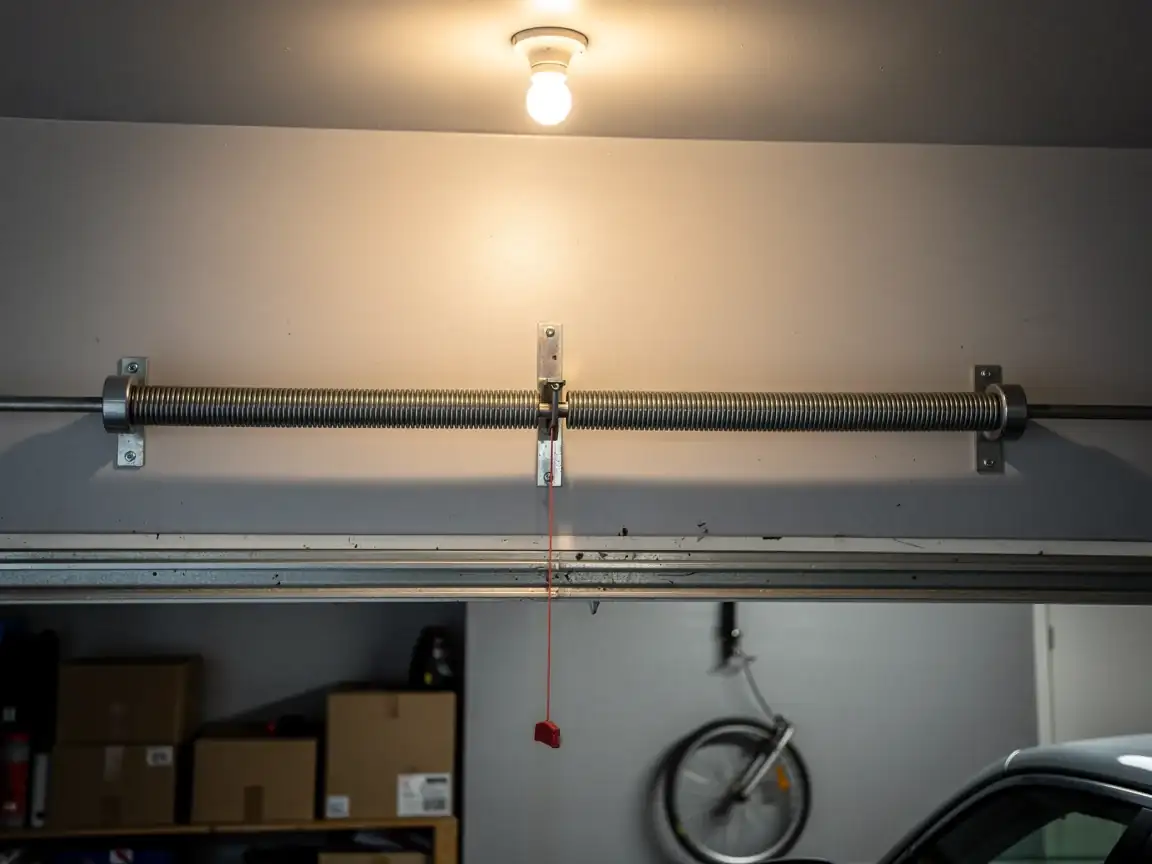
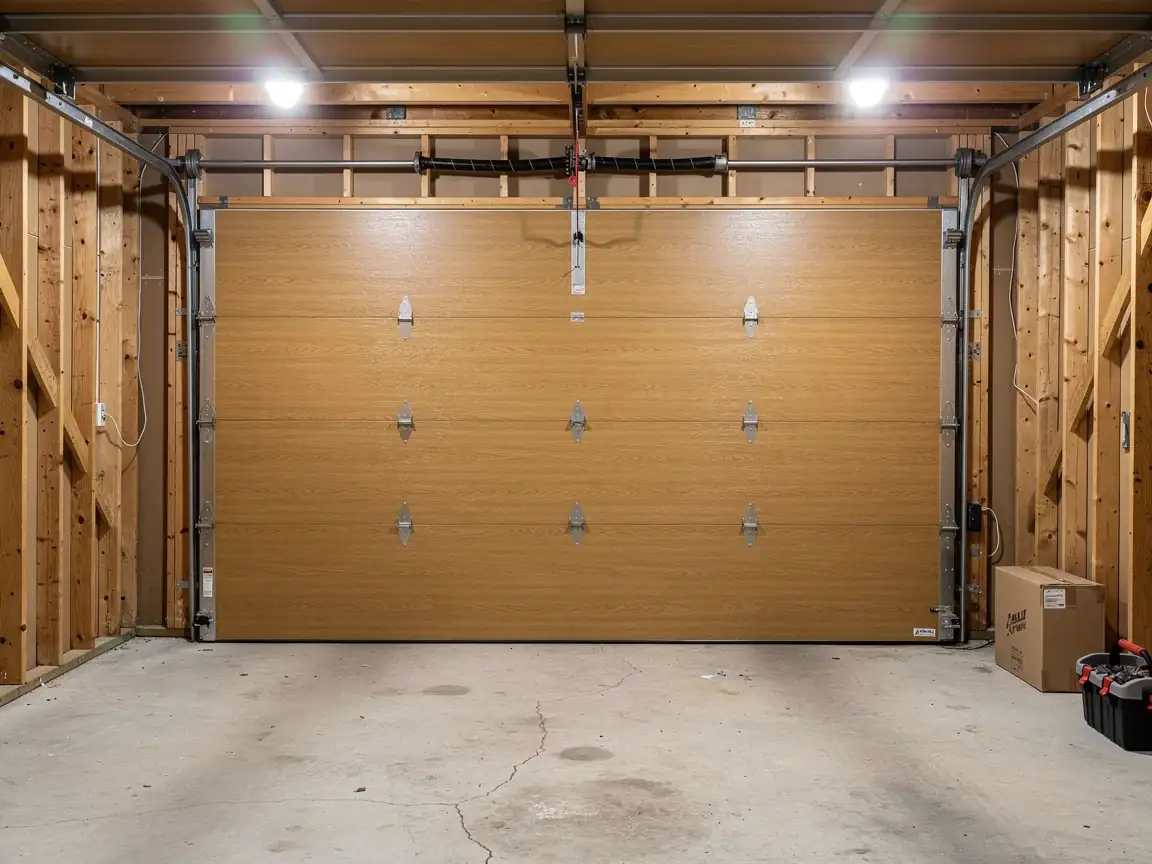
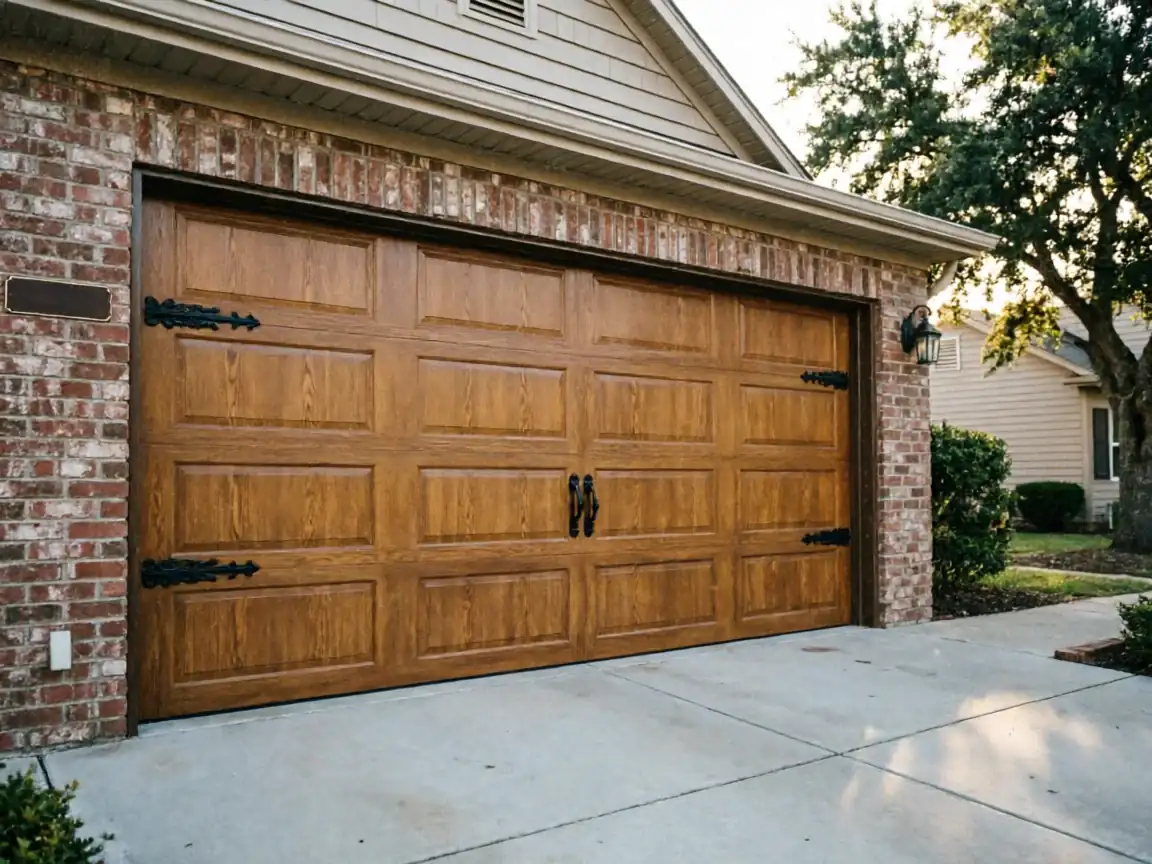
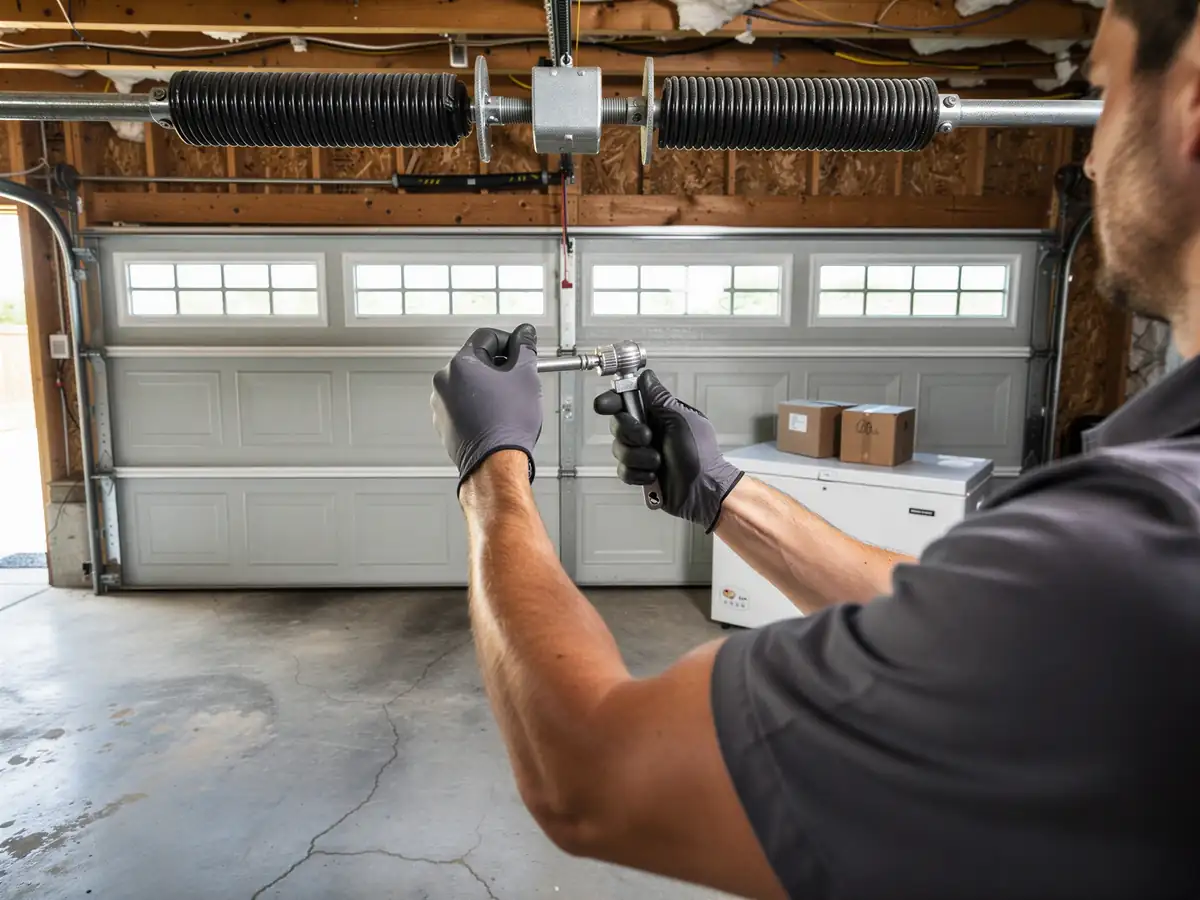
Nevada's housing stock is younger than most of the territory we work in - the median build year here is 2009, versus closer to 2000 across the wider service area. That matters for the DIY question because newer builds almost always came with torsion springs, not the old extension-spring-over-the-door setups you'll still find on houses from the 1970s and 80s elsewhere in the county. Torsion springs store more energy in a tighter coil, and they're mounted on a bar directly above the door, under tension the whole time the door is closed. A spring that snaps on a torsion system can put a winding cone through a hand or a face before you've finished reading this sentence. We're not going to tell you it's impossible to do safely with the right winding bars and clamps, but we will tell you most people who try it with a borrowed socket wrench end up calling someone anyway - just with a bent bar or a trip to urgent care added to the job. If your door won't open, or opens a few inches and stalls, that's a spring problem. Leave the winding cones alone and make the call.
What Can Go Wrong
With most Nevada homes built in the 2000s, the springs going bad right now are largely original - meaning they're somewhere around 15 to 20 years into a cycle life most torsion springs are rated for. That's the window where steel fatigue shows up as a sudden snap rather than a slow sag, which is why the failure often looks like it came out of nowhere. Heat plays a role too - our climate band here runs moderate on heat exposure, and repeated summer expansion and winter contraction of the coil adds stress cycles the spring's rated life doesn't always account for. The other failure we see on newer builds is a worn cable or a bent end bearing plate taking the blame for what's actually a spring that's lost tension gradually, pulling the door off-balance until an opener motor strains and burns out trying to compensate. On a 427-household town like Nevada, that's less an epidemic and more a handful of houses a year hitting the same age-related wall at roughly the same time.
What the Fix Involves
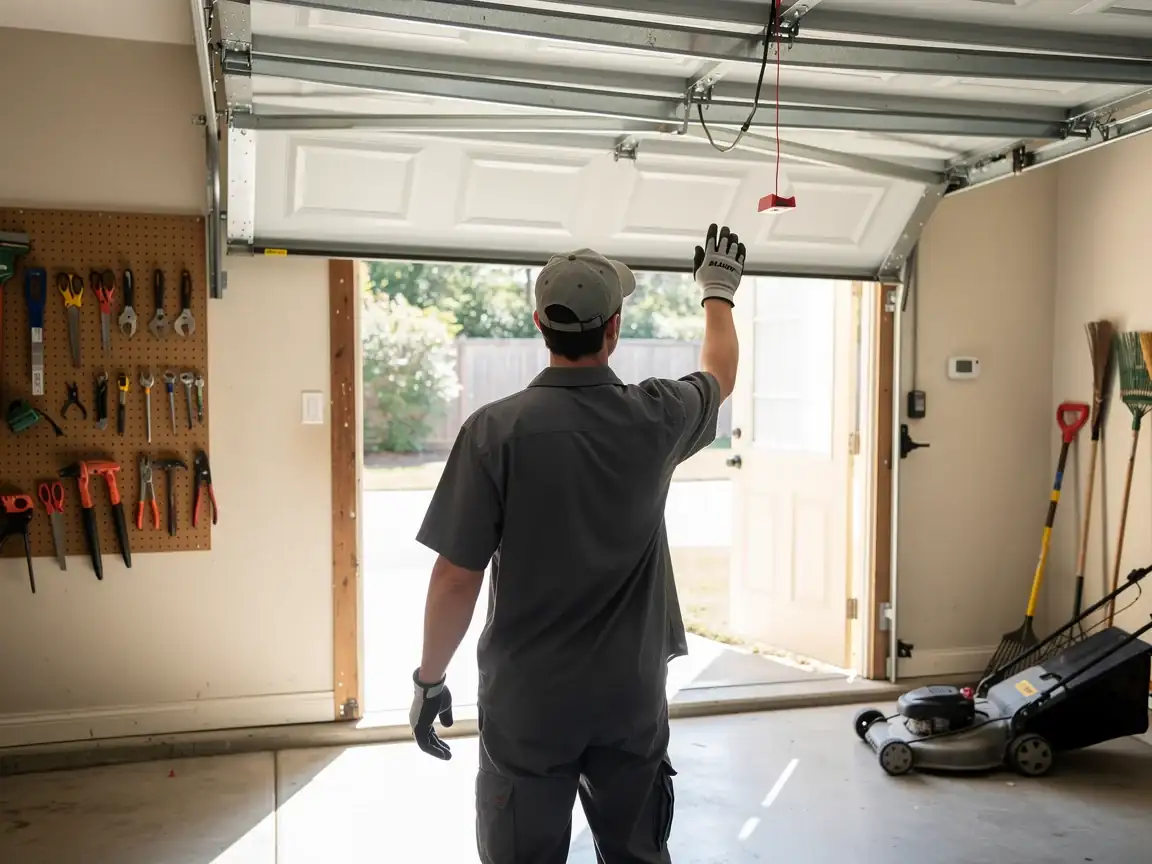
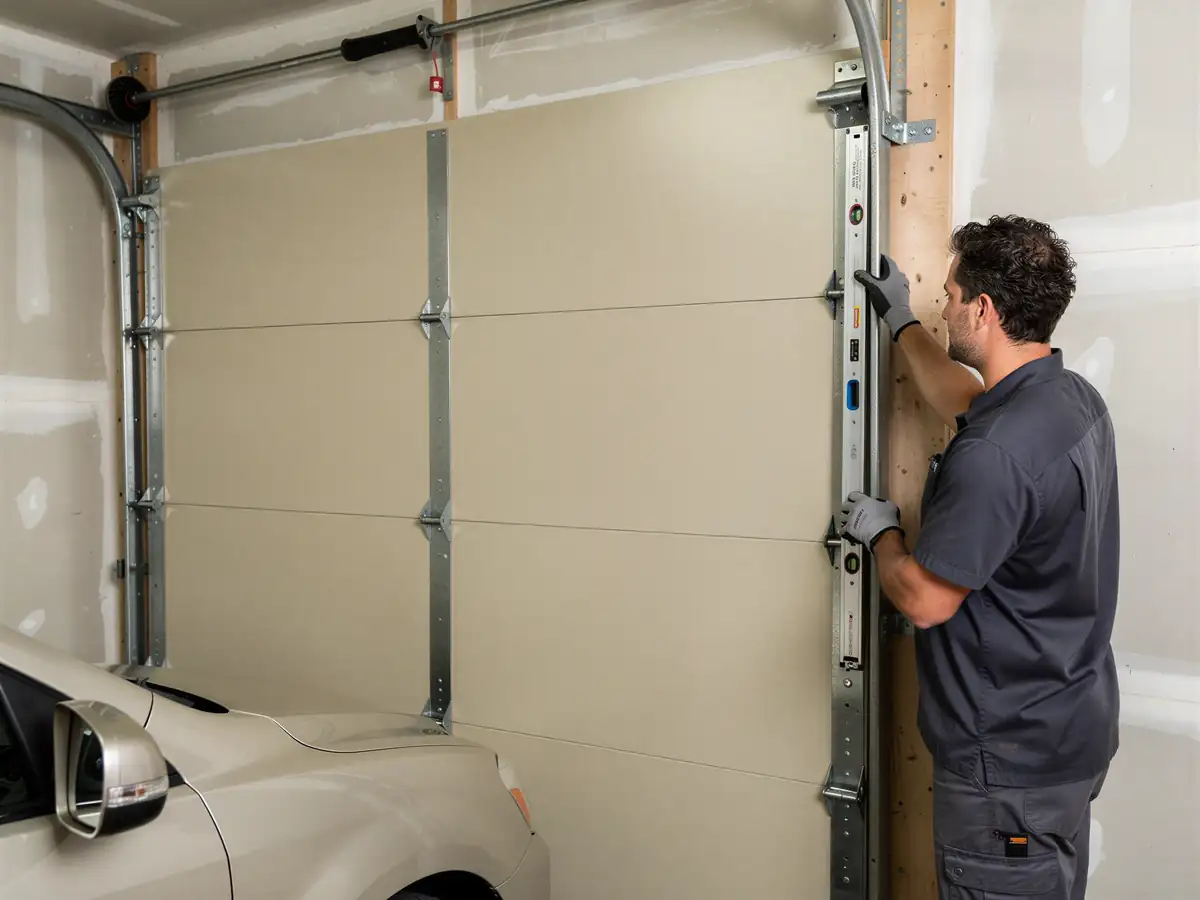
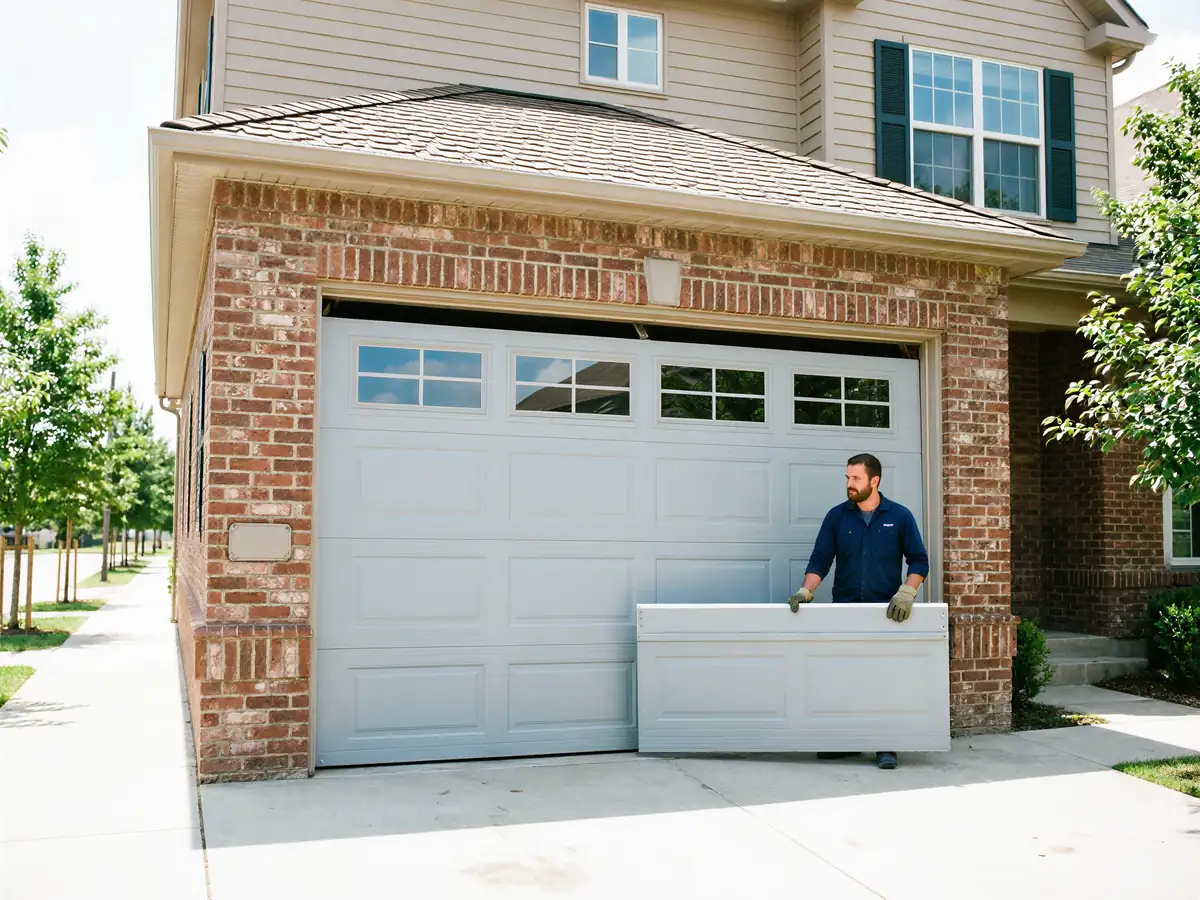
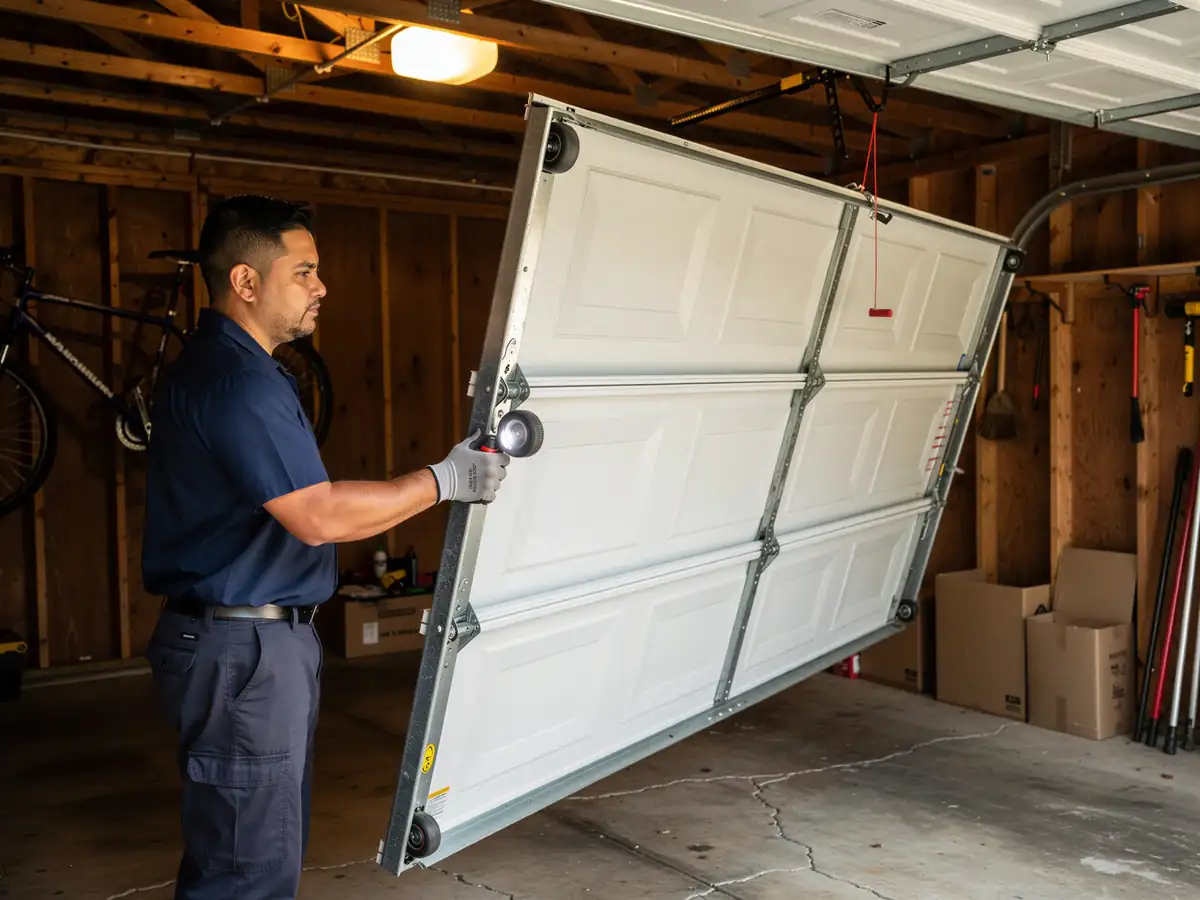
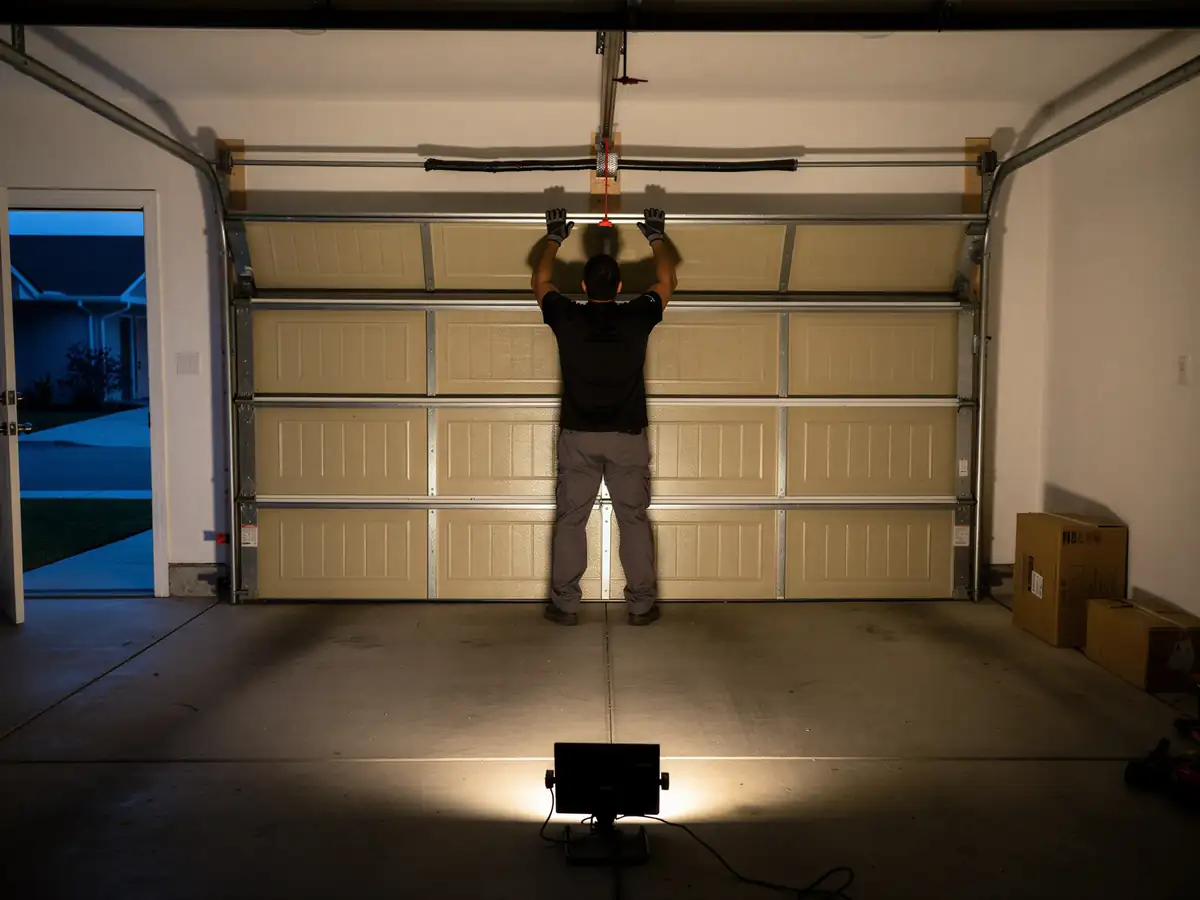
We pull the door, release tension on the old spring with winding bars, and check the torsion bar, center bearing plate, and both end bearings for wear before anything new goes on - a spring snap can bend the bar enough that a new spring won't sit right on a bent one. New springs get sized to the door's actual weight and height, not swapped in as a generic match, because a spring rated wrong for the door either won't lift it or will slam it on the way down. Cables get inspected while the door's open and unloaded, since that's the only safe time to look at them closely. Once the new spring's wound to the correct turns and the door's rehung, we run it through a full open-close cycle and check balance by hand - a properly sprung door should hold still at waist height on its own. If the opener's been straining against an unbalanced door for a while, we'll flag that separately; a burned-out opener motor isn't a spring repair, and we're not going to pretend it is.
Parts We Carry
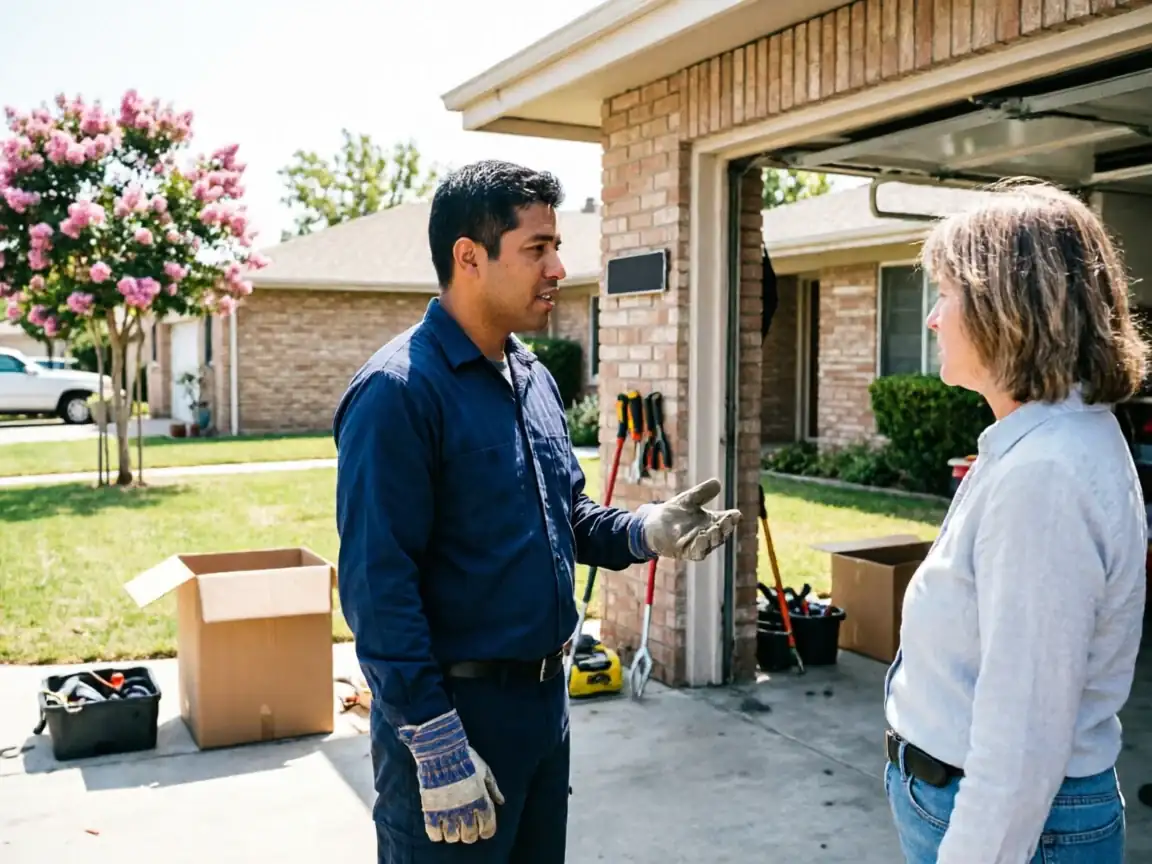
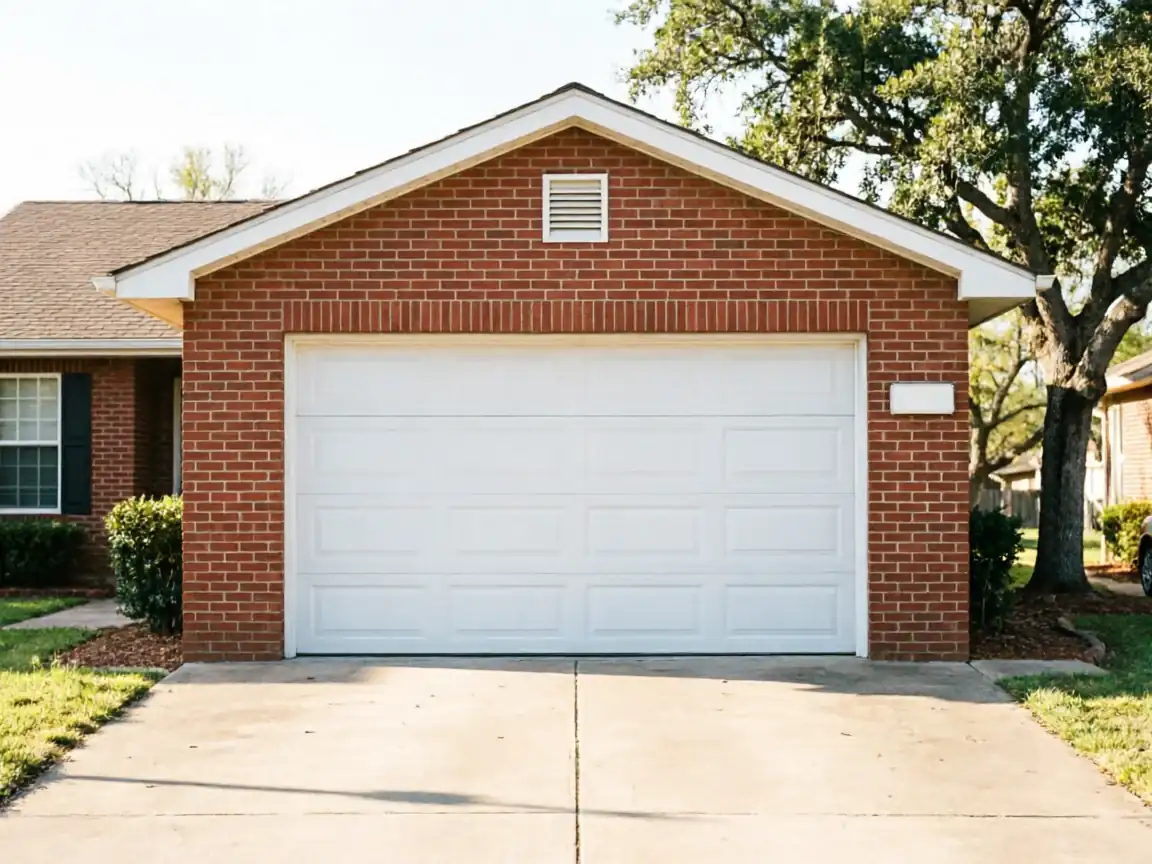
We keep torsion springs sized for standard single and double residential doors on the truck, along with the cables, bearing plates, and winding hardware that go with a typical 2000s-era build like most of what's standing in Nevada. What we don't carry loaded every day is anything sized for an unusual door - oversized commercial-style doors or older extension-spring systems sometimes need a part ordered in, and if that's the case we'll say so on-site rather than guess and come back twice. For a town built mostly in the last two decades, the parts on the truck cover the overwhelming majority of what we find.