What the Weather Here Does to It
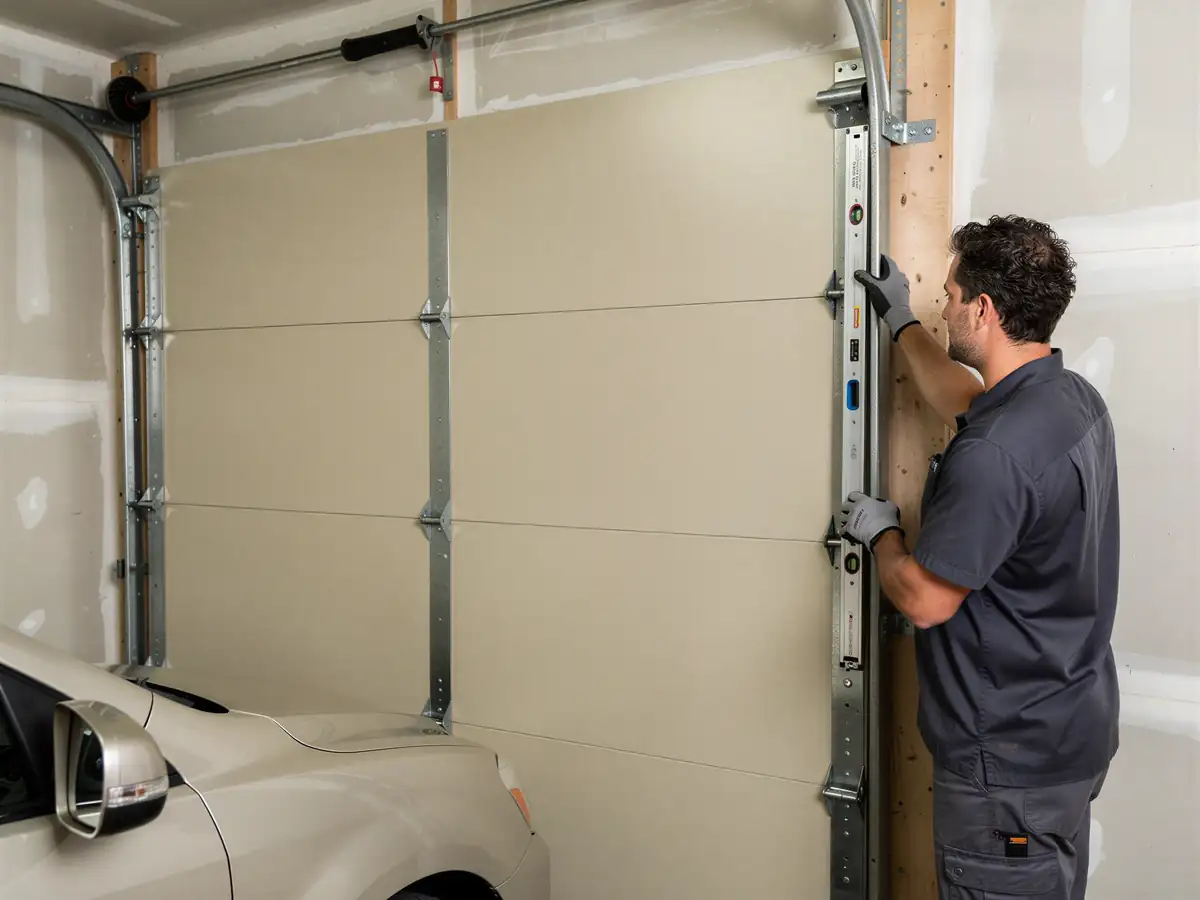
Royse City sits in a moderate heat band. That doesn't mean brutal extremes year after year, but it does mean the steel track on your garage door goes through a real expansion-and-contraction cycle every summer and winter. Metal track swells slightly in the heat of a North Texas afternoon and pulls back as it cools overnight. Do that for ten or fifteen years and the lag bolts holding the track brackets to the jamb start to walk loose, a sixteenth of an inch at a time. You don't feel it happen. You notice it when the door starts rubbing one roller harder than the others, or when the bottom panel doesn't sit flush in the opening anymore. It's not a dramatic failure - it's slow drift, and the moderate heat band here is exactly the kind of climate that produces that slow drift instead of a sudden one. A door that's been fine for a decade can go sideways in a single hot July without any single event causing it.
Leaving It Alone
Most of the housing stock in this part of the county went up between 1971 and 2012, with the median build year sitting right around 2000. That means a large share of Royse City garages are running the same builder-grade track hardware that went into subdivisions across this area during that 2000s building boom - decent steel, standard brackets, nothing custom. That hardware was built to a price point, not to last forever unattended. Leave a loose bracket alone and the track edges a little further out of plumb every month. The roller starts riding the lip of the rail instead of the channel. Eventually it jumps the track entirely, usually on the side where the opener's pull is uneven, and the door binds or drops crooked in the opening. By that point you're not tightening a bolt, you're often replacing a bent section of track and sometimes a roller or two that got chewed up fighting it. The fix is cheap early and more involved late - that part doesn't change no matter what year the house was built.
What Is Going On
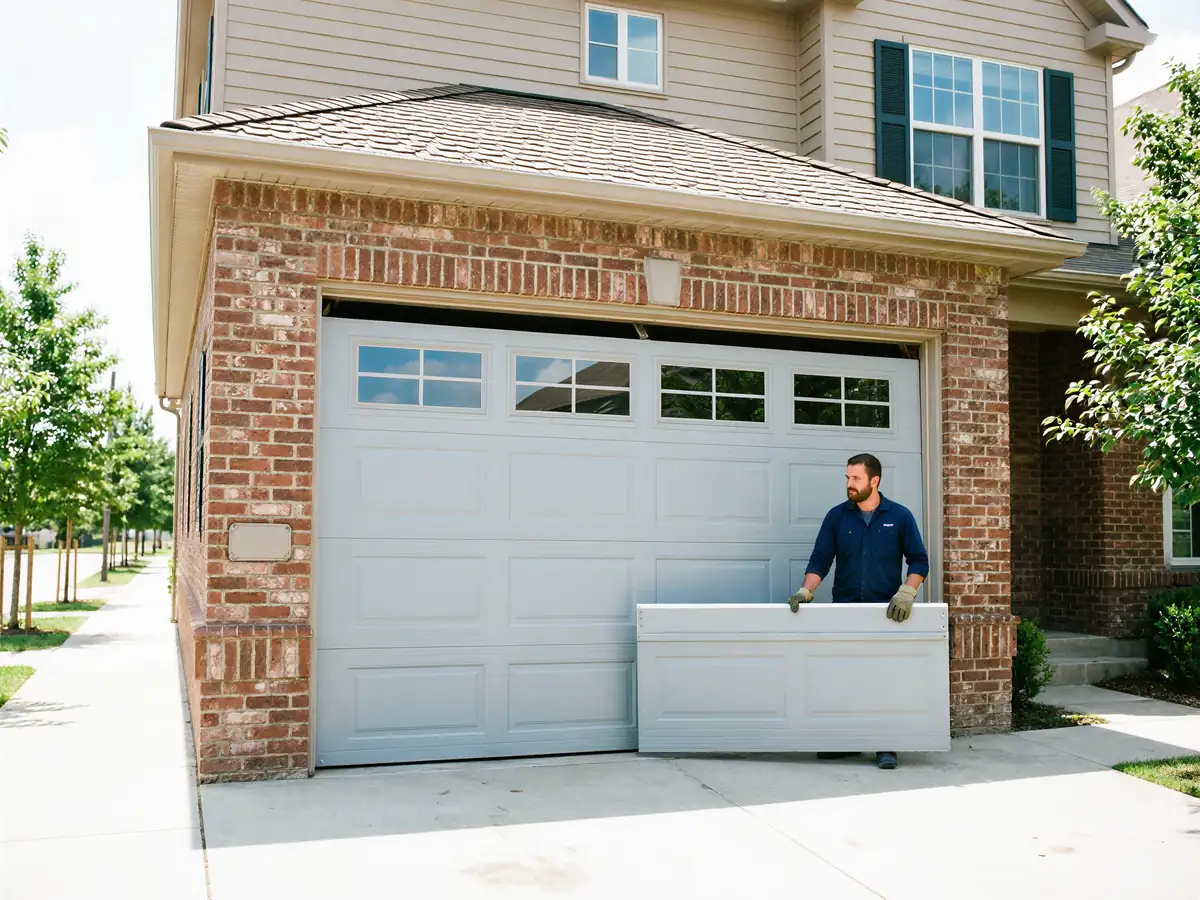
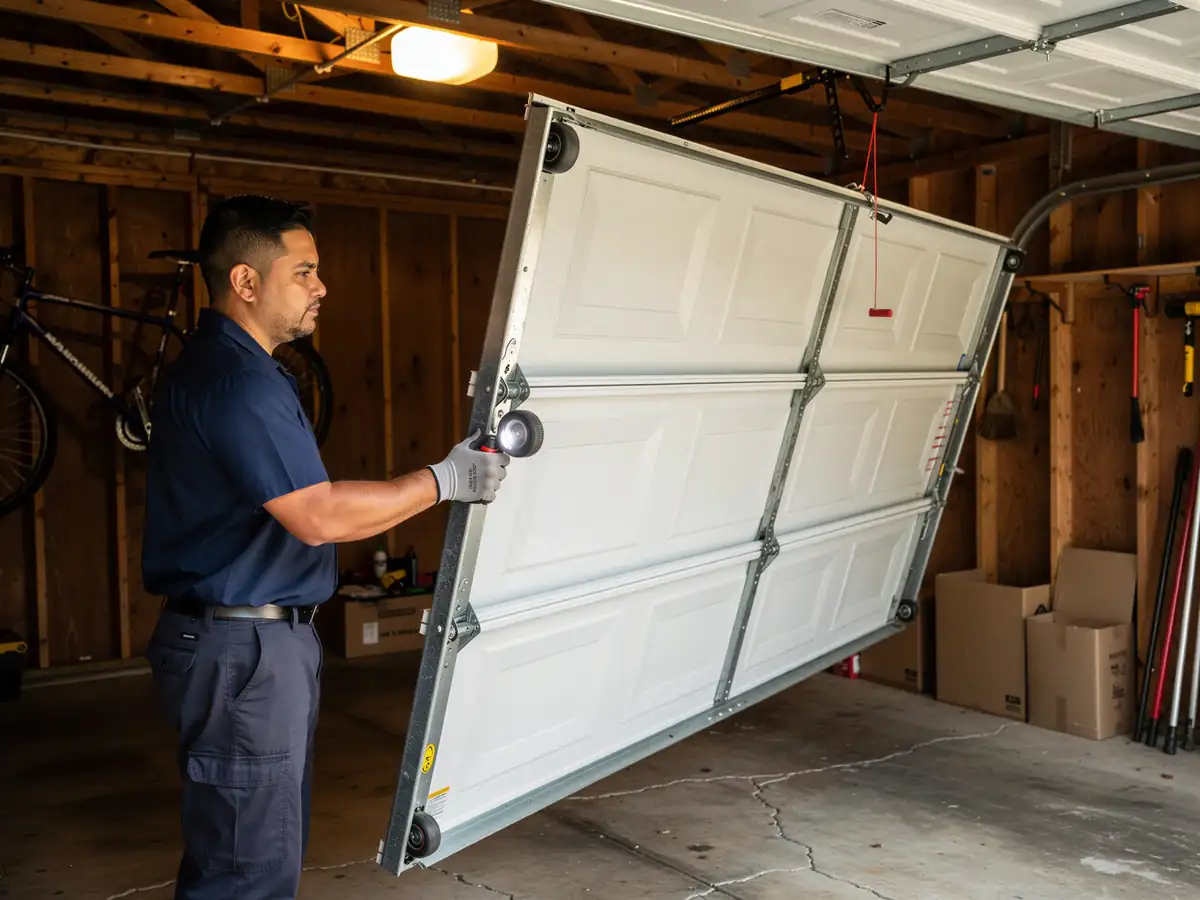
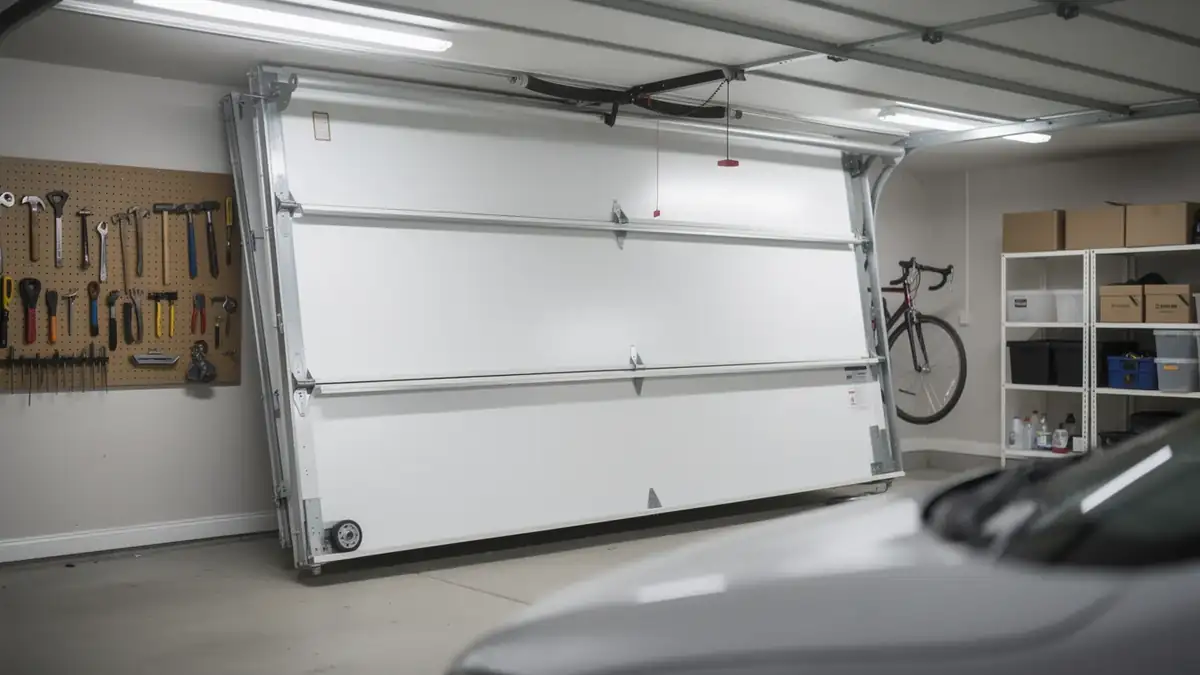
When a door goes off track, it's almost always one of three things, and they show up in a predictable order. First, a bracket or hinge has loosened enough that the track is no longer sitting plumb against the jamb - this is the stage tied directly to the expansion-and-contraction cycling that moderate heat here produces year over year. Second, a roller has worn down or cracked and is no longer riding the channel square, which lets the door edge sideways a little on every cycle. Third, and this is the one that gets expensive, the track itself has taken a bend from being forced while misaligned, usually because someone kept hitting the opener button while the door was hanging up. On 2000s-era builder hardware, which is what most Royse City garages are running, the first stage is common enough that a yearly look at the brackets while they're still just loose - not yet bent - saves the rest of the chain from happening at all.