The DIY Question
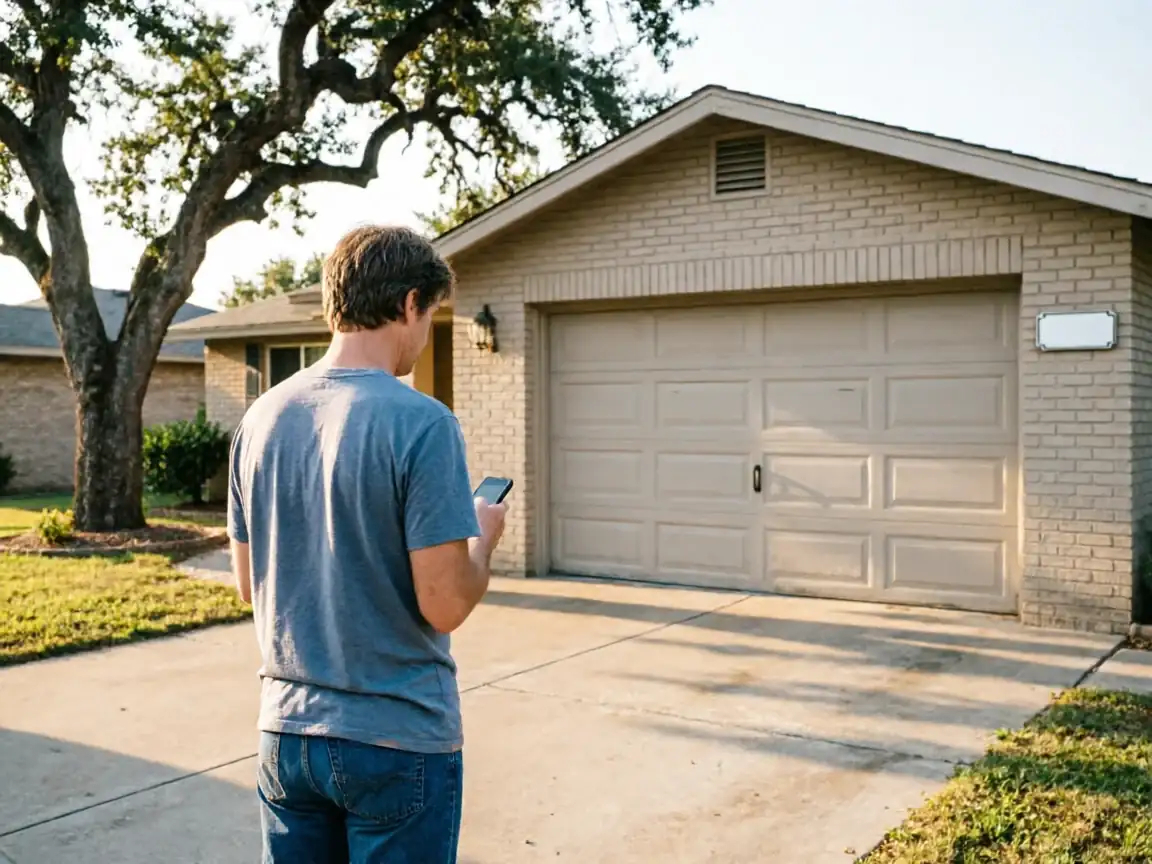
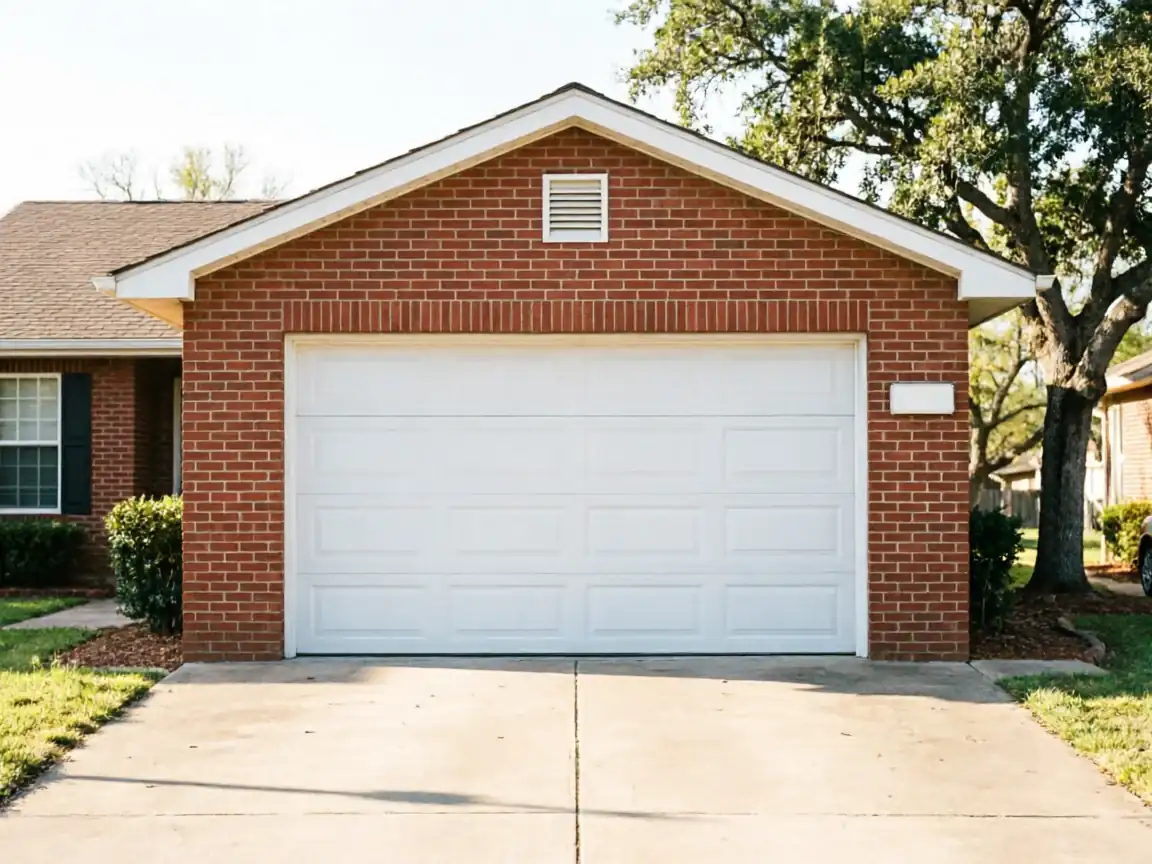
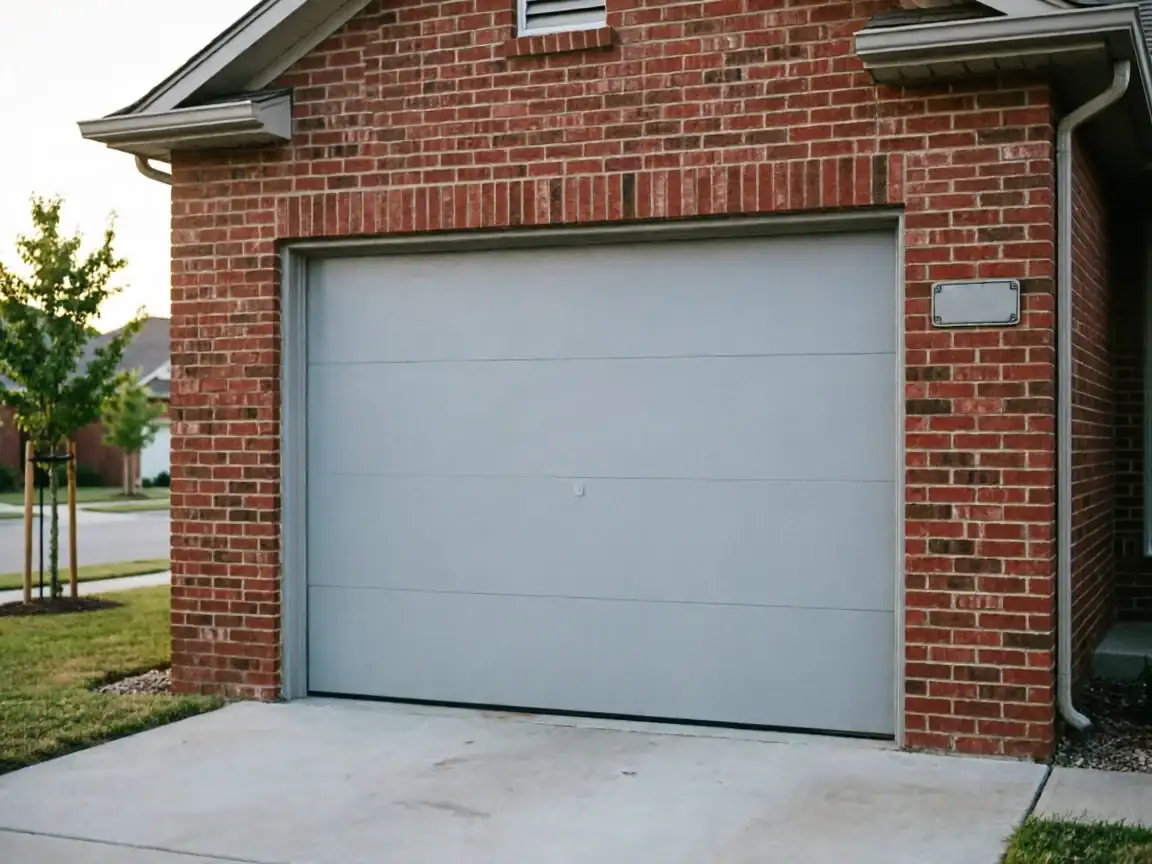
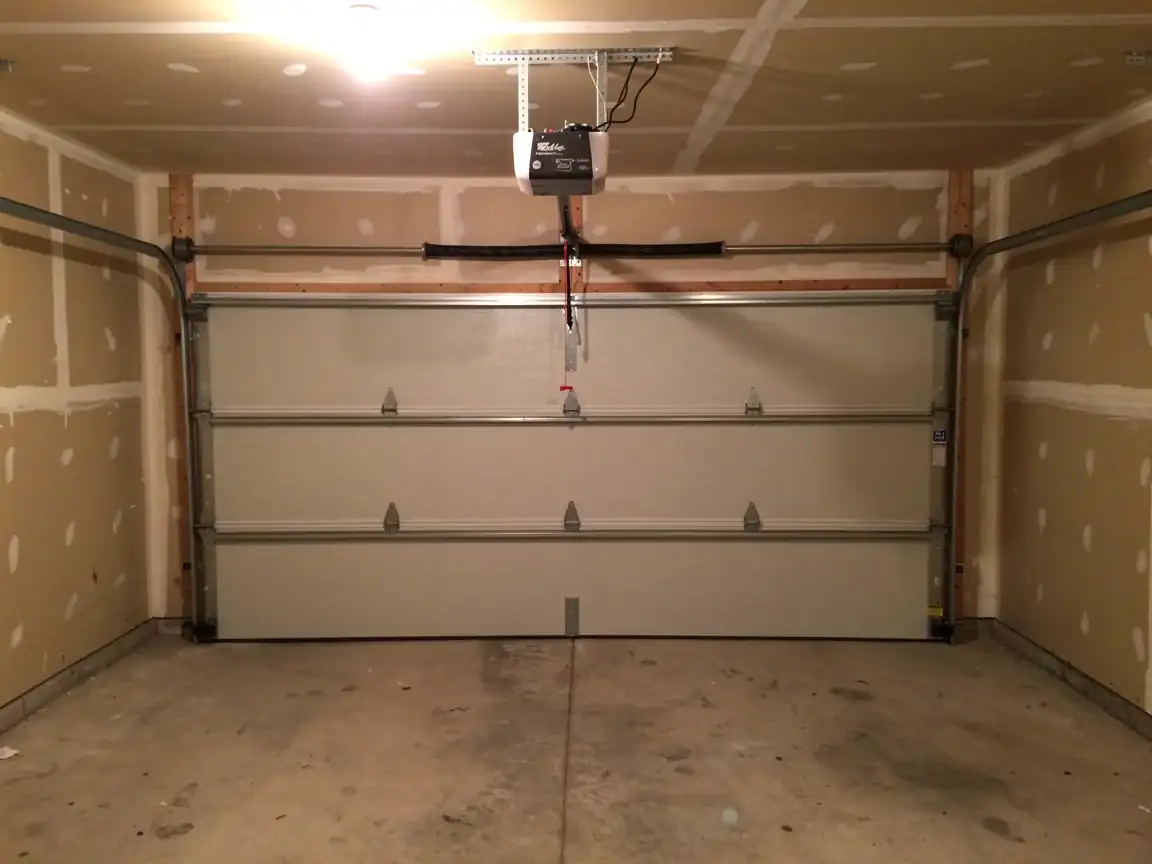
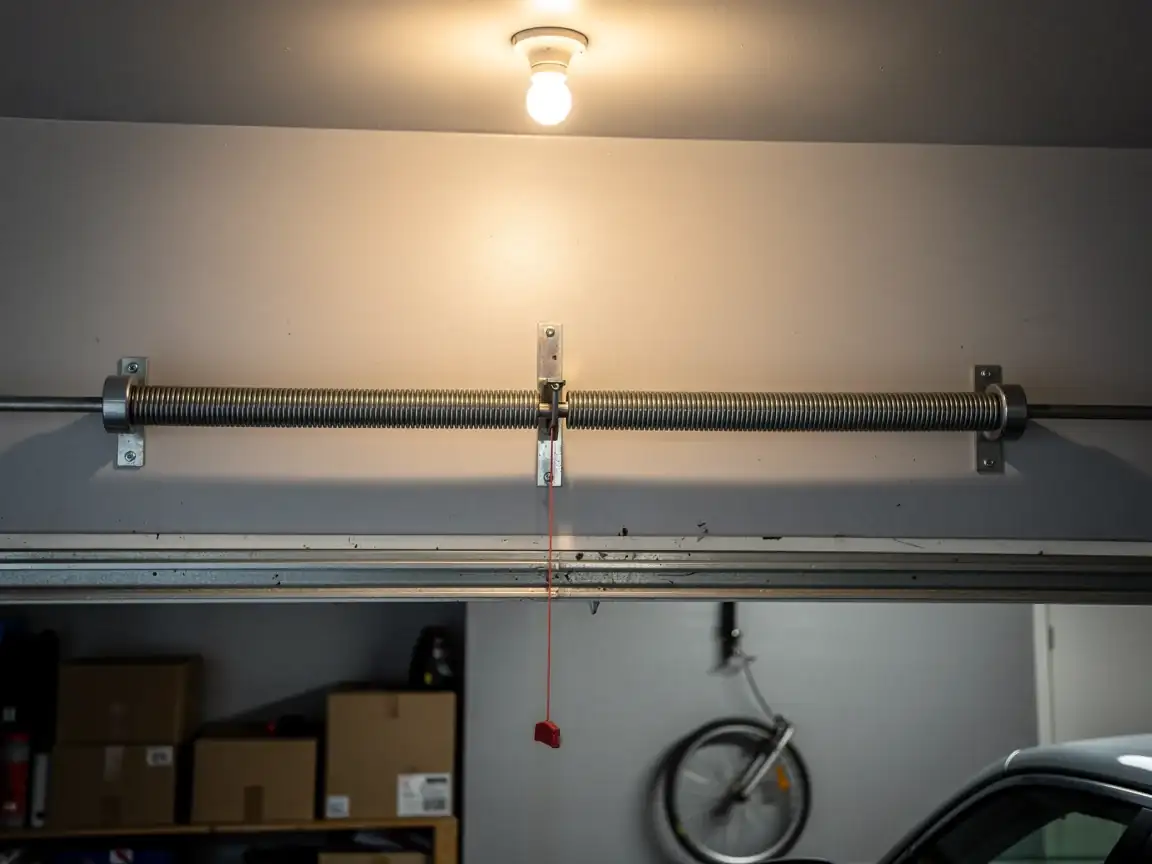
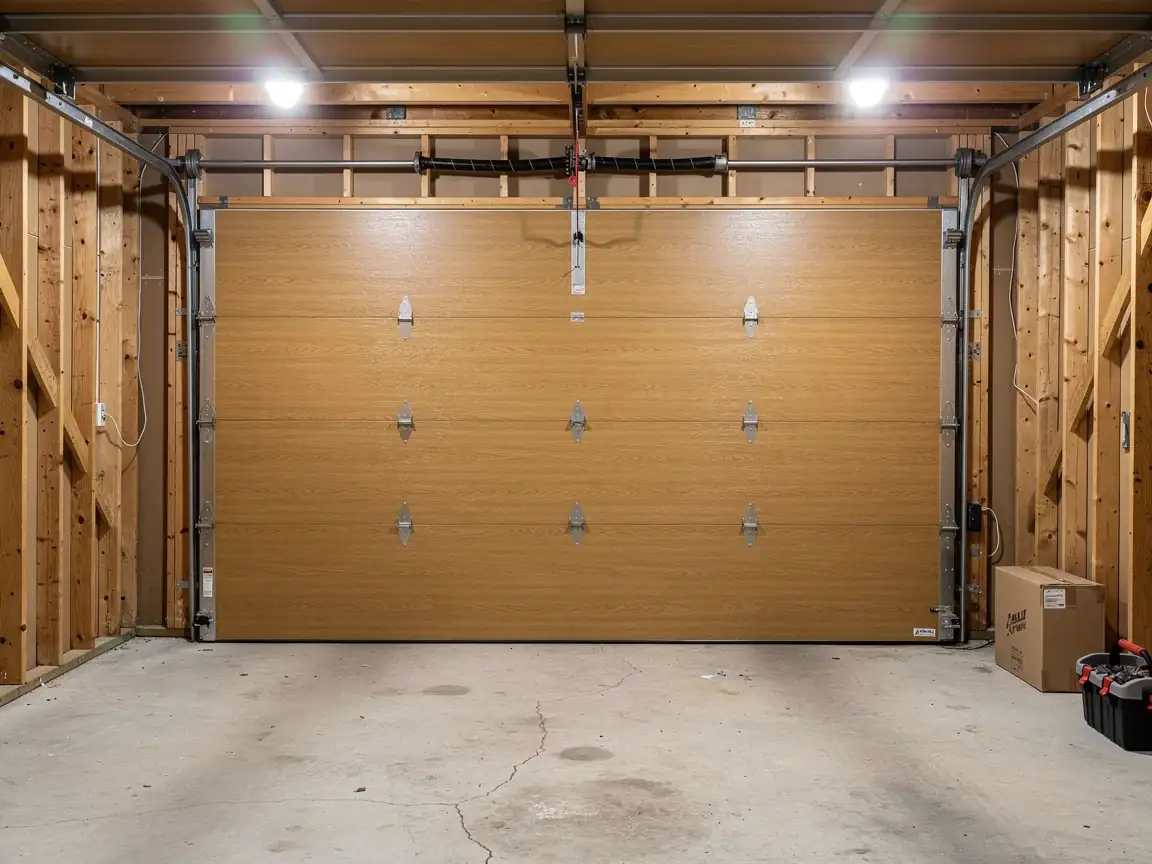
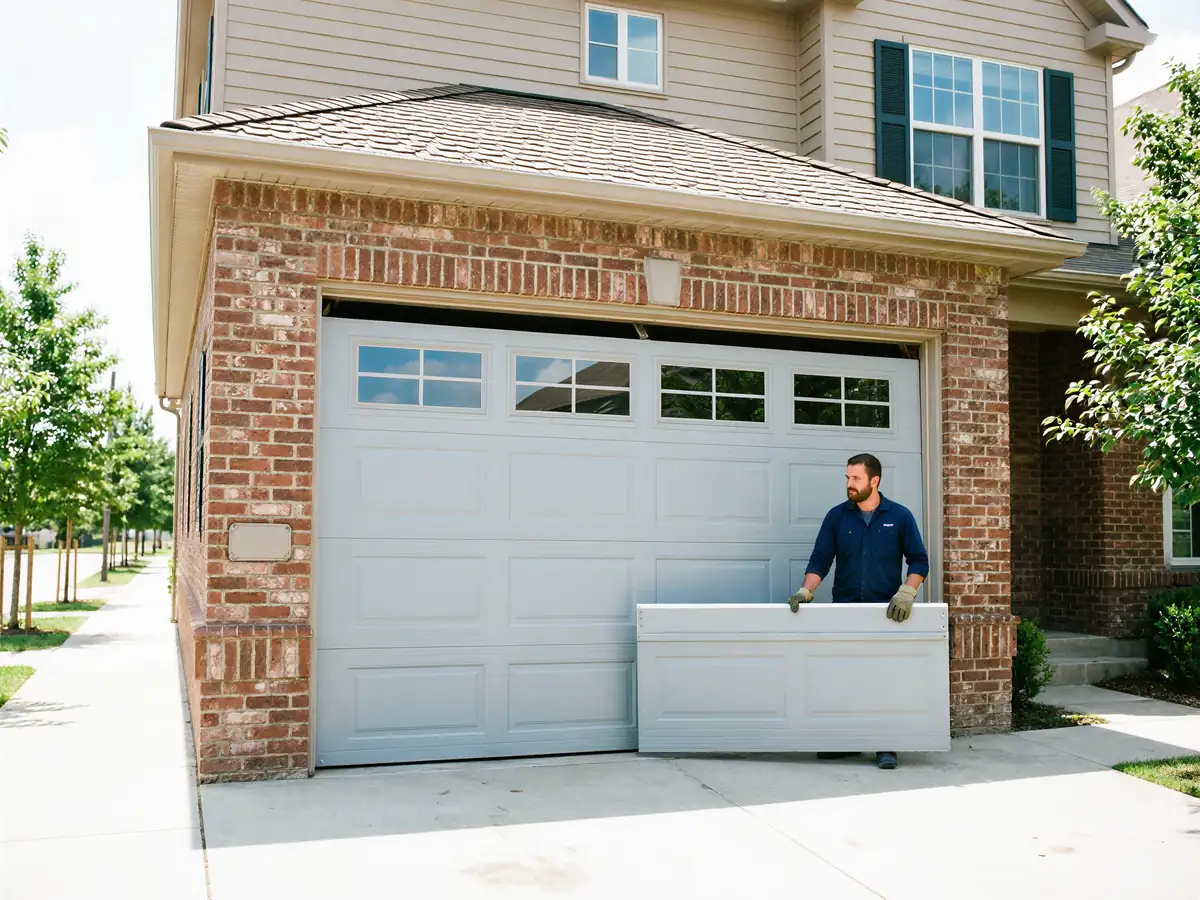
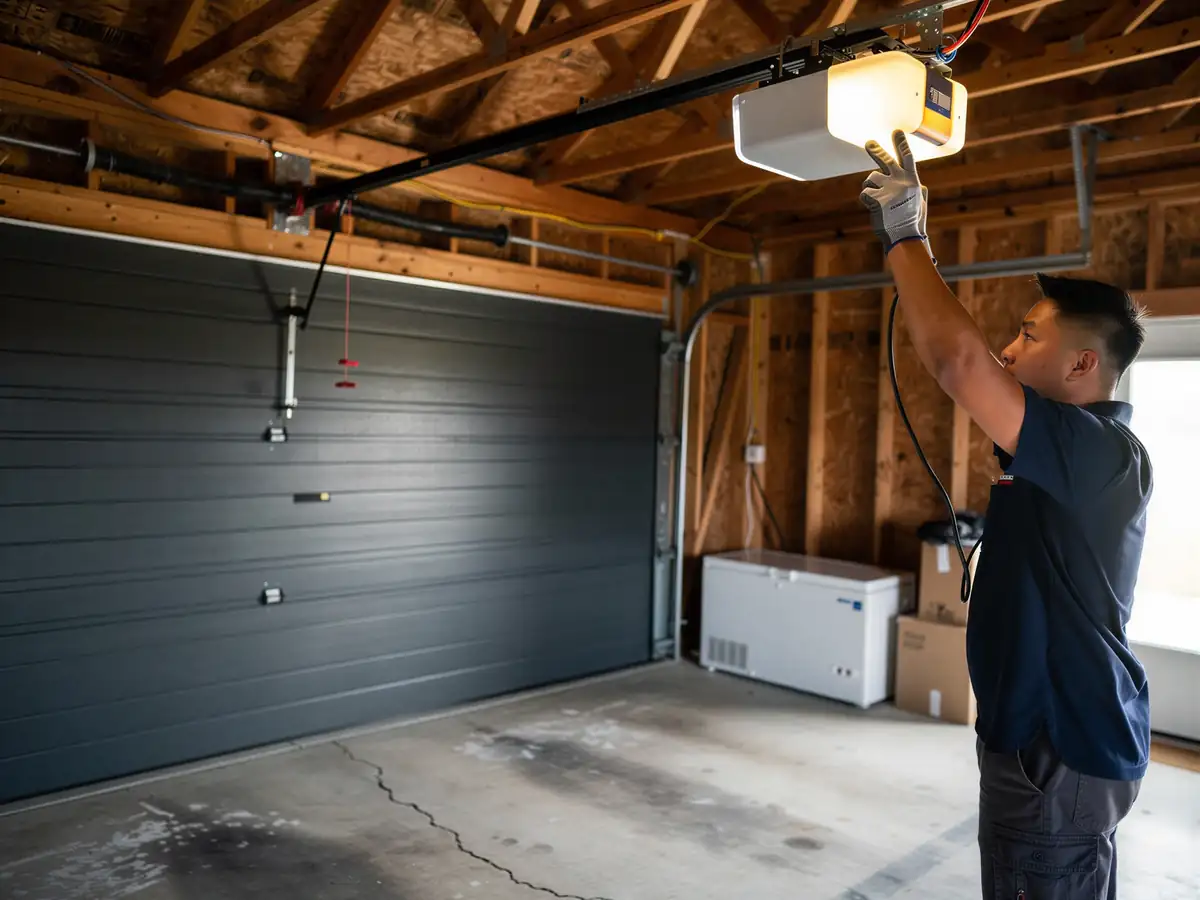
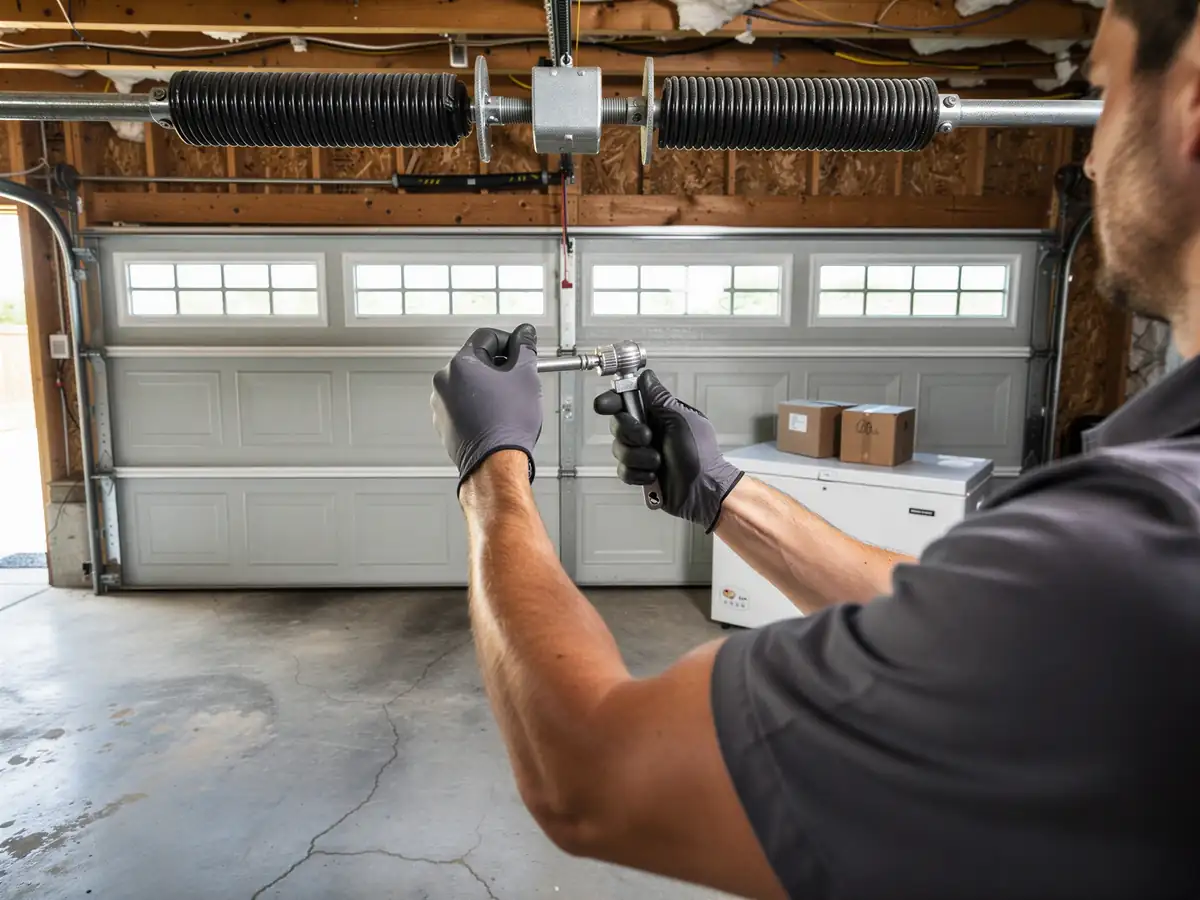
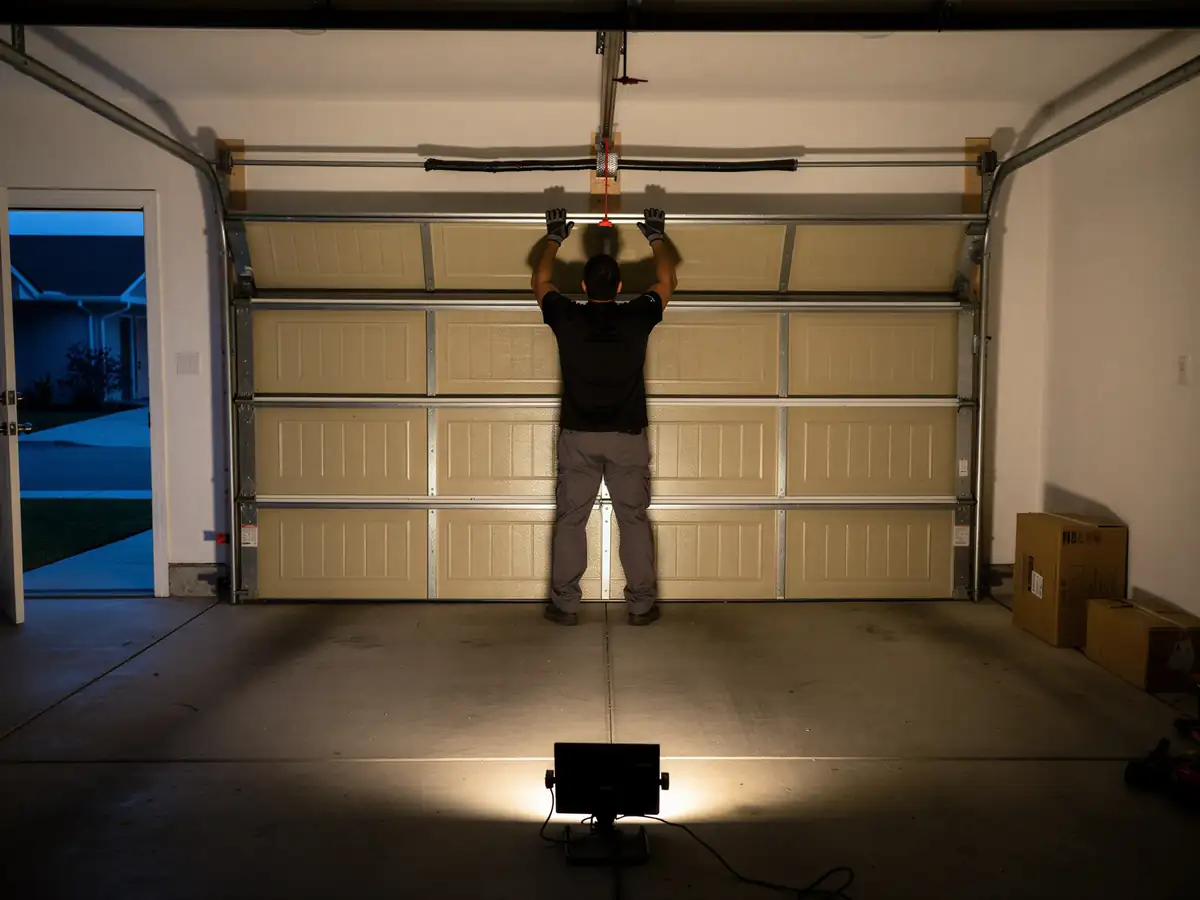
Nevada sits about 5 miles from our shop in Royse City, which is a short enough drive that we're not weighing whether a trip is worth it the way we might for a town 15 or 20 miles out. That matters for you: if you're on the fence about calling versus trying a fix yourself, the drive isn't the deciding factor. The door is. Most houses in Nevada went up around 2009, which means you're likely dealing with a heavier insulated steel door on a torsion system sized for that extra weight. A sagging spring on a door like that isn't a five-minute YouTube job - the cable tension and the spring wind are both higher than on an older, lighter door. Things like a loose roller bracket, a opener remote that's lost its code, or a track bolt that's worked loose are reasonable to check yourself. Spring replacement, cable work, or anything where the door could drop isn't. We'd rather tell you that up front than have you find out why the hard way.
What Can Go Wrong
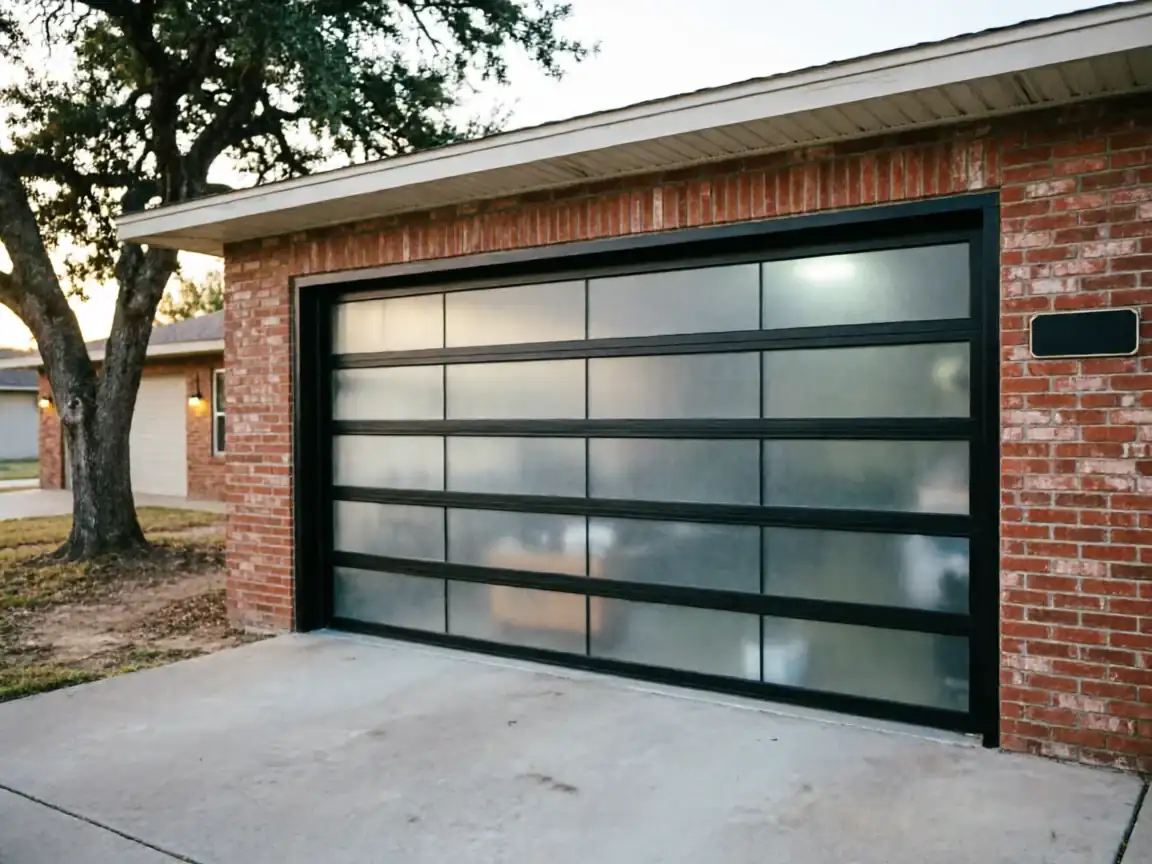
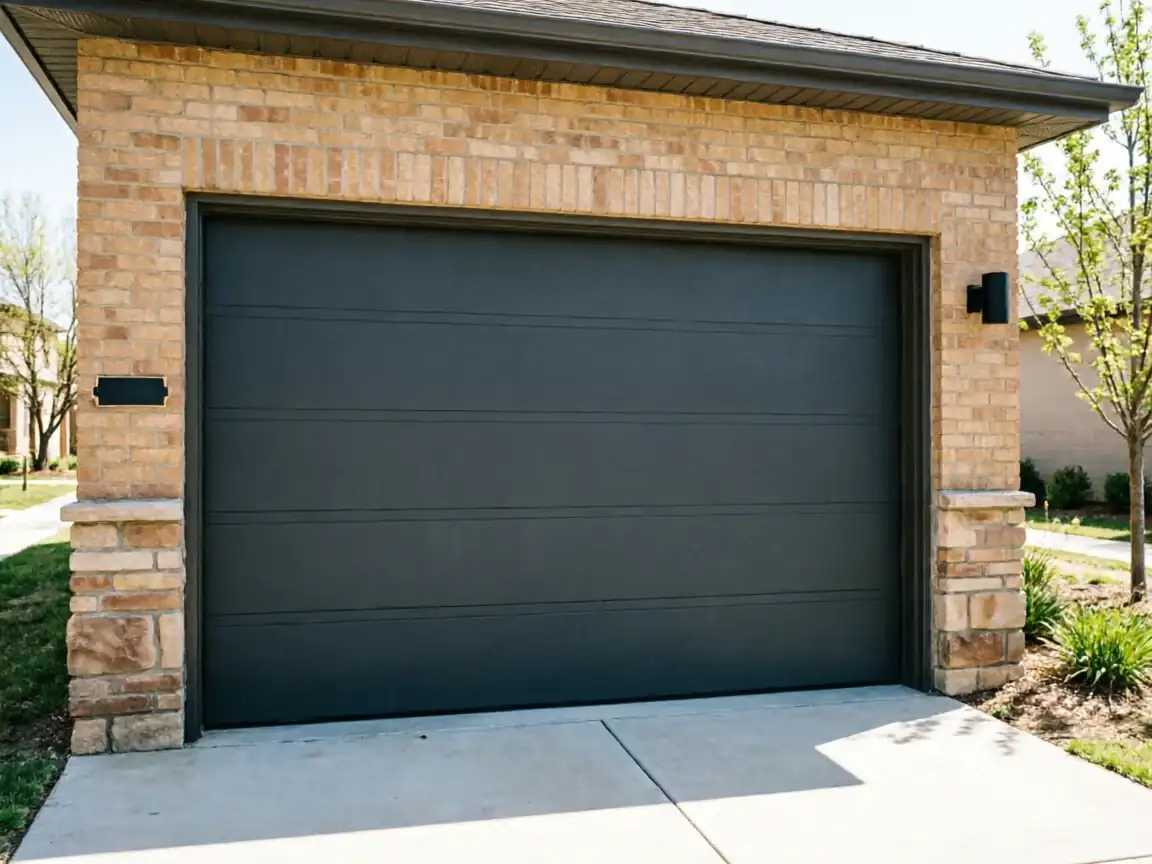
The housing stock in Nevada is newer than what we see across a lot of our service area, where builds stretch back to 1971. A door put up in the mid-2000s is usually still on its original hardware, which at 15-plus years old is right in the window where torsion springs start giving out and nylon rollers get brittle. Insulated panel doors from that era also tend to run heavier opener motors, and we see drive gears wear out on those before we see it on older, lighter doors. Our climate band here runs moderate on heat, so you're not fighting the kind of extreme swings that crack panels outright, but summer heat still dries out lubricant on tracks and hinges faster than owners expect, which shows up as grinding or a door that catches partway open.
What the Fix Involves
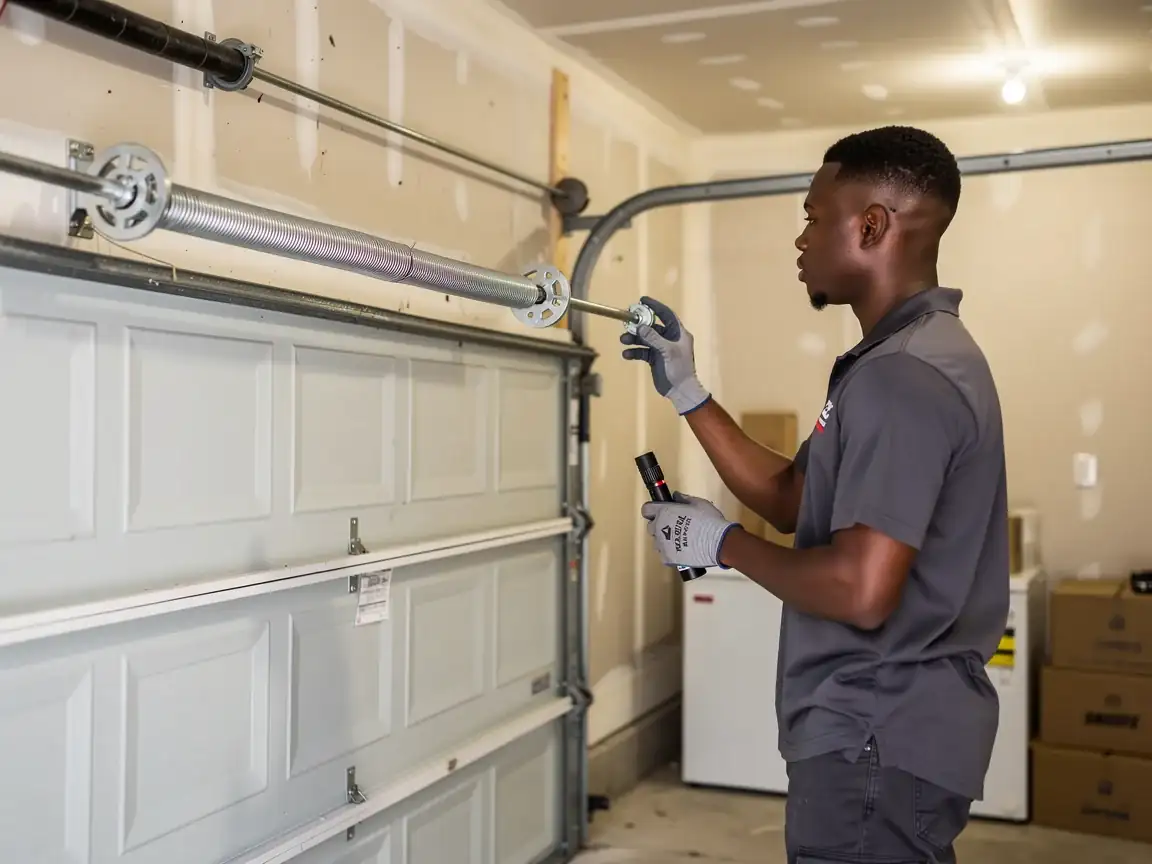
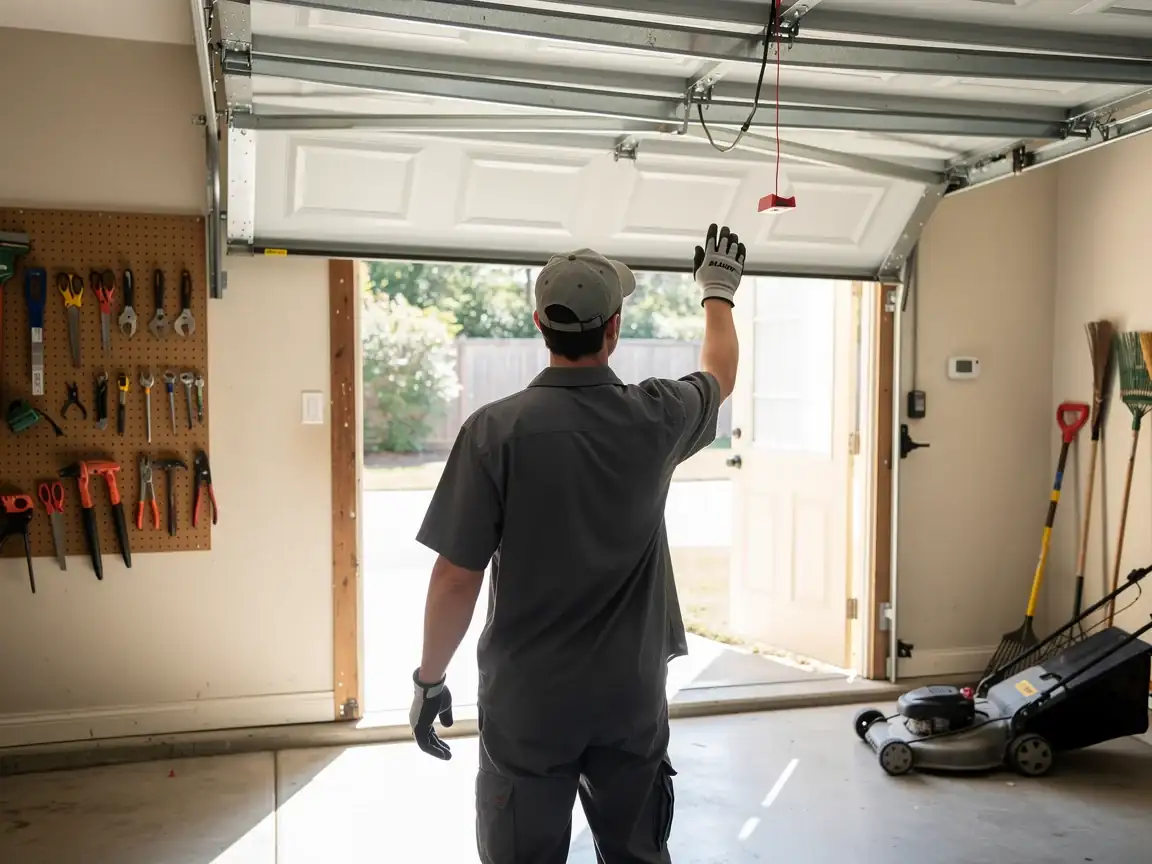
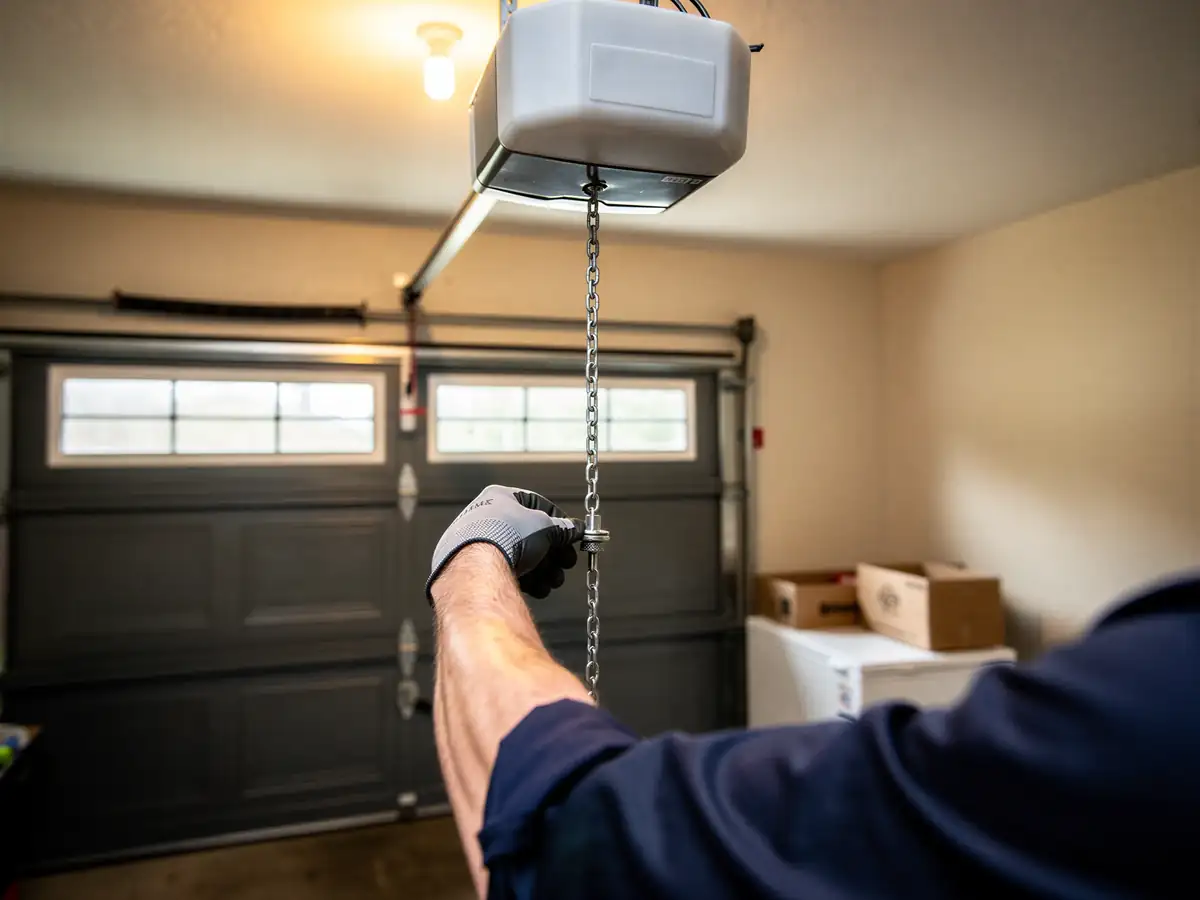
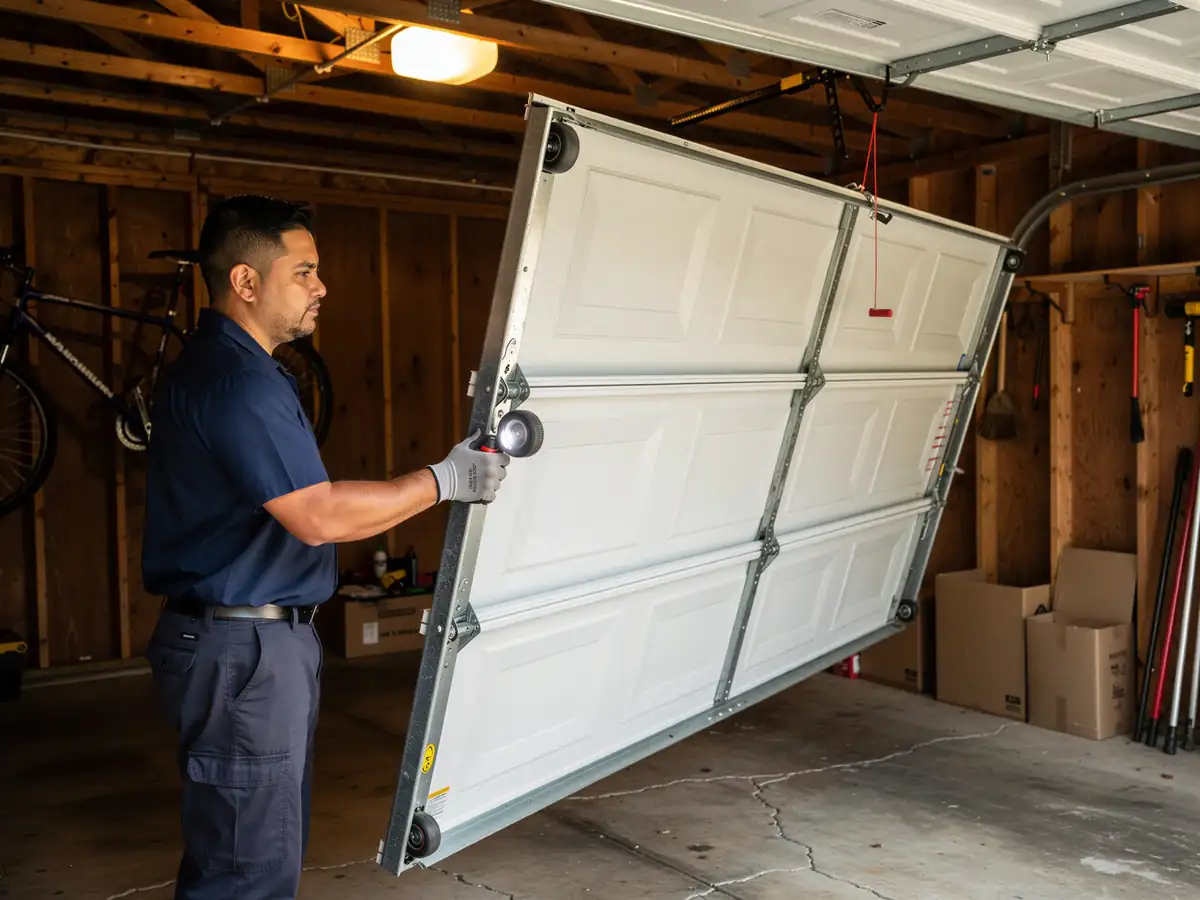
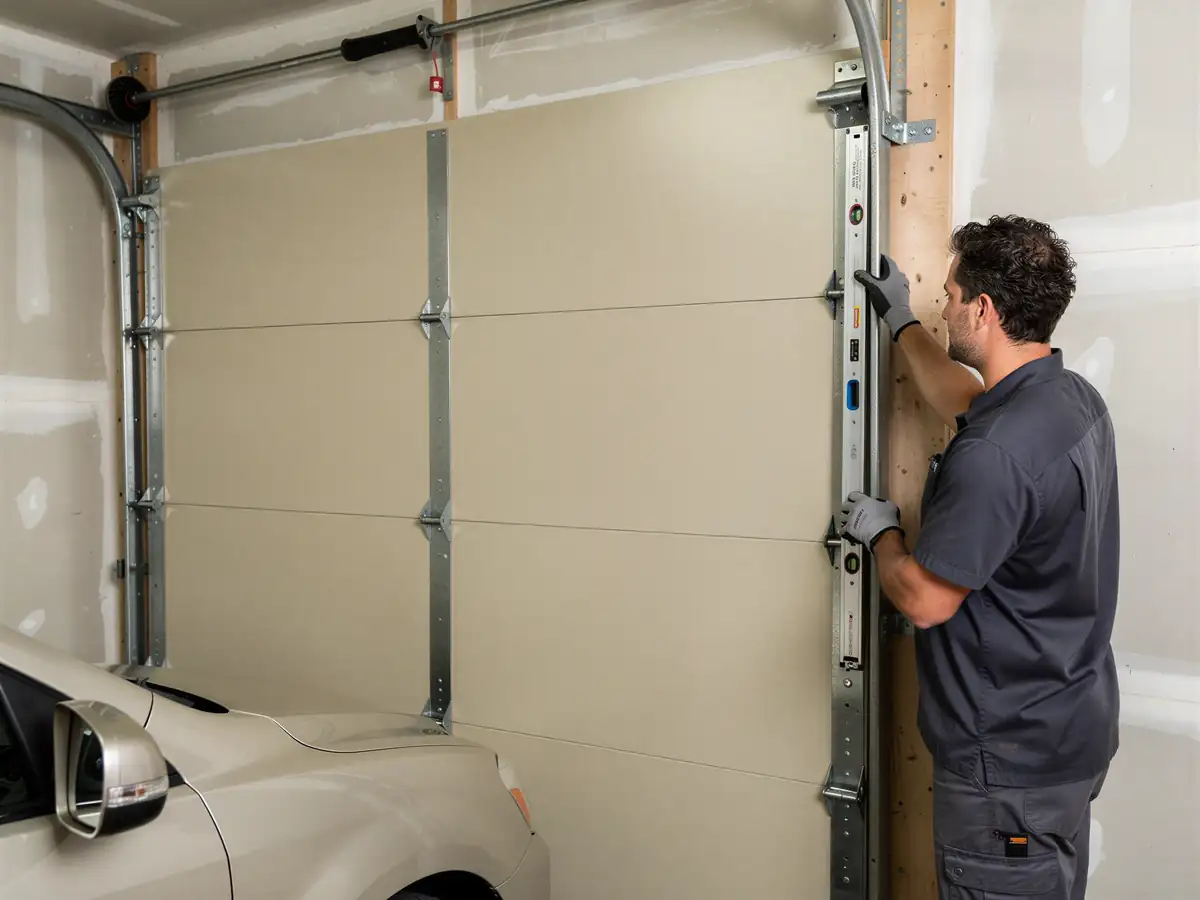
A repair call starts with us running the door manually, disconnected from the opener, to feel where the resistance or imbalance actually is - that tells us whether we're looking at a spring, a cable, a bent track, or the opener itself. On newer insulated doors, panels are heavier, so we check that both springs are matched and wound to the correct turns for the door's actual weight rather than assuming a stock spring will do. We also check the roller and hinge hardware for wear consistent with a door that's a decade-plus old, even on houses that otherwise look new. If the opener's circuit board or logic unit is the problem rather than the door itself, we say so rather than replacing parts that aren't the issue.
Parts We Carry
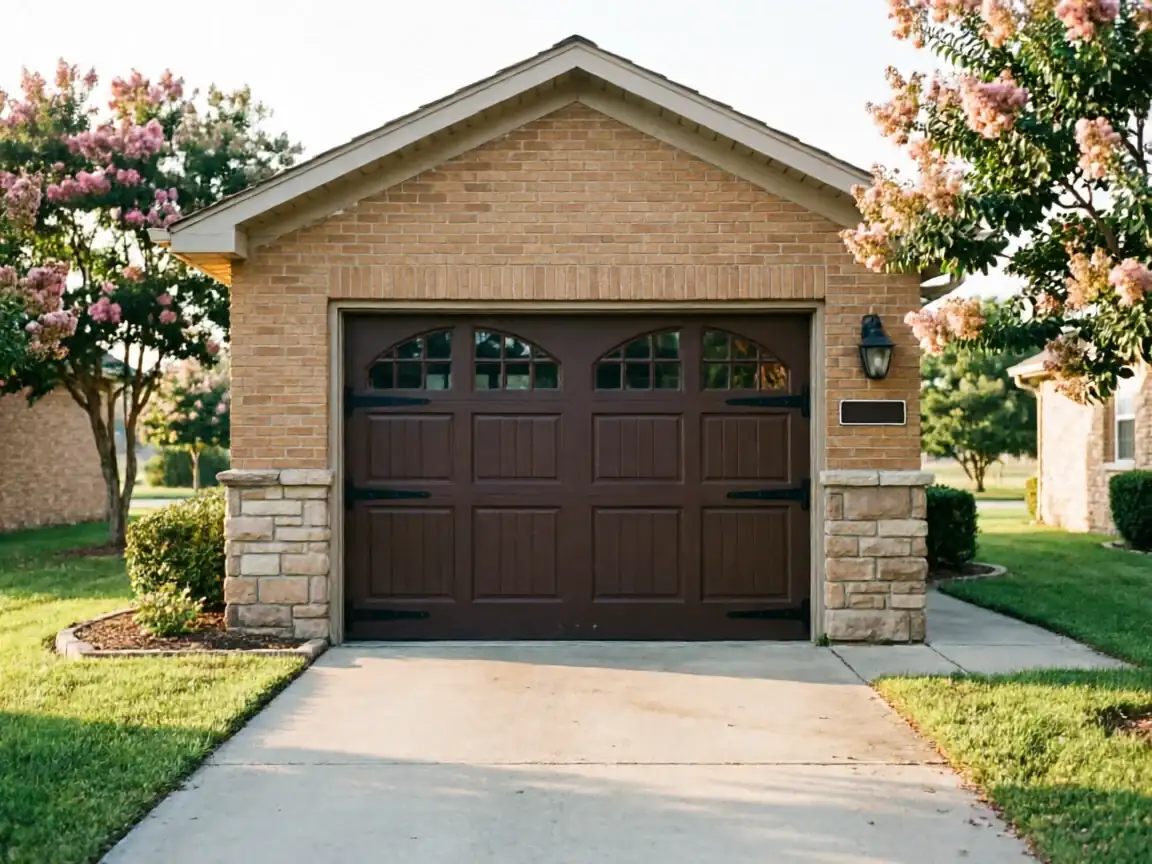
We carry a range of torsion springs sized for both older single-door setups and the heavier insulated double doors typical of newer construction like you'll find across Nevada. That includes standard rollers, cables, and hinges, plus common opener logic boards and drive gears. What we don't keep on the truck is a match for every proprietary panel style - if a specific insulated panel needs an exact factory match, that part sometimes has to be ordered in, and we'll tell you that lead time before we start rather than after.