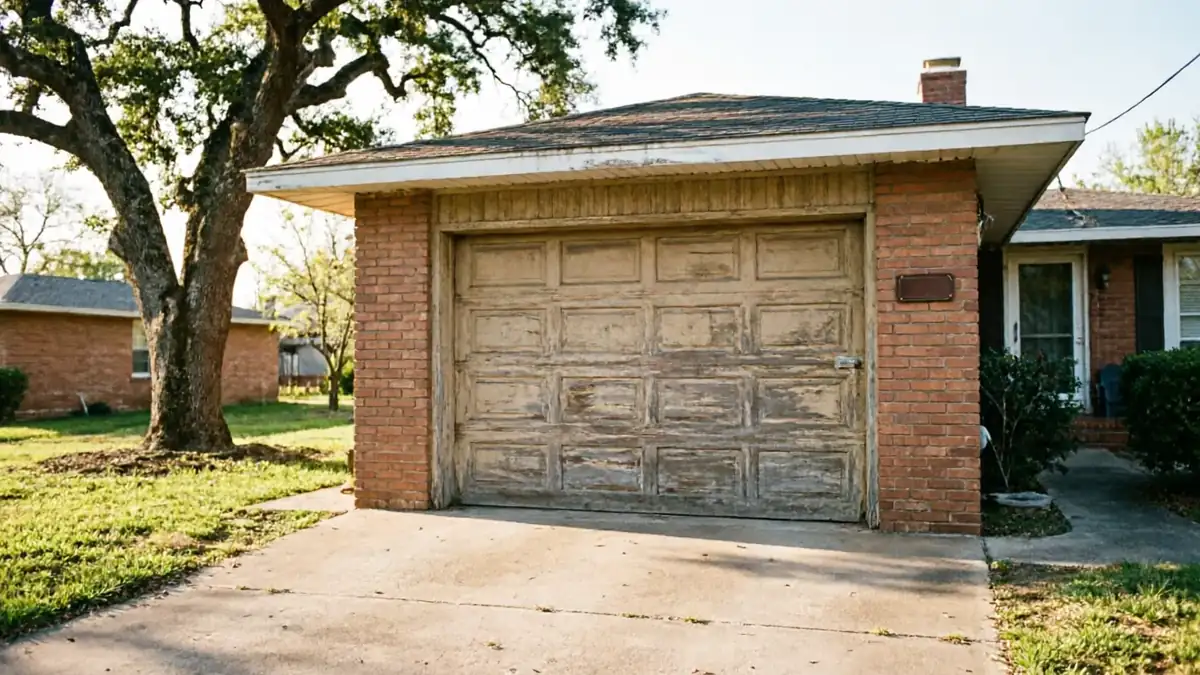
What the Weather Here Does to It
Most houses in the Royse City service area went up between 1971 and 2012, with the bulk of that stock built right around 2000. That matters because a door installed when the house was new is now sitting at the 20 to 25 year mark, which is exactly where torsion springs and nylon rollers start giving out.
The service area carries a moderate heat climate band, not the kind of swing that cracks panels overnight but enough to dry out lubricant and stiffen rollers faster than the owner's manual expects. Steel sections expand and contract through the day, every day, for two decades. That slow cycling works grease out of hinges and bearings long before anything looks broken from the driveway.
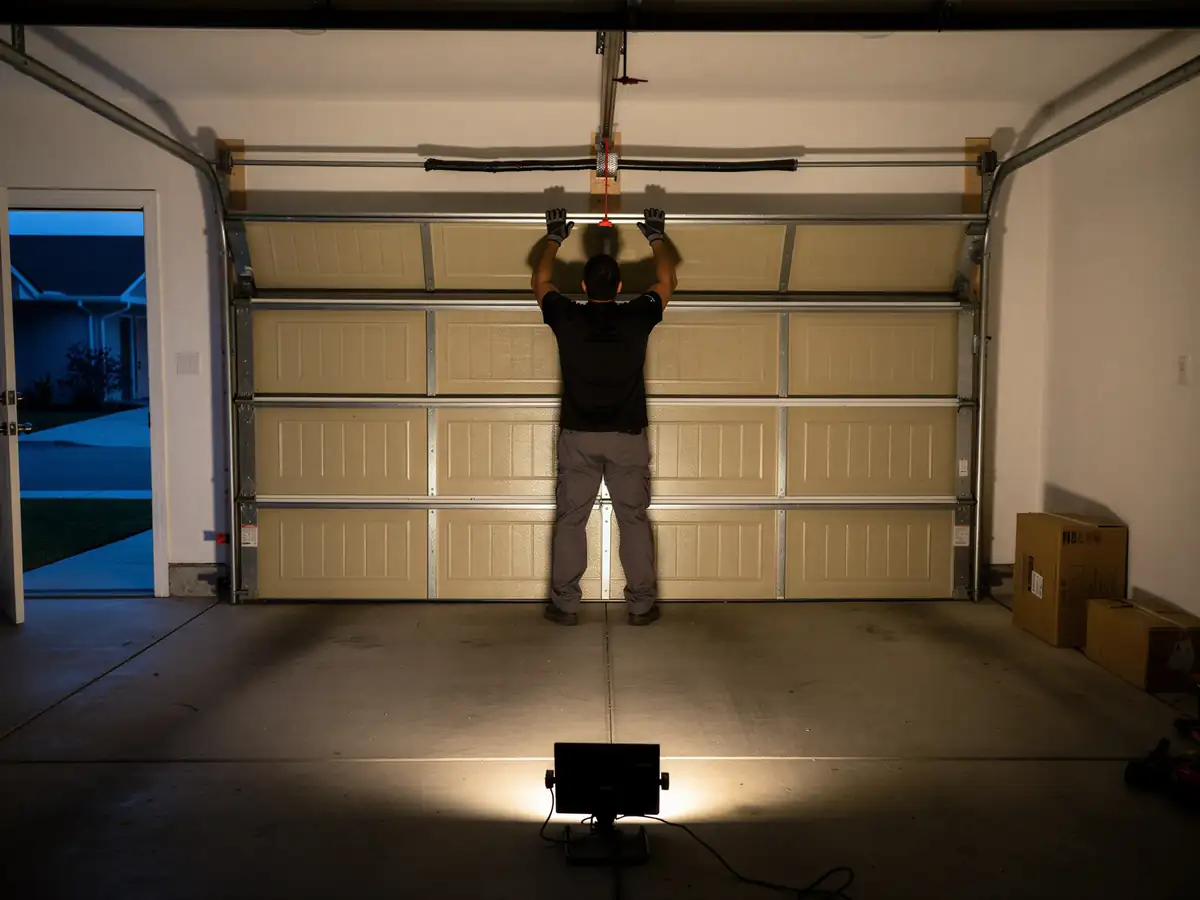
It also means the failure mode here is usually gradual, not dramatic. A door that's starting to groan on the way up, or one that hesitates a beat before the opener catches, is telling you the heat has already done its work on the moving parts. By the time it won't open at all, you've had warning signs for months. That's the window where fixing instead of replacing still makes sense, and it's narrower than most owners think.
Leaving It Alone
A door that's been ignored since the house was built doesn't fail all at once, it fails in order. Lubricant goes dry first, then rollers start binding in the track, then the extra load gets passed to the springs and the opener motor. By the time a spring snaps, it's usually been straining against dry hardware for a year or more.
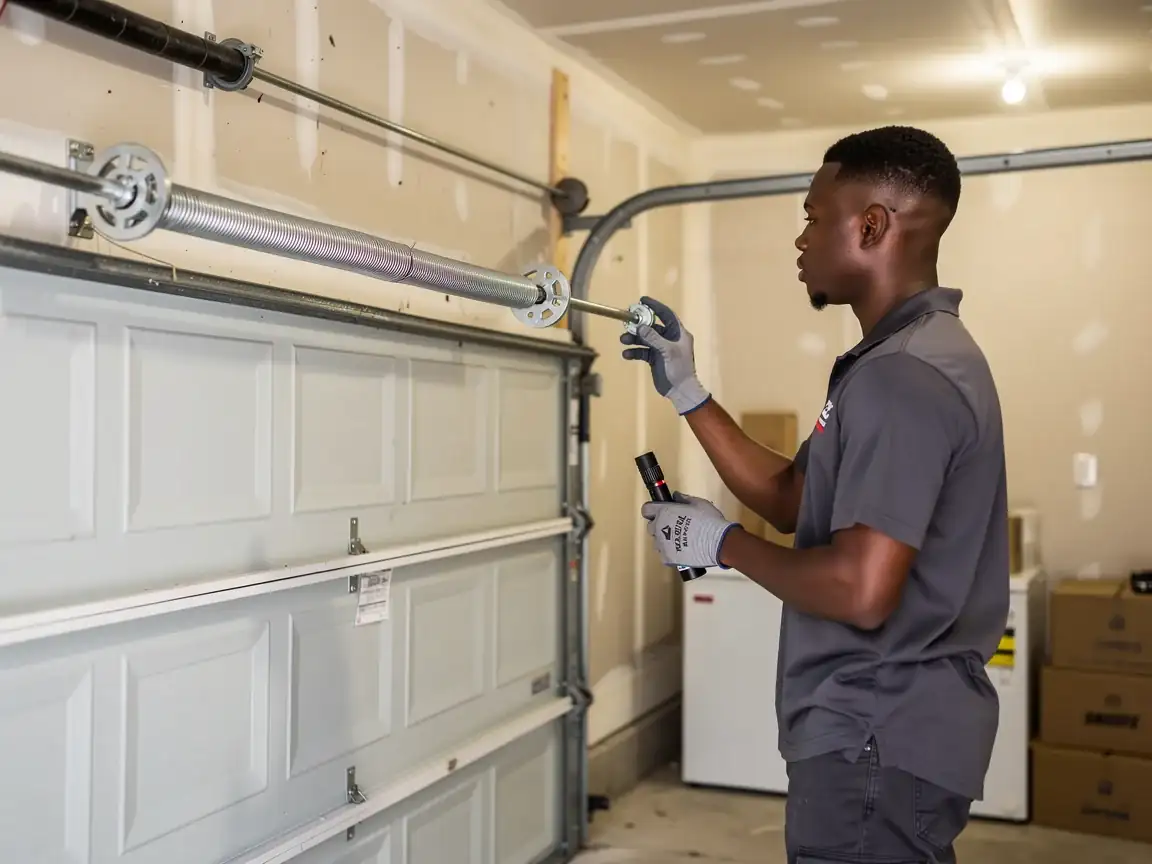
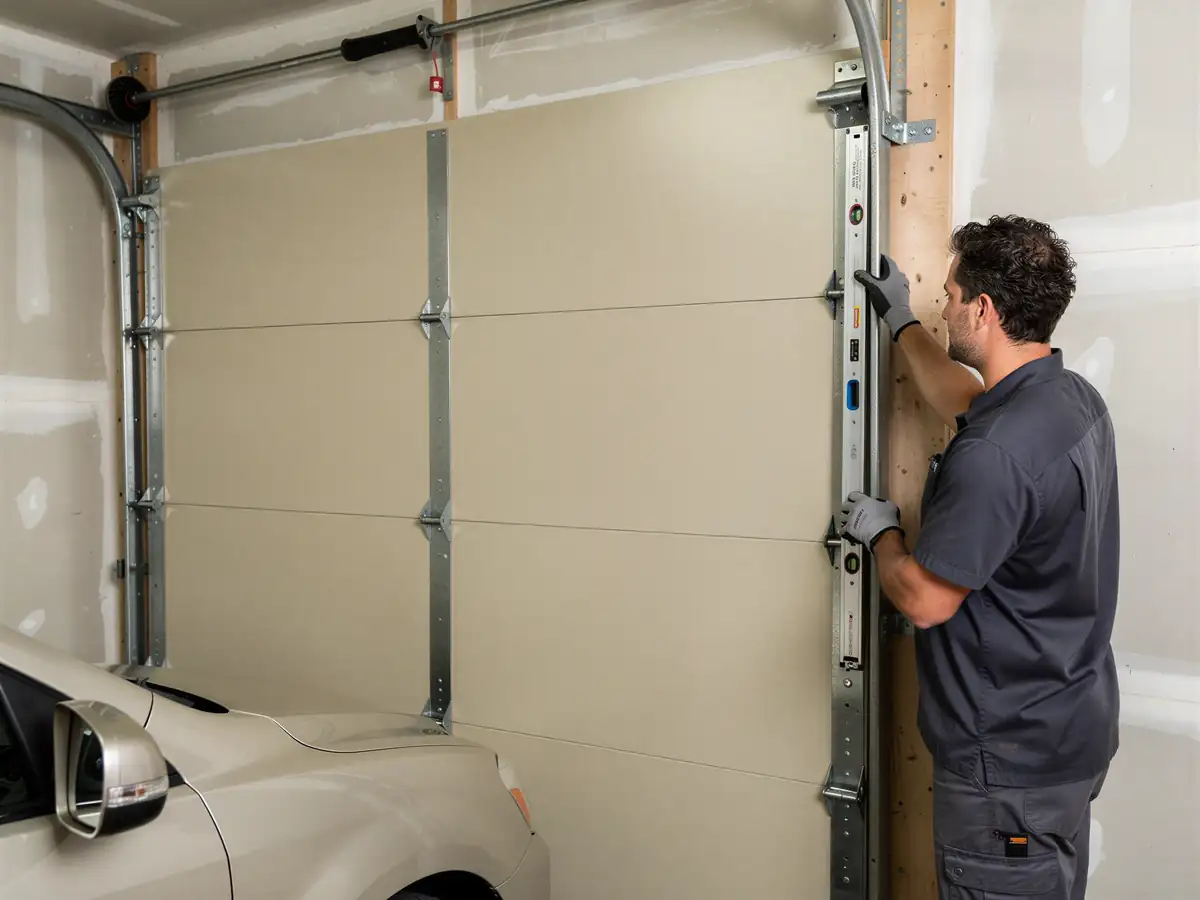
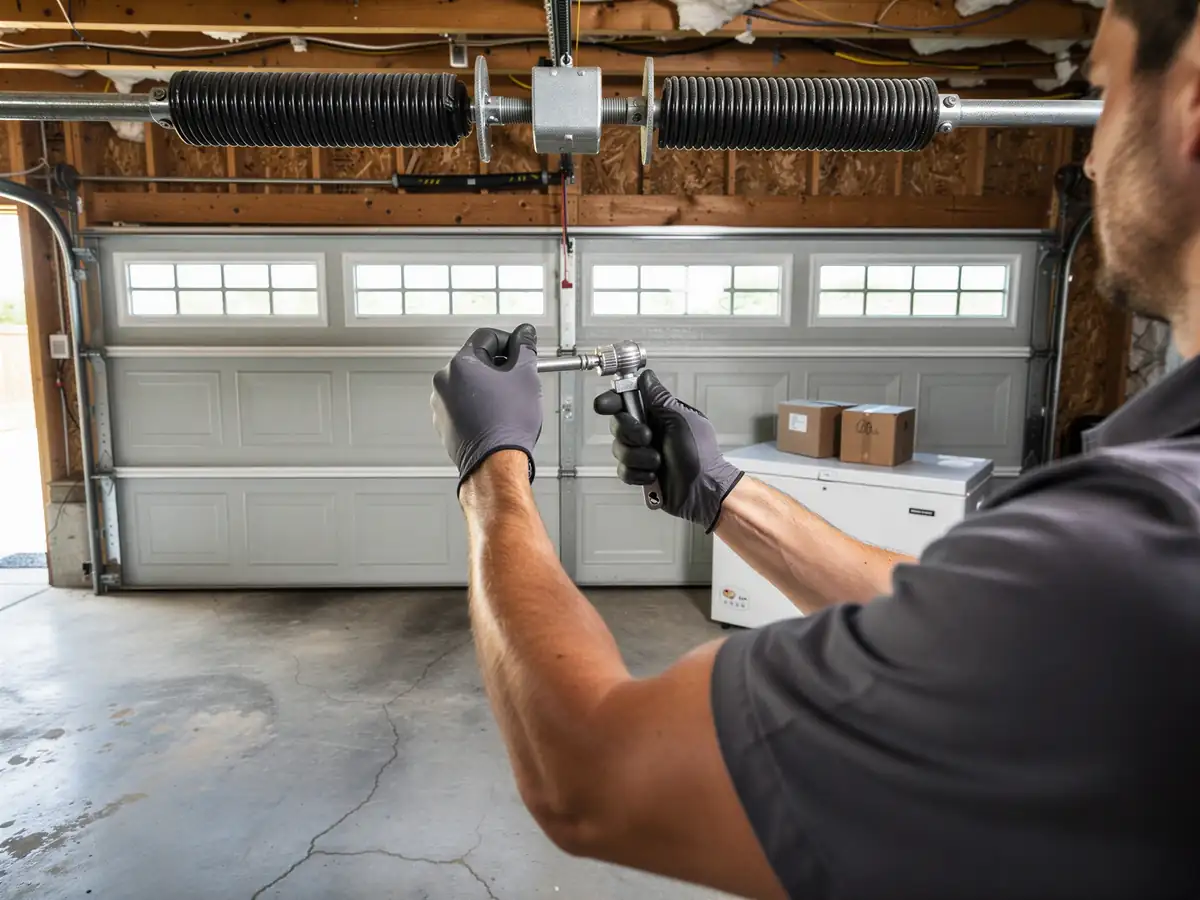
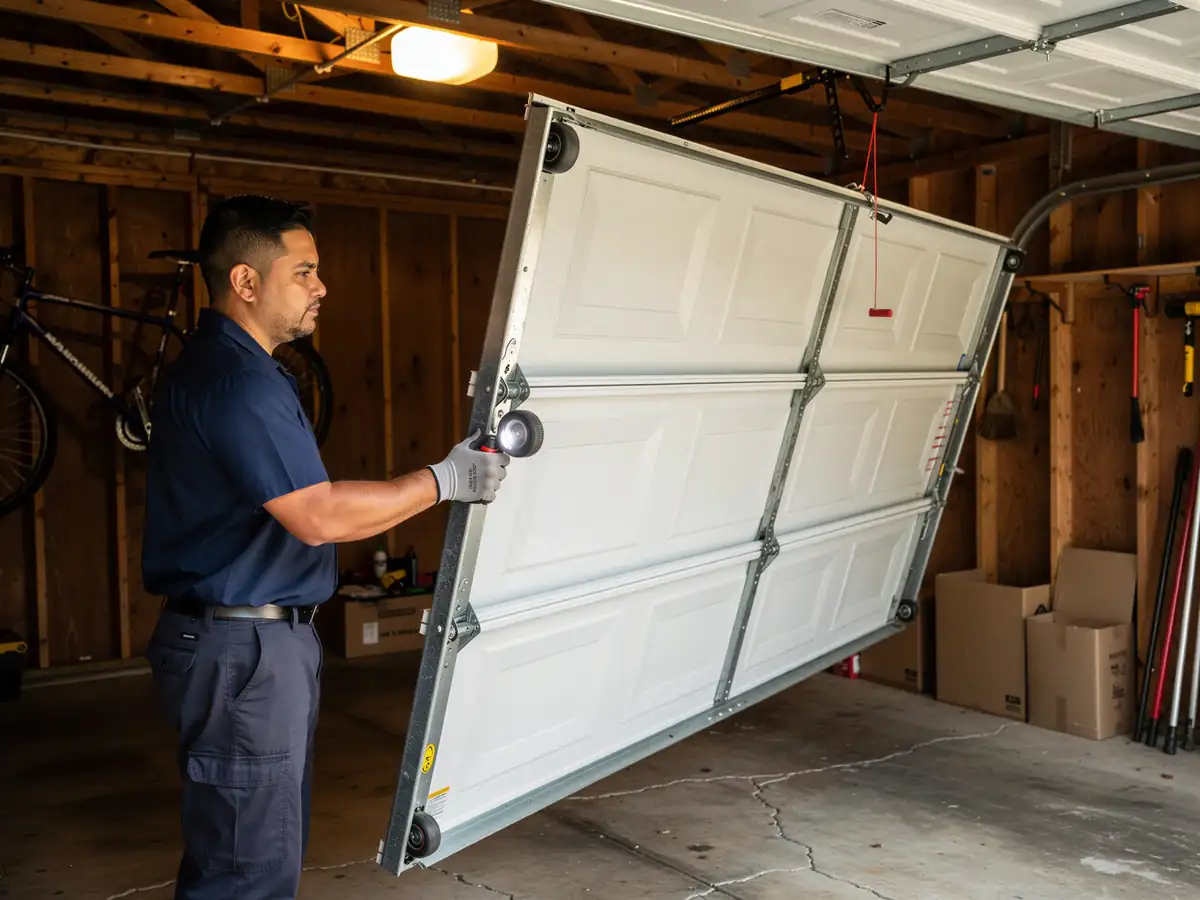
Here's the honest part: once a torsion spring breaks on a door that's never been serviced, we're not just replacing a spring. We're often finding worn cable drums, a track that's been knocked slightly out of true from the extra strain, and an opener gear that's been working harder than it should. None of that shows up from inside the house. It shows up when the door comes apart on the lift.
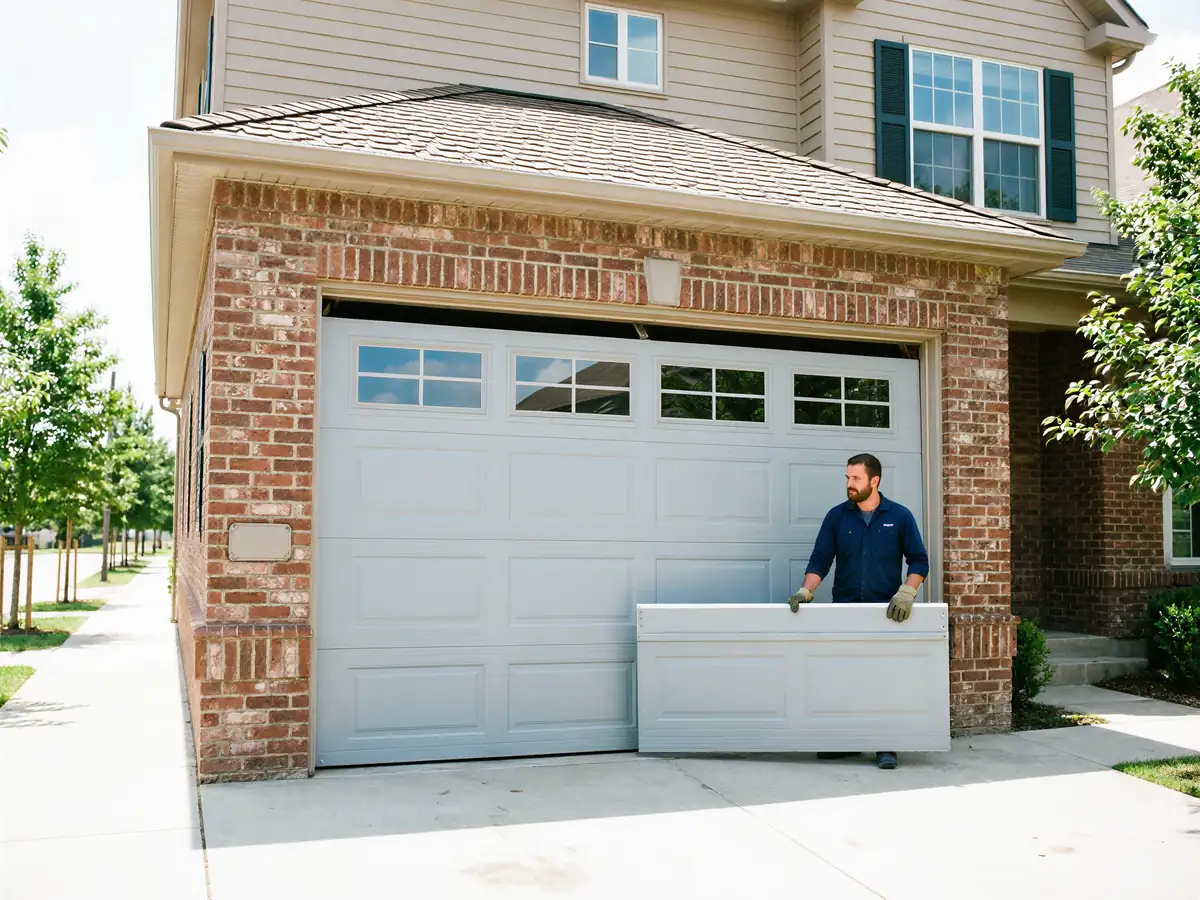
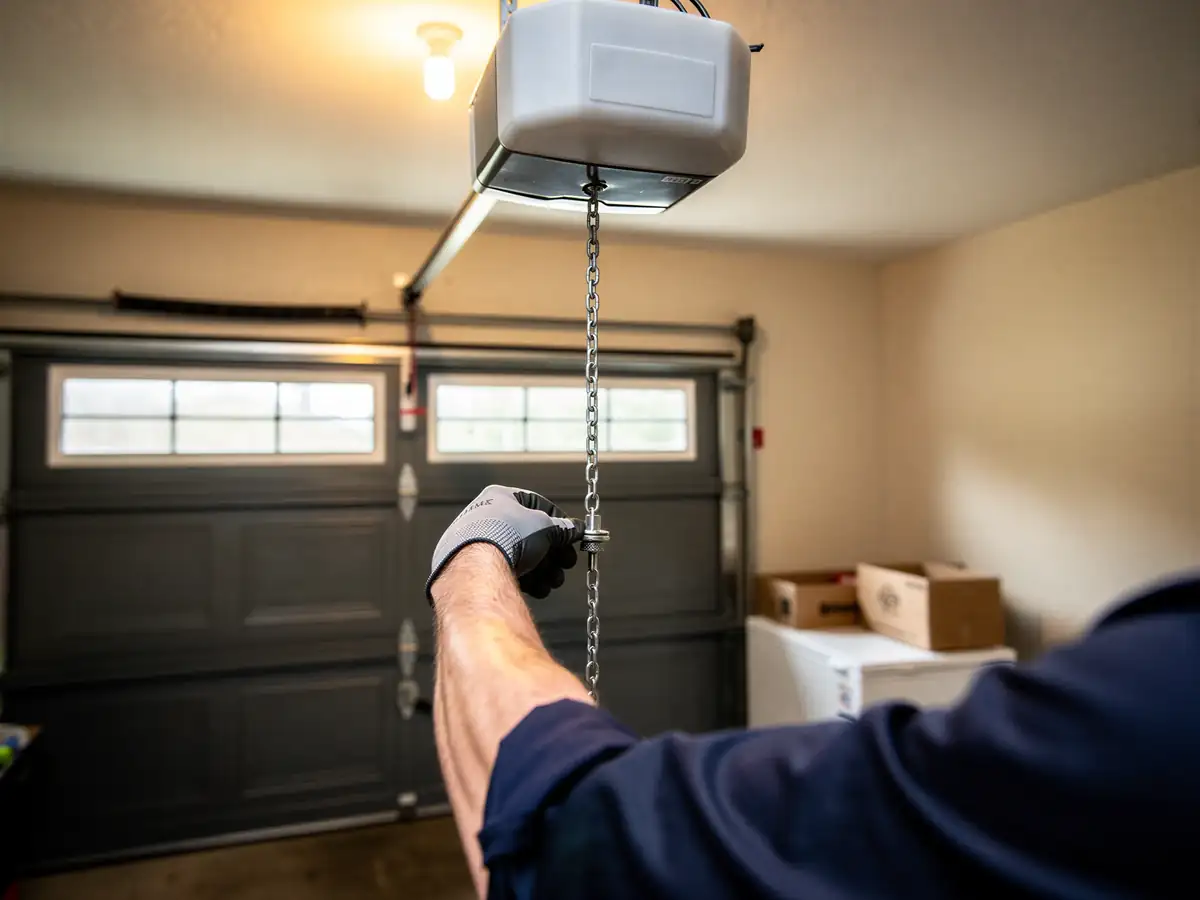
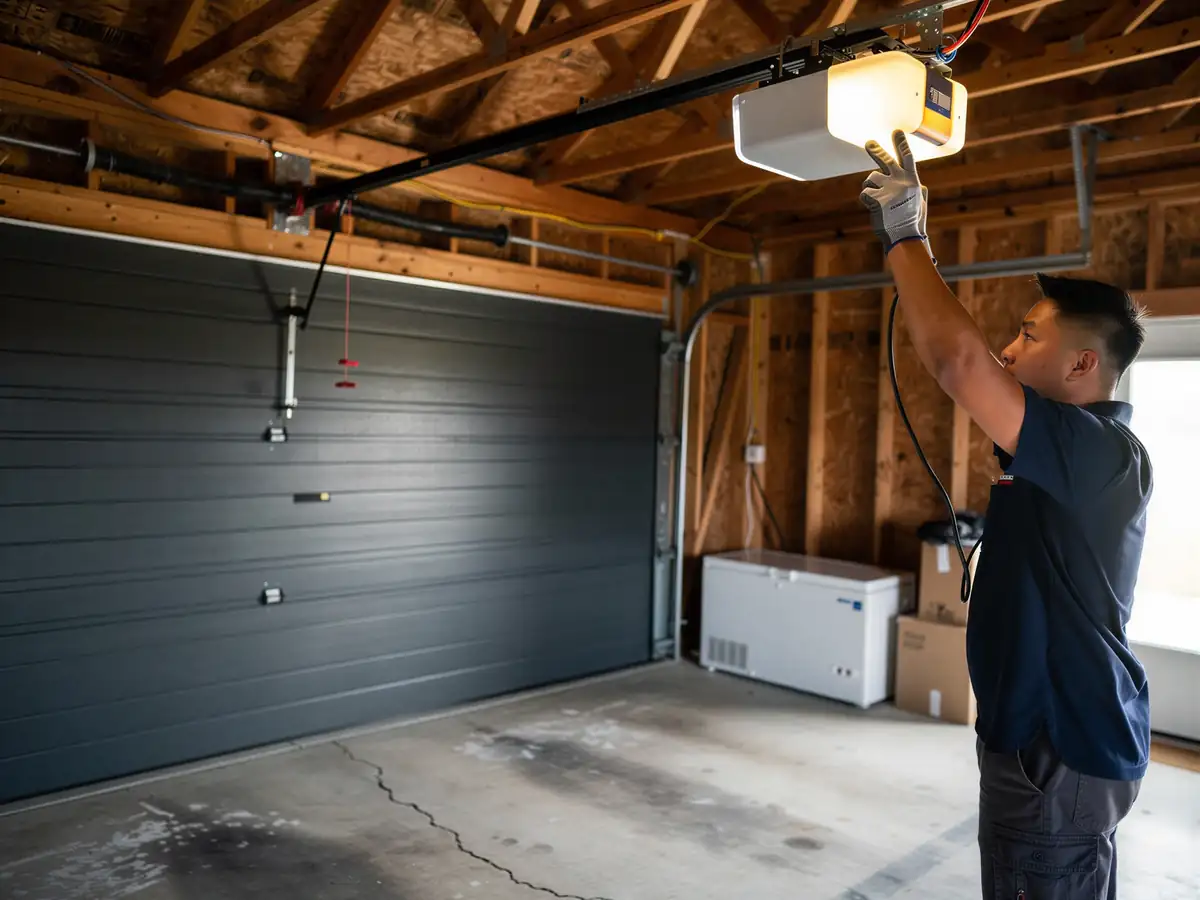
We don't recommend tearing into a 20-year-old door at the first squeak. But if it's groaning, sagging on one side, or the opener strains before it catches, that's not a cosmetic problem anymore. On a door built around the same era as most of the housing stock here, that's the stage where a repair still has a reasonable chance of lasting. Wait much longer and you're choosing between a bigger repair bill and a new door anyway.
What It Costs
We're not going to give you a number that doesn't exist
What we can tell you is what drives the decision on a door that's roughly as old as the house.
Parts availability is the real variable
A door and opener from the 2000s building boom here usually still has common hardware behind it, torsion springs, standard rollers, universal cable, which keeps a repair worth doing. Where it stops being worth doing is when the track or the panel itself has been bent or rusted past what hardware alone can fix. At that point you're paying for labor twice, once to patch it and again in a year or two to replace it properly.
With a median household income of $117,428 in this area
Most owners here can afford to replace rather than nurse a failing door, but that doesn't mean every door needs it. A clean spring replacement on an otherwise sound door is a different conversation than a door with a bent track and a motor that's already burned out. We look at the door in person before we say which one you're dealing with, because guessing over the phone gets owners the wrong answer more often than it gets them the right one.
- $117,428 median household income
What Is Going On
Across the 20,747 households we could be working on, 17,541 are owner-occupied houses, which is the group actually making the call on repair versus replacement rather than passing it to a landlord. That's most of this area, and it's a population of doors that were largely installed in the same narrow window, 1971 through 2012, centered around 2000.
What that means practically is a lot of garage doors here are aging out together. Springs rated for a set number of cycles don't care what year it is, they care how many times the door has gone up and down, and a 20-plus year old door has put in a lot of cycles under moderate heat stress the whole time.
The pattern we see is less about any one disaster and more about timing. Doors built when this neighborhood was new are now at the stage where the original hardware is tired, even if the door itself still looks fine. Catching that stage with a repair is usually the better call than waiting for the spring to go on its own terms.