What the Weather Here Does to It
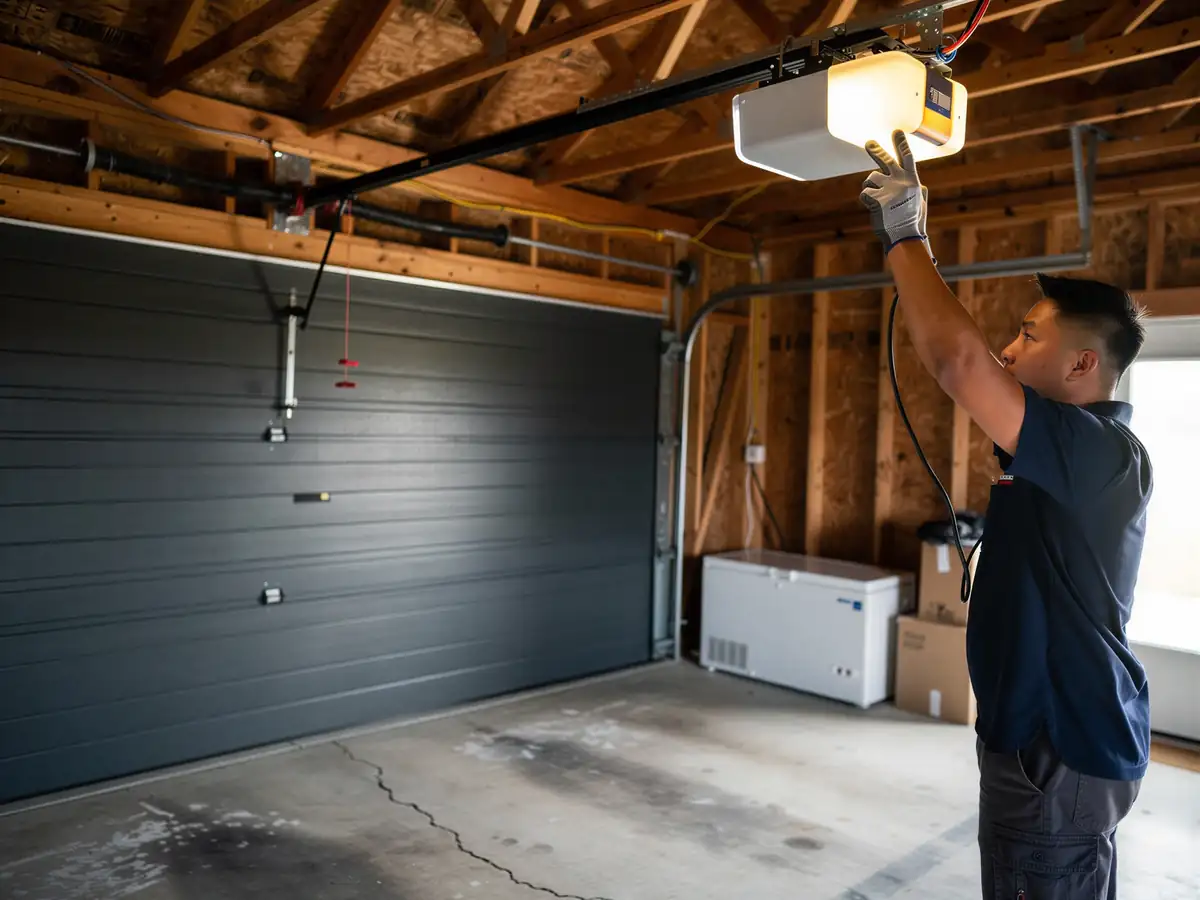
The climate band for this part of Texas is rated moderate heat, not the brutal extremes some regions get, but a closed garage still runs hotter than the outside air all summer long. If your house was built between 1971 and 2012 - which covers most of the stock here, with the median landing around 2000 - your opener's circuit board and photo-eye sensors have been baking through a couple of decades of summers already. Heat doesn't usually kill an opener outright. It dries out the grease on the rail, swells the rubber on the trolley, and makes the logic board flaky before it fails for good. You'll notice it as a door that hesitates, reverses for no reason, or needs three tries on a hot afternoon. Moderate doesn't mean mild. It means the swings are long and steady rather than violent, which is actually harder on electronics than one bad week, because components fatigue instead of snapping. I can't tell you the exact garage temperature on a July day because I don't have that number, but the band itself tells you the opener is working against heat load every season it runs, not just on the worst days.
Leaving It Alone
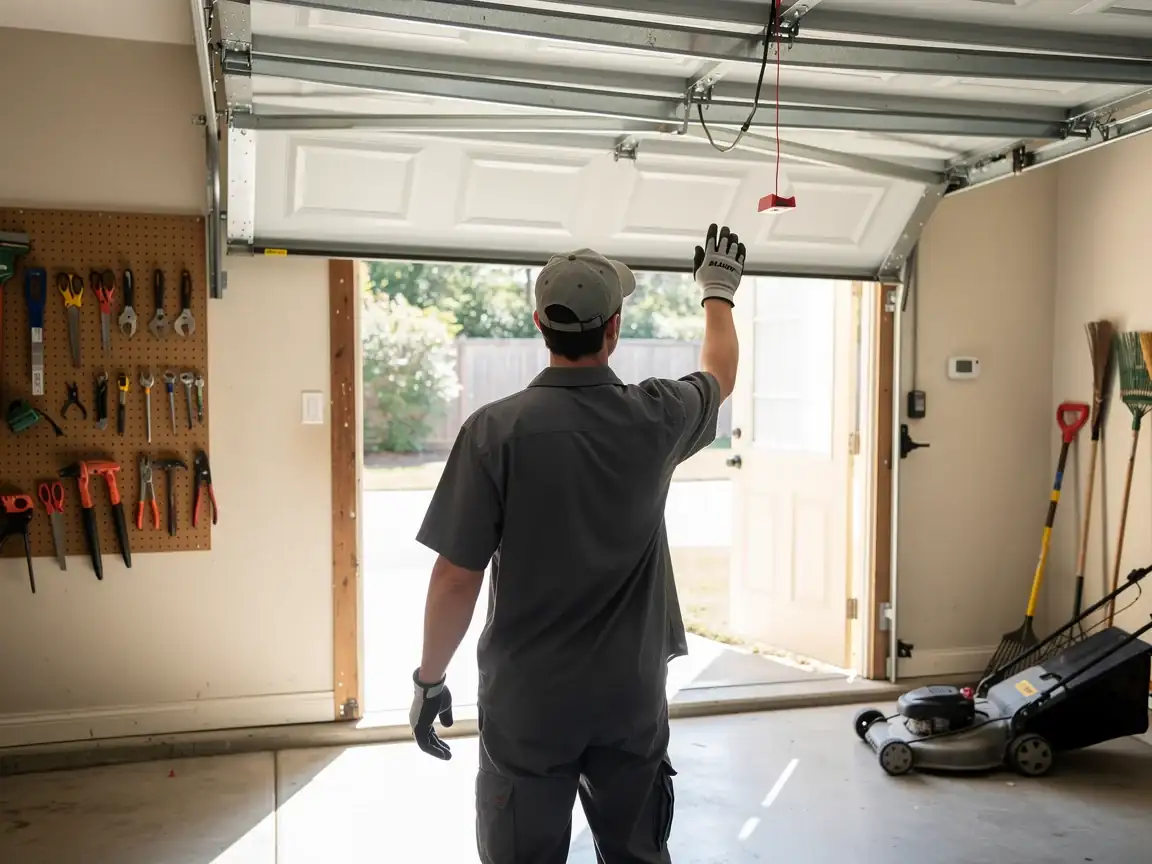
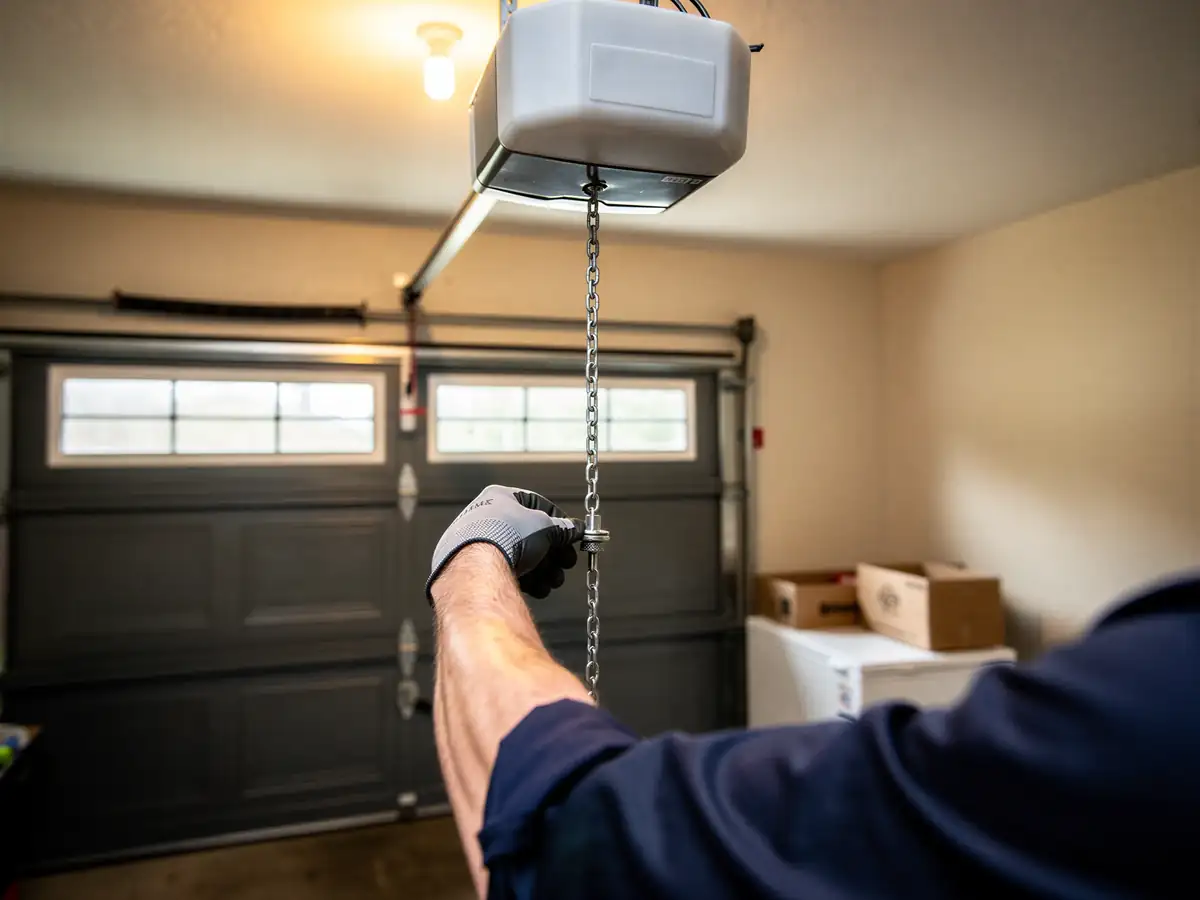
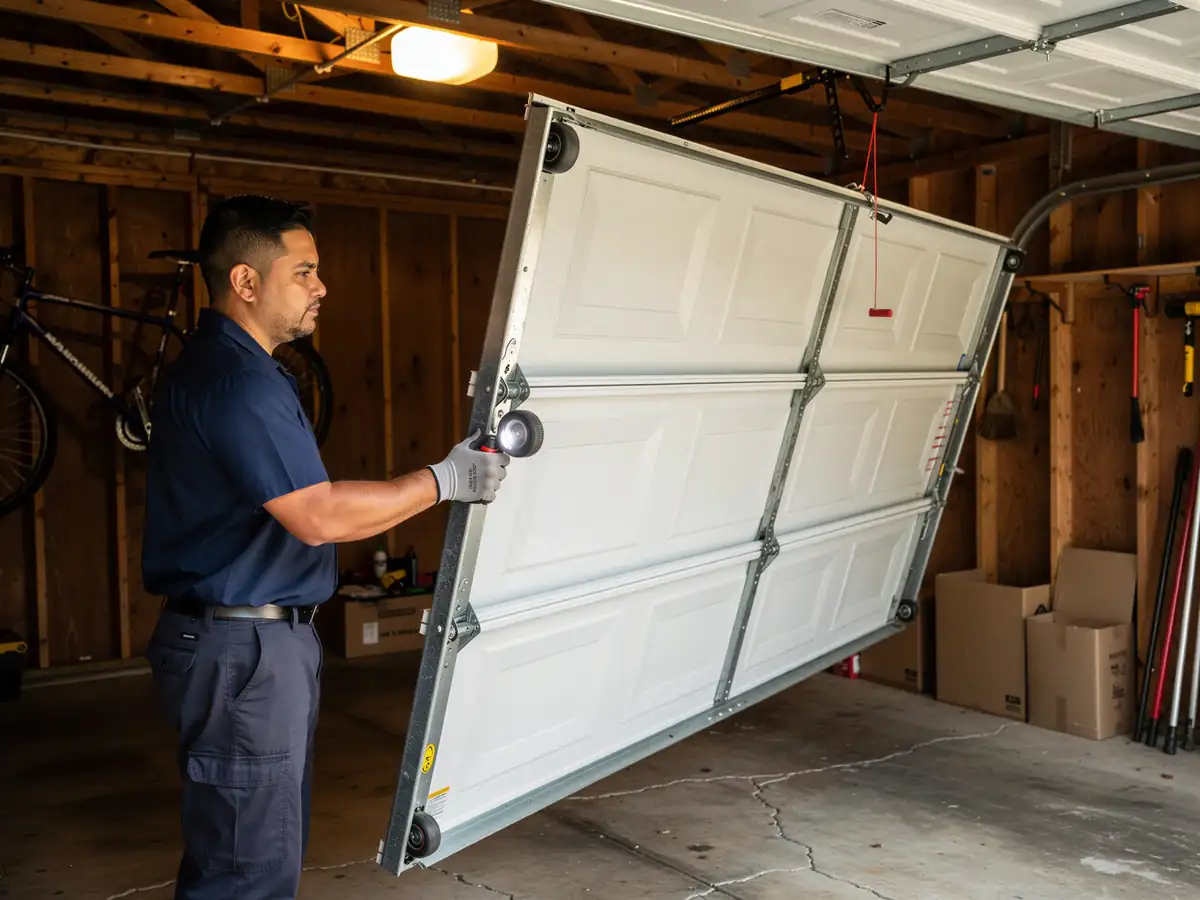
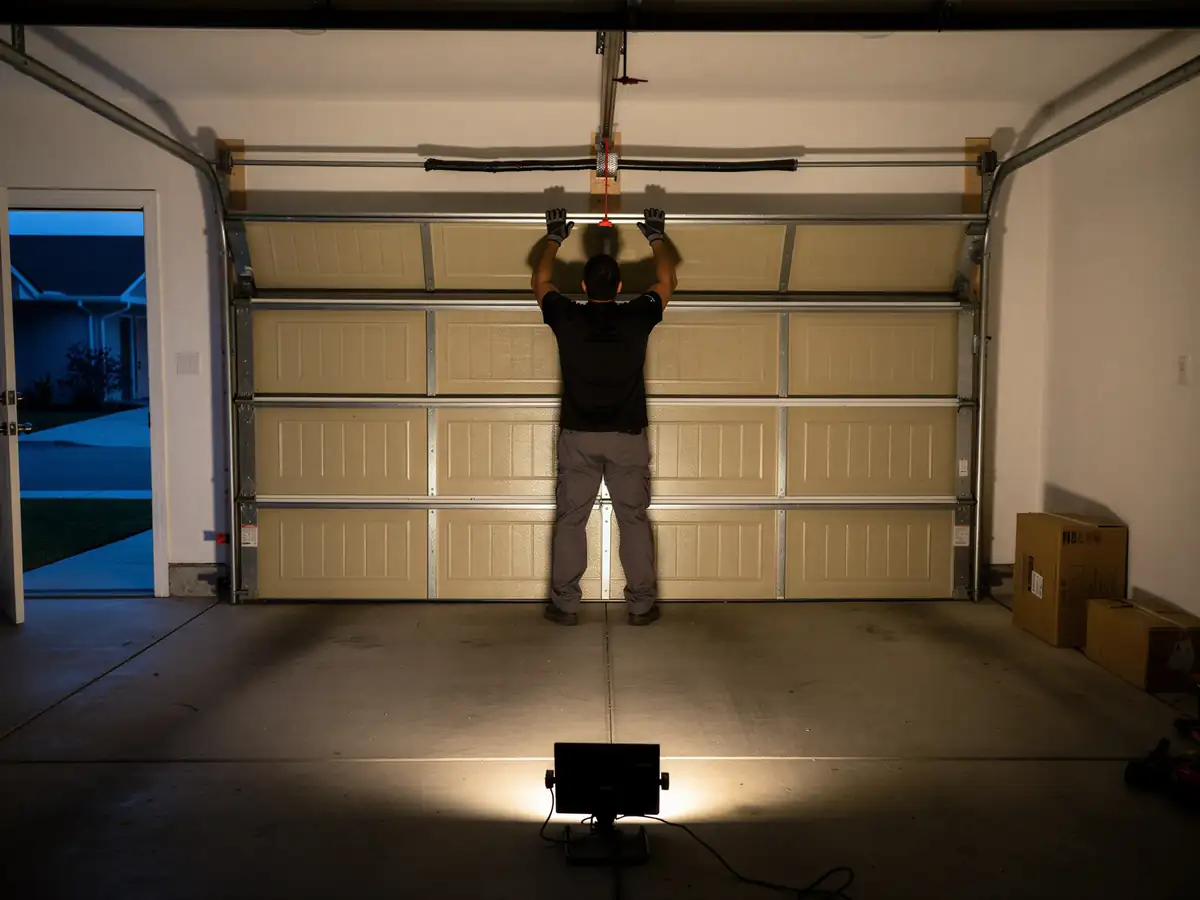
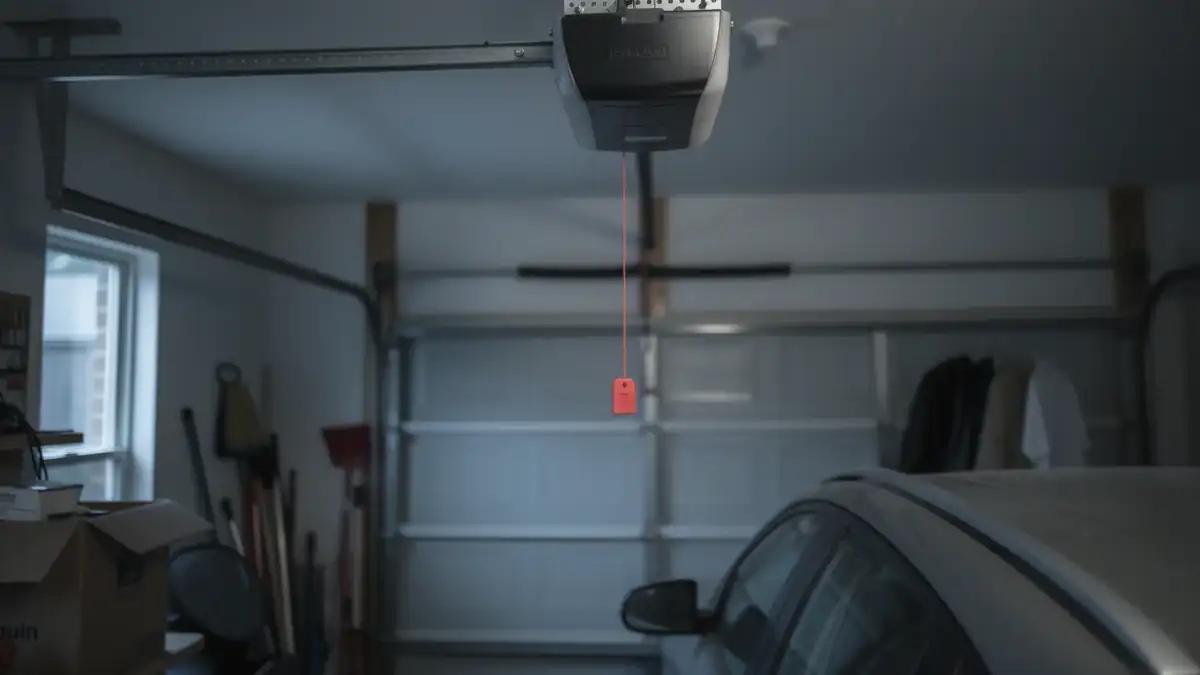
Leave a flaky opener alone long enough and the first real test of it is a power cut, not a slow Tuesday morning. When the power drops, the motor stops, and the door only moves on the manual release - the red cord hanging from the trolley. If that mechanism hasn't been exercised in years, because the opener's run fine on power the whole time, you find out it's rusted stiff right when you need it loose. A good number of the houses in this area are from that same 2000s build wave, so a lot of garages share the same aging hardware on the same timeline - one grid interruption and you're not the only call that day. I'd rather tell an owner now, while the door still runs on power, to pull the release and run the door by hand once a year, than get a call mid-outage asking why it won't budge. The honest limitation here: I don't have outage-frequency data for this area, so I'm not going to tell you how often the power actually goes out. What I can tell you is that whenever it does, that's the one moment the manual release has to work, and it's also the one piece of hardware nobody checks until then.
What Is Going On
Royse City sits in a stretch of Texas that filled in fast during the 2000s, and you can see it in the neighboring towns - Nevada five miles off, Union Valley and Josephine close behind, Lavon and Caddo Mills a few miles further, then Heath, Farmersville, and the rest stacked out past ten miles. A lot of that ring of growth happened on the same timeline as the housing here, which is why the opener problem isn't a one-house issue. Across the 16 named subdivisions that make up most of the 2000s-era stock in this service area, builders installed whatever opener came standard with the package at the time, and all of those units are aging out together. With 17,541 owner-occupied houses in the area, that's a lot of garages running hardware from the same few product years. It's not a crisis - openers from that era were built fine for their time - but it does mean the failures cluster. When one neighbor's opener board goes, the one two doors down from the same subdivision, same build year, is usually not far behind it. That's the pattern worth knowing, more than any single statistic: age and build-era do more to predict an opener failure here than anything about how the owner used it.