What the Weather Here Does to It
Royse City sits in a moderate heat climate band, not the extreme swings you'd get further west or up toward the panhandle. That matters for a garage door because the stress here is steady rather than violent. A steel door panel on the sun-facing side of the garage heats up every afternoon and cools every night, and that daily expansion and contraction works on the seams, the hinges, and the track bolts year after year. It's not dramatic, but it adds up over a couple of decades.
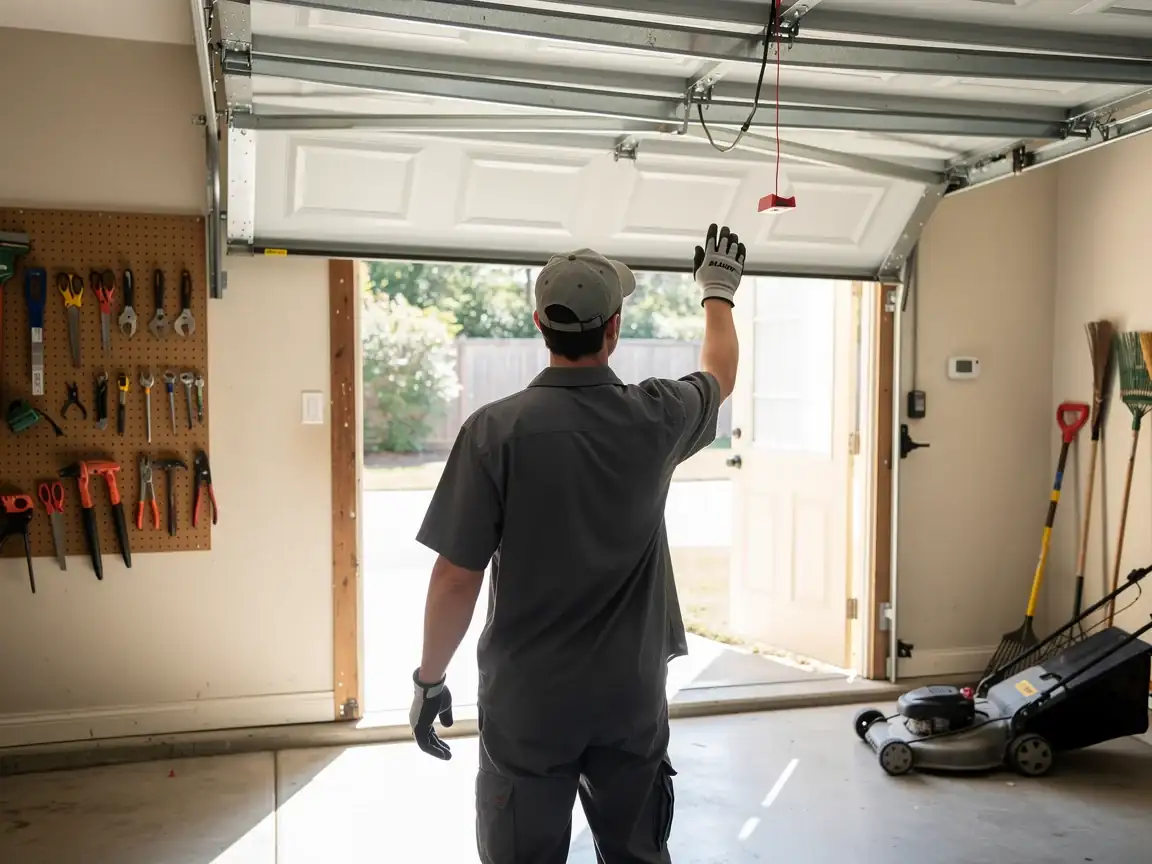
The bigger issue is usually inside the garage, not on the door itself. Most houses in this service area went up between 1971 and 2012, with the bulk clustering around 2000 across the 16 named areas we cover, which means a lot of attached garages built without much thought for heat buildup. An opener's circuit board sitting in a garage that regularly hits summer highs degrades faster than one in a conditioned space. Capacitors dry out, logic boards get flaky, and you start seeing an opener that works fine in the morning and refuses to close by evening. Springs lose a bit of tension faster too under sustained heat cycling, even in a moderate band like this one, compared to a door kept in constant shade.
None of this means you need to do anything dramatic. It means the parts wear at a rate tied to where you live, and that's worth knowing before you assume a slow opener is a wiring problem.
Leaving It Alone
A door that's a little slower to close or a little noisier on the way up isn't an emergency, and we're not going to tell you otherwise. But in a service area where the climate band is moderate heat rather than mild, those small symptoms tend to get worse faster than people expect, because the daily heat cycling keeps working on whatever's already loose.
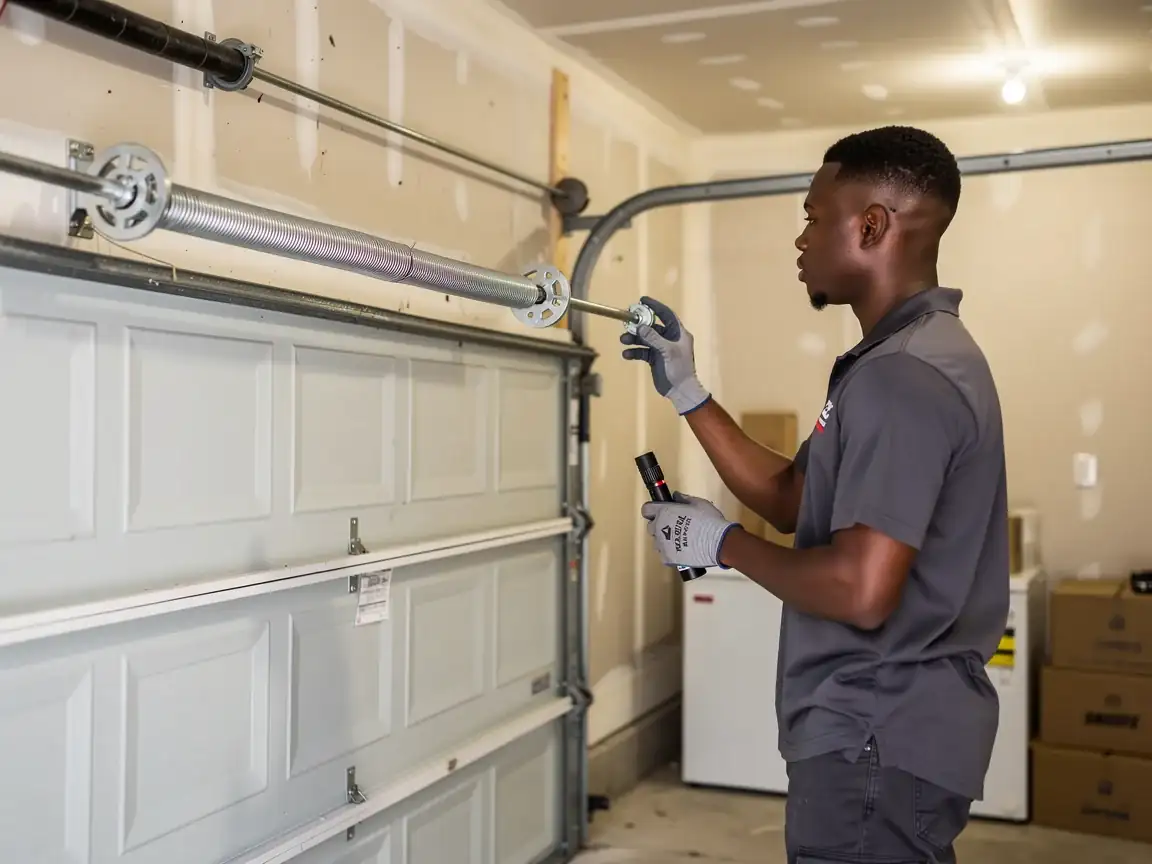
Most houses here were built between 1971 and 2012, median around 2000, so a lot of torsion springs and opener units are now fifteen to twenty-five years old - right at the edge of a typical service life even without heat stress added on top. A spring that's lost tension doesn't usually snap without warning; it sags gradually, and the opener starts working harder to compensate, which shortens the motor's life too. Ignore it long enough and you're not replacing one part, you're replacing two.
Across the service area there are 20,747 households and 17,541 owner-occupied houses, most sitting on original builder-grade door hardware from whenever the house was framed. That hardware wasn't bad, but it also wasn't built to last forever, and nobody upgrades a garage door spring until it fails. Waiting isn't reckless, but it does mean the eventual call usually involves more than a five-minute adjustment. If a door is dragging, sagging on one side, or the opener strains audibly, that's the window to get it looked at before it becomes a cable or track problem too.
What It Costs
We don't publish a price list here because what a door needs depends on what's actually wrong with it
And guessing a number before we've seen the hardware does homeowners more harm than good. What we can tell you is what tends to drive the cost in this market.
Median household income here runs $117,428
Which is above a lot of surrounding areas, and it shows in what people choose to do once a door starts failing: more owners here replace a worn opener outright rather than nurse along a dying circuit board, and more choose insulated steel doors over the thinner panel that came standard on a lot of 2000s-era builds. That's not us pushing an upsell - it's just the pattern in the repair calls we get.
The honest limitation
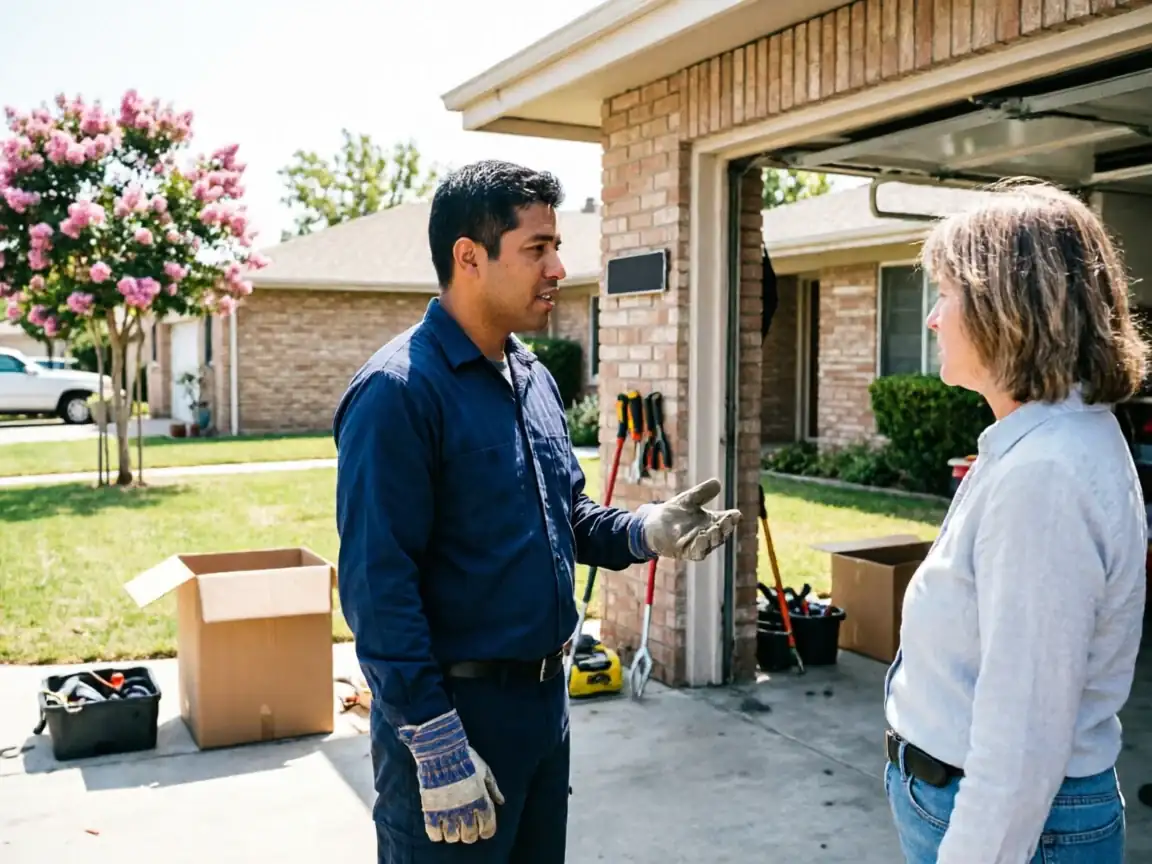
If a spring has already let go and taken the cable with it, or if the opener's logic board is fried, we're not going to quote a number over the phone with any confidence. A torsion spring job is a different cost than a full opener swap, and a door that's been dragging on a bad track for months sometimes needs more than the original complaint suggested. What we do instead is look at the door, tell you straight whether it's a repair or whether the age and condition mean replacement is the better money, and price it from there.
What Is Going On
Most of the calls we get track back to one of two things: age of the hardware or heat stress on the opener. Given that most houses in this service area were built between 1971 and 2012, with the bulk clustering around 2000, a large share of the doors we work on are sitting on original springs and original opener units that are now reaching the end of a normal service window. Add in a moderate heat climate band, and the failure pattern is predictable - opener boards go first, springs go second, and cables sometimes go third once a worn spring forces them to carry weight they weren't sized for.
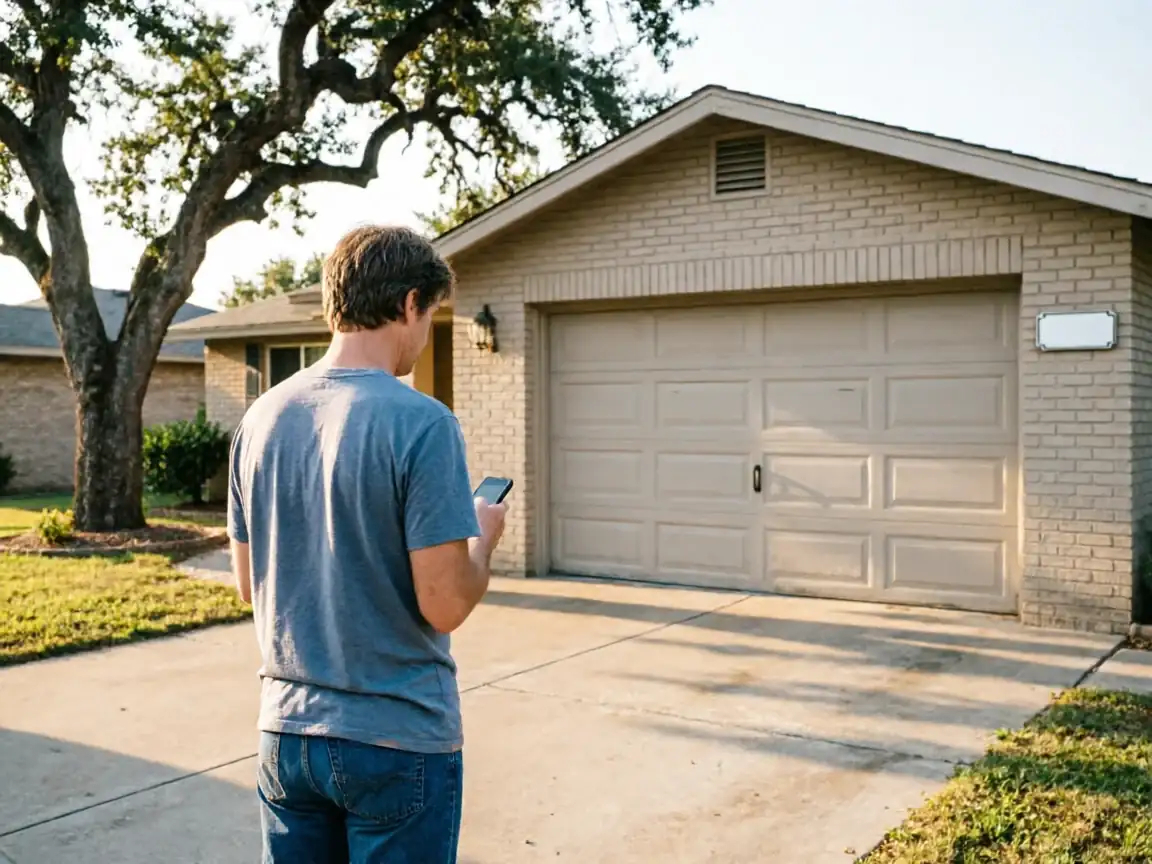
We cover ground out to Sunnyvale, 19 miles off, and Nevada, just 5 miles away, without crossing into housing stock from a different build era, so what we see on one job tends to repeat on the next one close by. That consistency is useful - it means when a homeowner describes a door that's slow to close in the afternoon heat and fine in the morning, we already have a good idea what's happening before we get there.
What we don't do is replace parts that don't need replacing. If a spring still has life in it, we'll say so. If the opener board is the actual problem and the door itself is fine, that's the only thing that gets swapped.