What Can Go Wrong
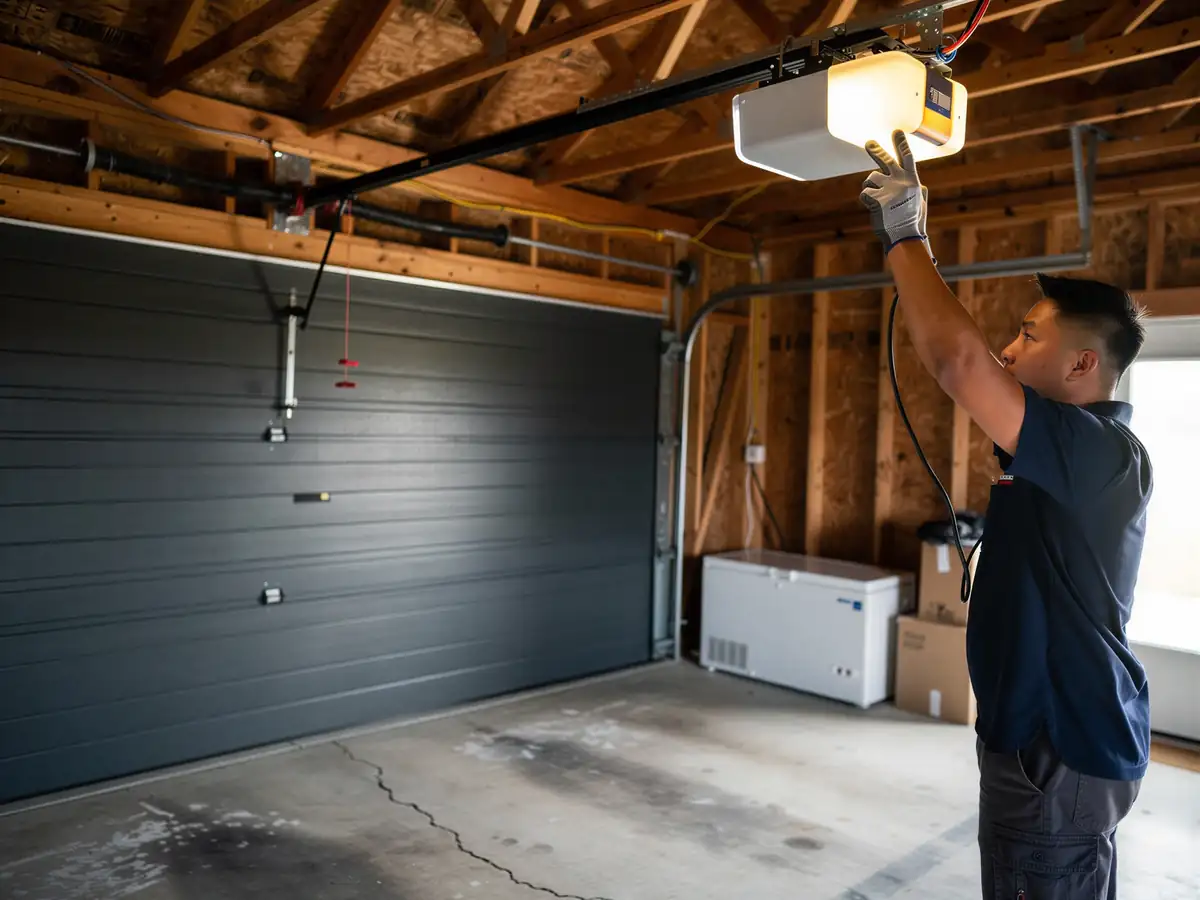
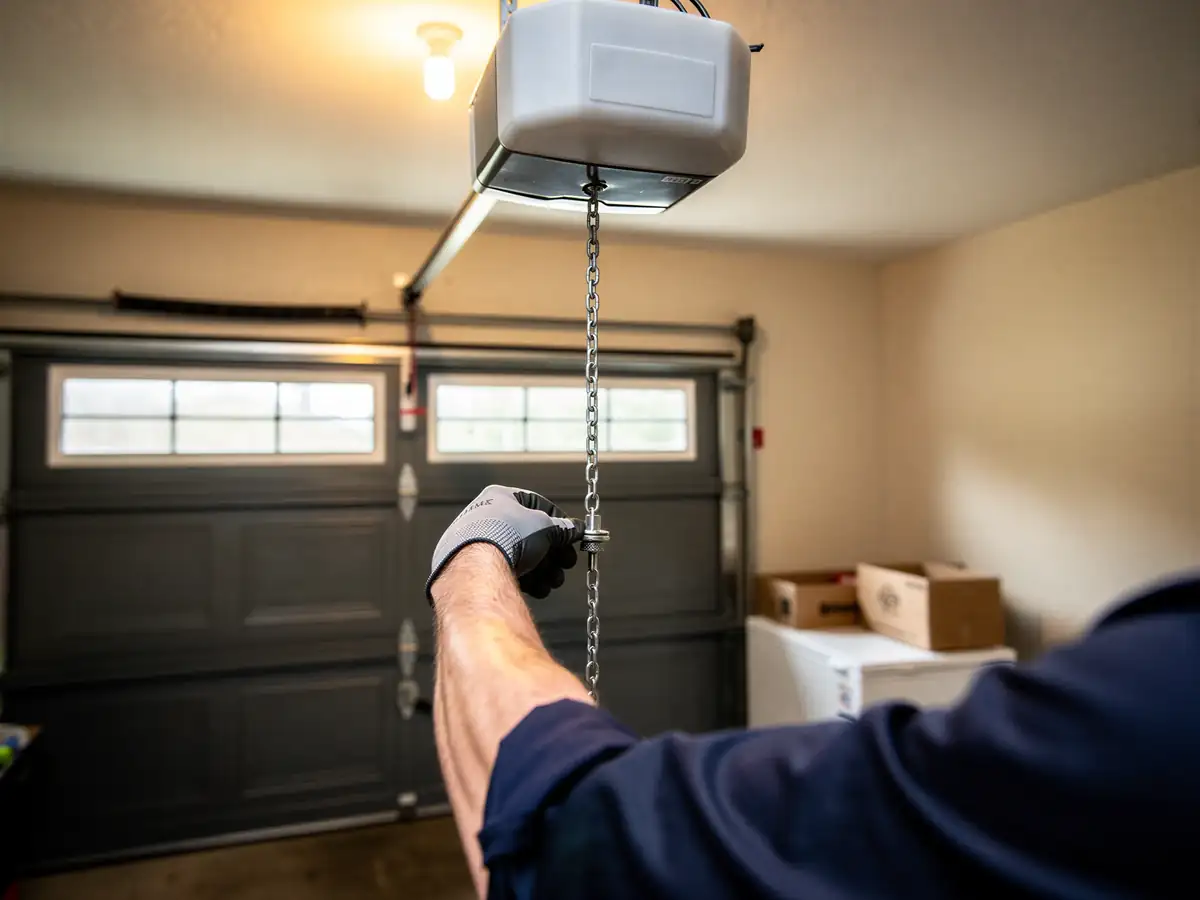
At a median household income of $178,403, Lucas sits well above the $117,428 median across our wider service area, and that changes the math on an opener call before we even get to the part that's broken. On a house in this income bracket, a $40 part swap to keep a fifteen-year-old chain-drive limping along often isn't worth the trip charge, where the same repair might make sense on a tighter budget elsewhere. We'll tell you straight when a logic board, capacitor, or gear-and-sprocket job is cheaper than a new belt-drive unit, and when it isn't. The common failures we see on openers from this era are: a cracked drive gear that strips under load, a logic board that's taken enough heat cycles to start misfiring, dead photo-eye sensors causing the door to reverse for no visible reason, and a worn trolley carriage that slips off the rail. None of these are exotic. They're what happens to a motor and gearbox that's run several thousand open-close cycles a year since the house was built.
Why This Fails Locally
Housing in this part of the service area mostly went up in the 2000s, and Lucas itself has a median build year of 2002 - right in that window. That means a lot of original openers out here are over twenty years old, pushing past the point where the capacitor, the circuit board, and the drive gear were ever designed to last. These units were also installed before rolling-code security and modern safety-sensor standards were standard equipment, so some of what we find isn't just worn out, it's outdated. The climate band here runs moderate heat, which isn't the extreme stress you'd see further south, but it still shortens the life of circuit boards mounted against an unconditioned garage ceiling, especially units already two decades old. Put those two things together - an opener old enough to be near end-of-life, sitting in a garage that still sees real summer heat - and the failure pattern in Lucas looks different from a neighborhood where most openers were installed in the last five years.
What You Are Seeing
If your door reverses halfway down for no clear reason, that's almost always a sensor alignment or a logic board issue, not the door itself. A grinding or clicking sound right before the motor stalls usually means the drive gear has stripped - it's a plastic part by design, meant to fail before it strains the motor, and on a 2002-era unit it's had plenty of time to wear down. Remote that works sometimes and not others points to either a failing receiver board or a battery that's been swapped so many times the contacts are worn. A light that blinks a set number of times when you try to close the door is the unit's own error code, and on most brands from that era it maps to either a sensor fault or a travel-limit problem. One honest limit here: if the opener is original to a 2002 build and the circuit board's gone, we'll usually recommend replacement over a board swap, since sourcing parts for a unit that old is slow and the cost often lands close to a new motor anyway.