What Can Go Wrong
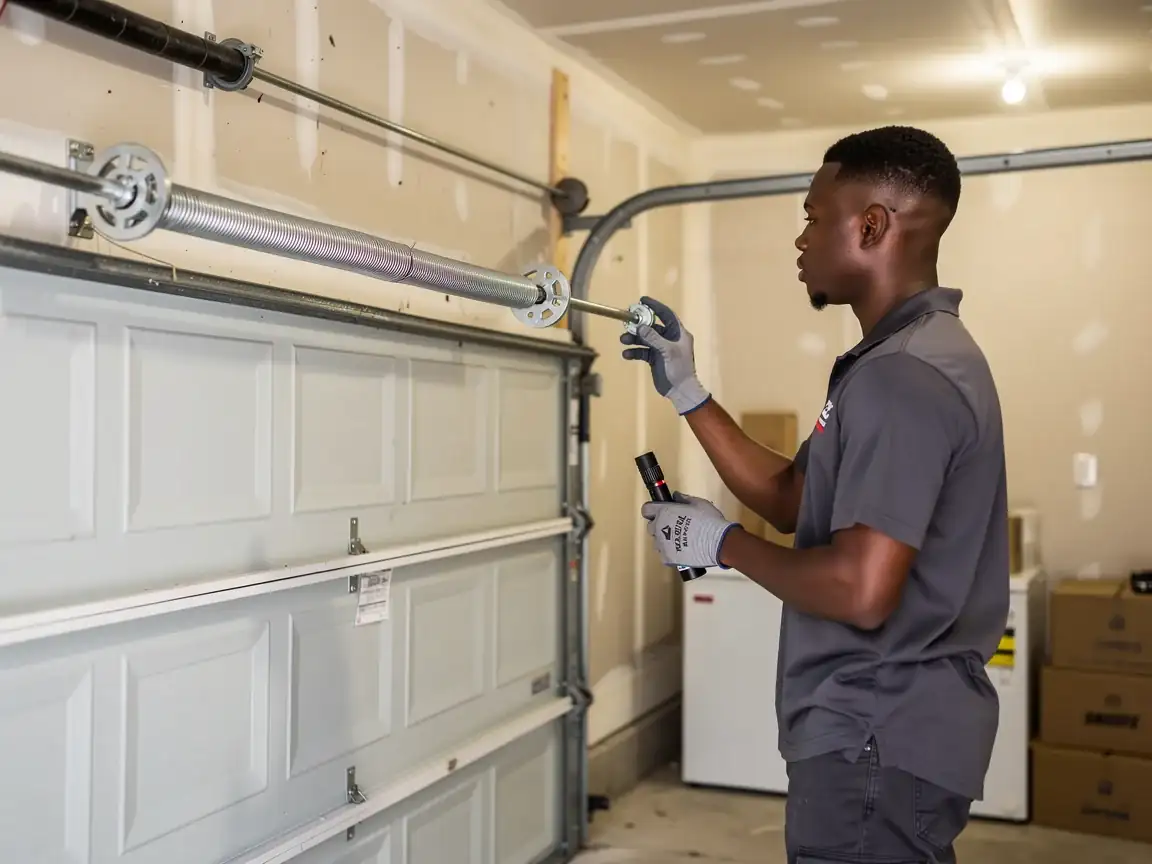
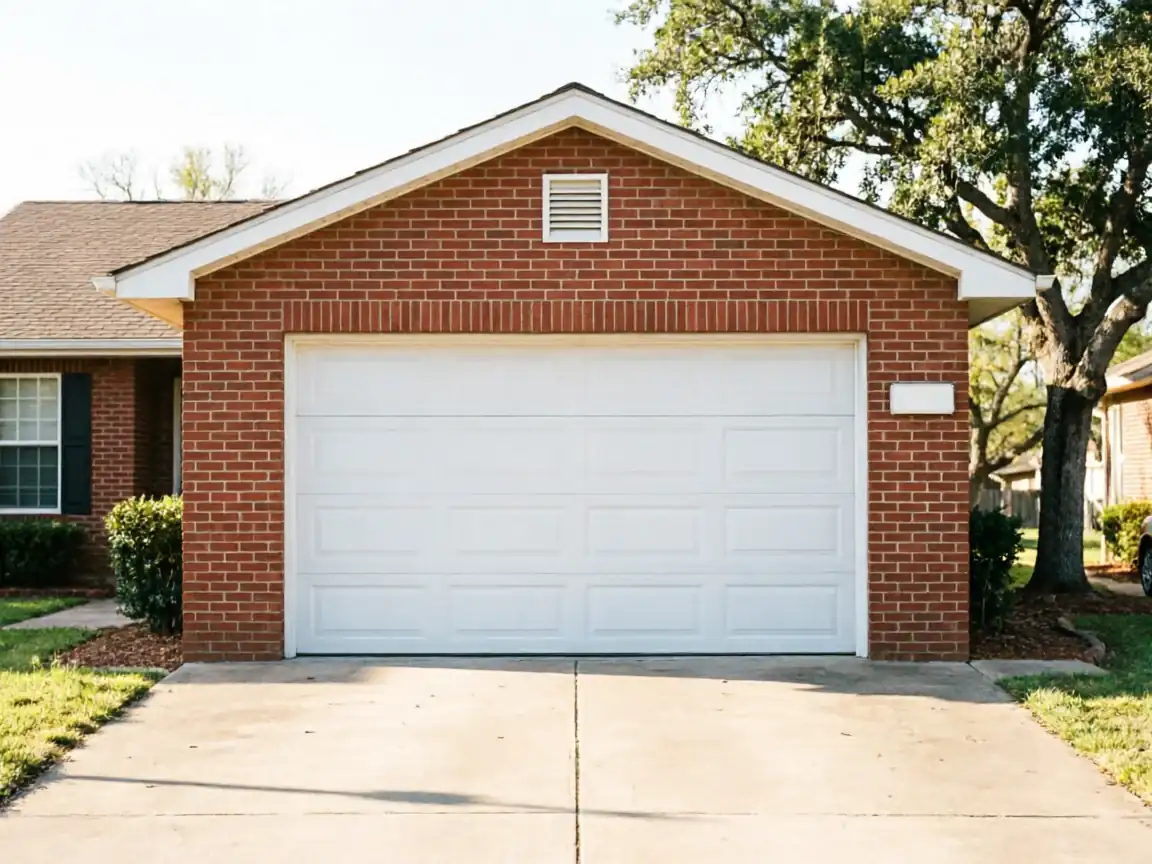
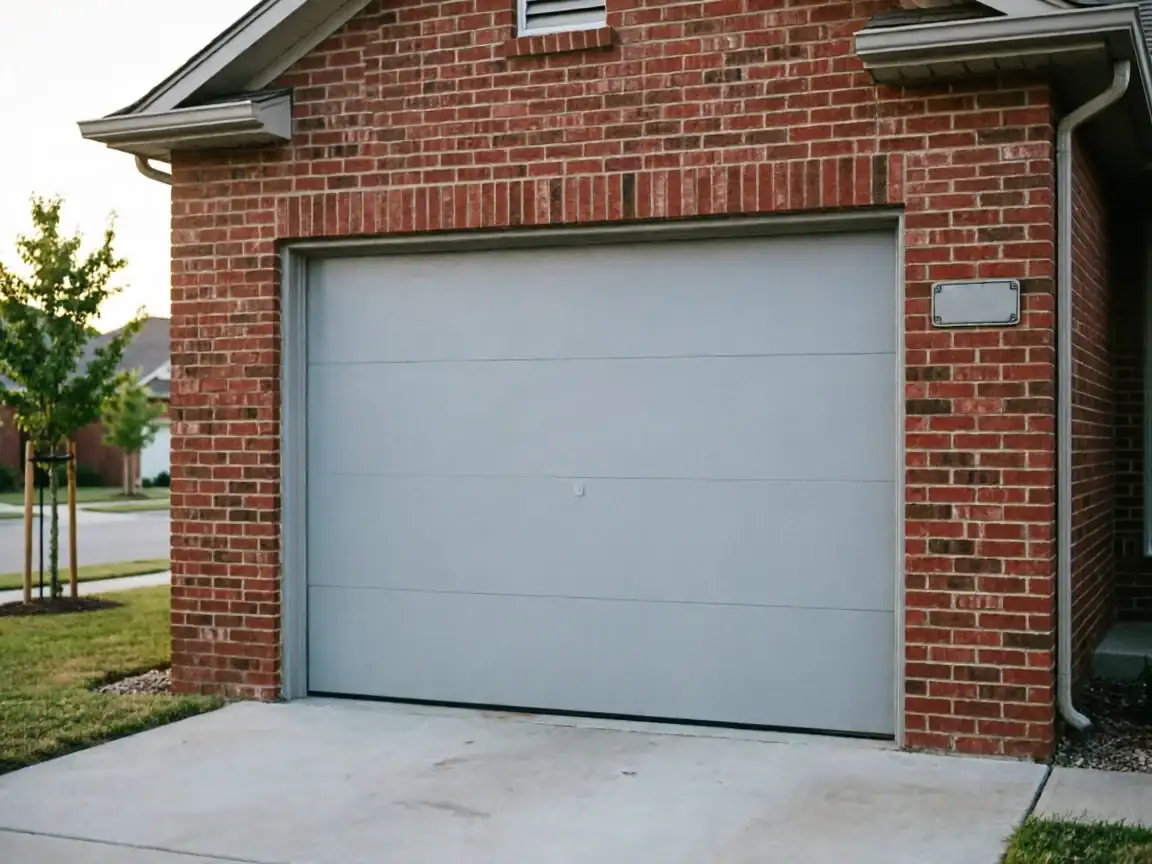
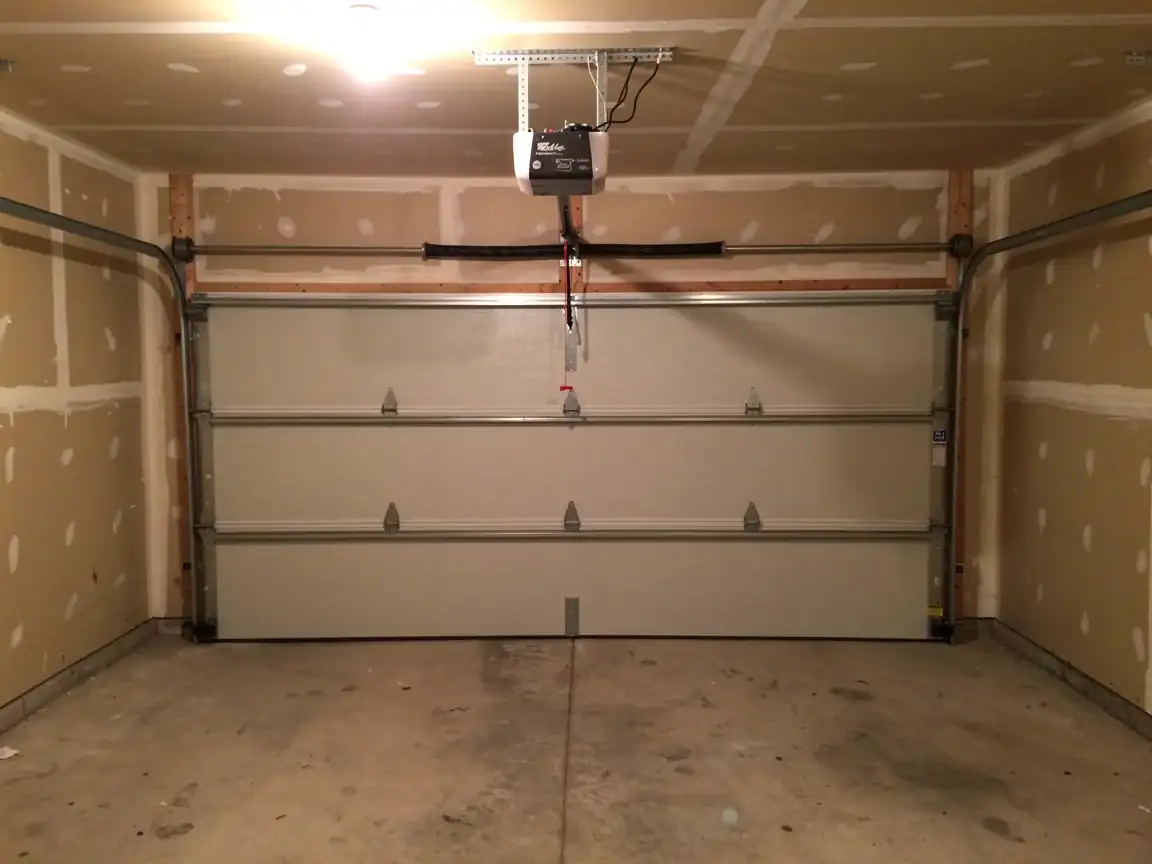
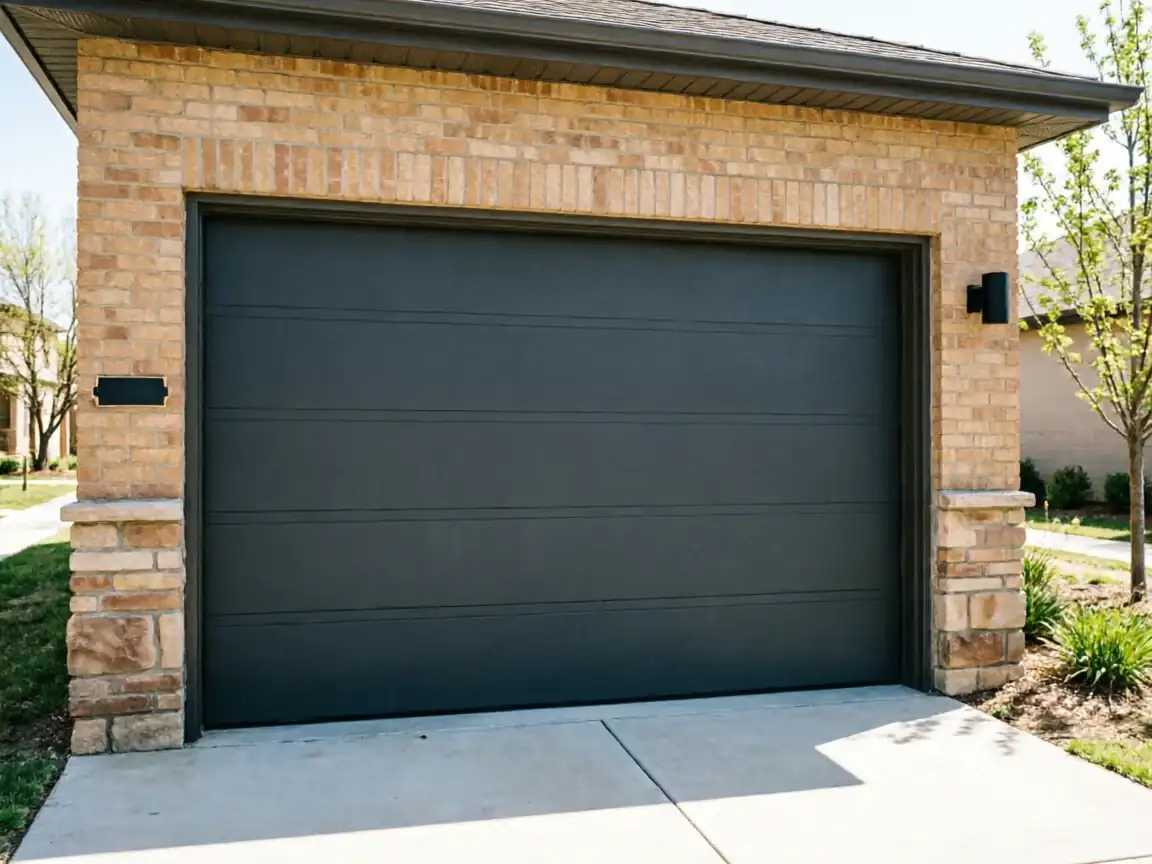
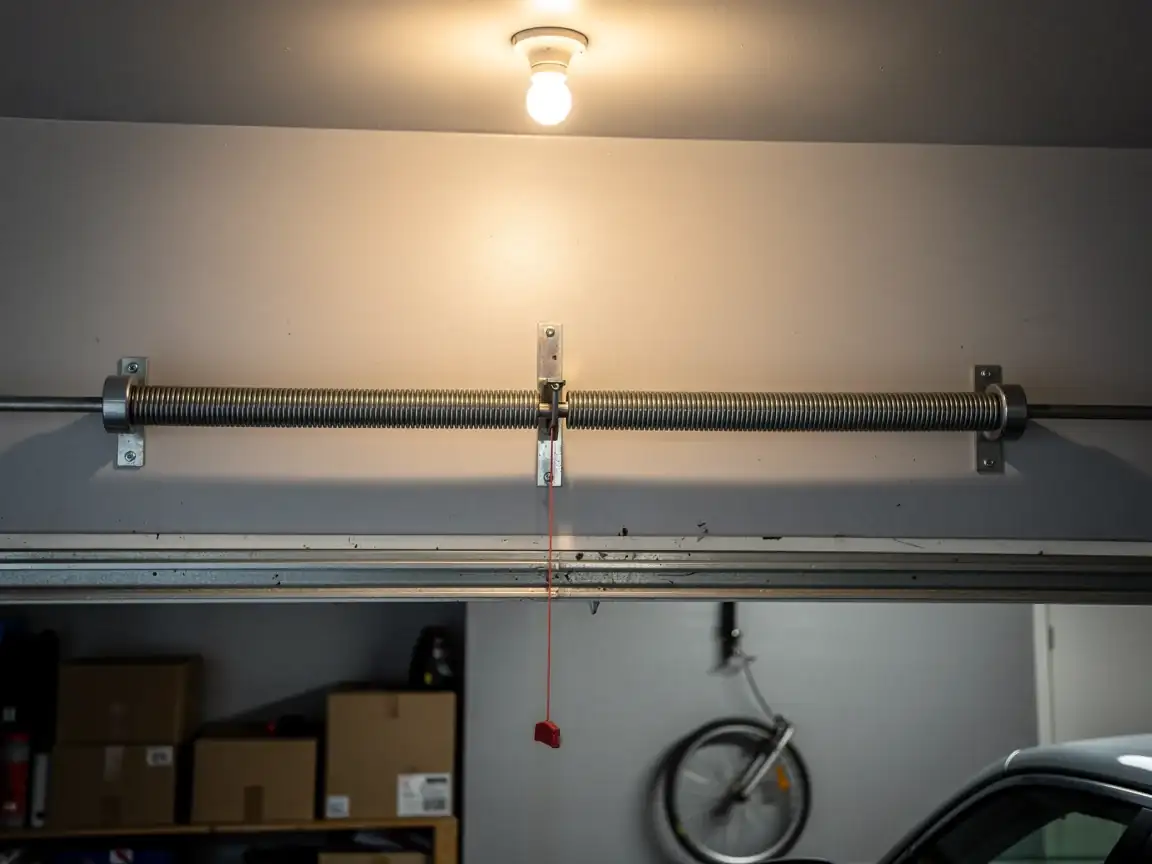
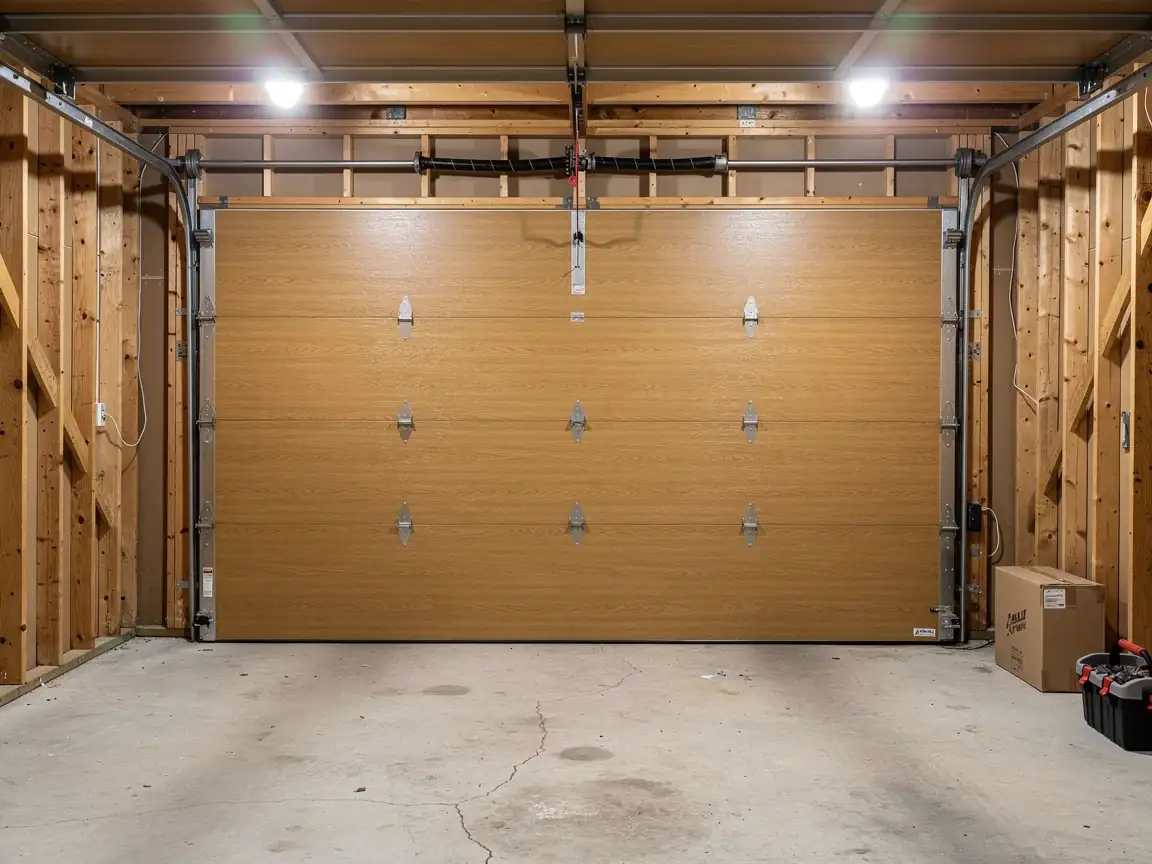
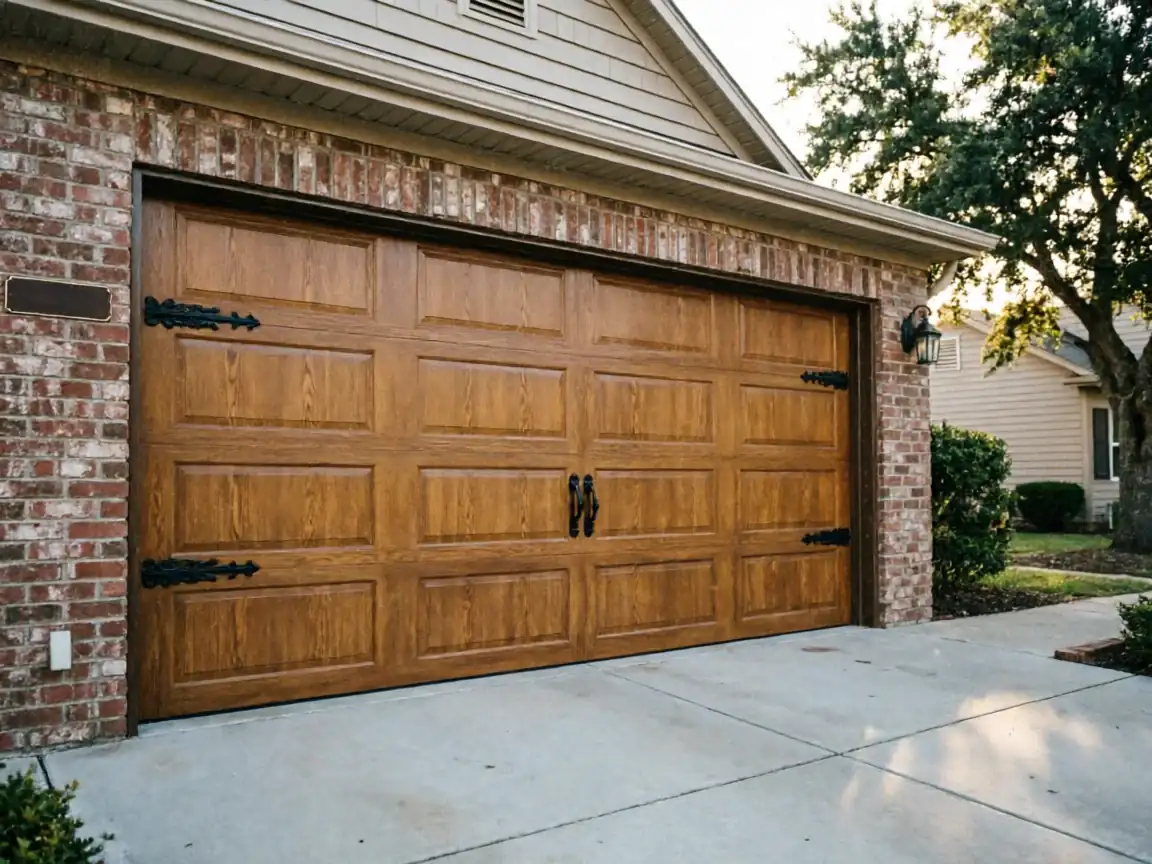
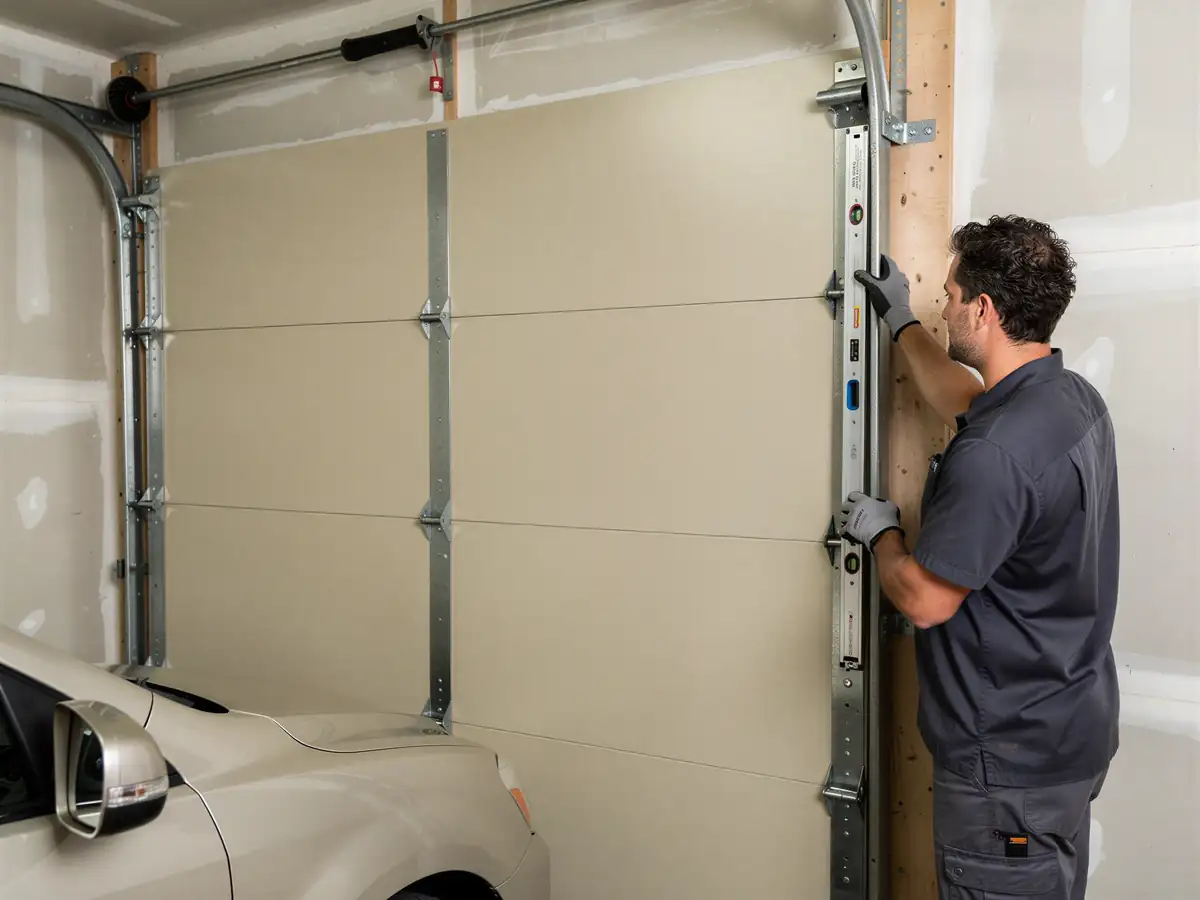
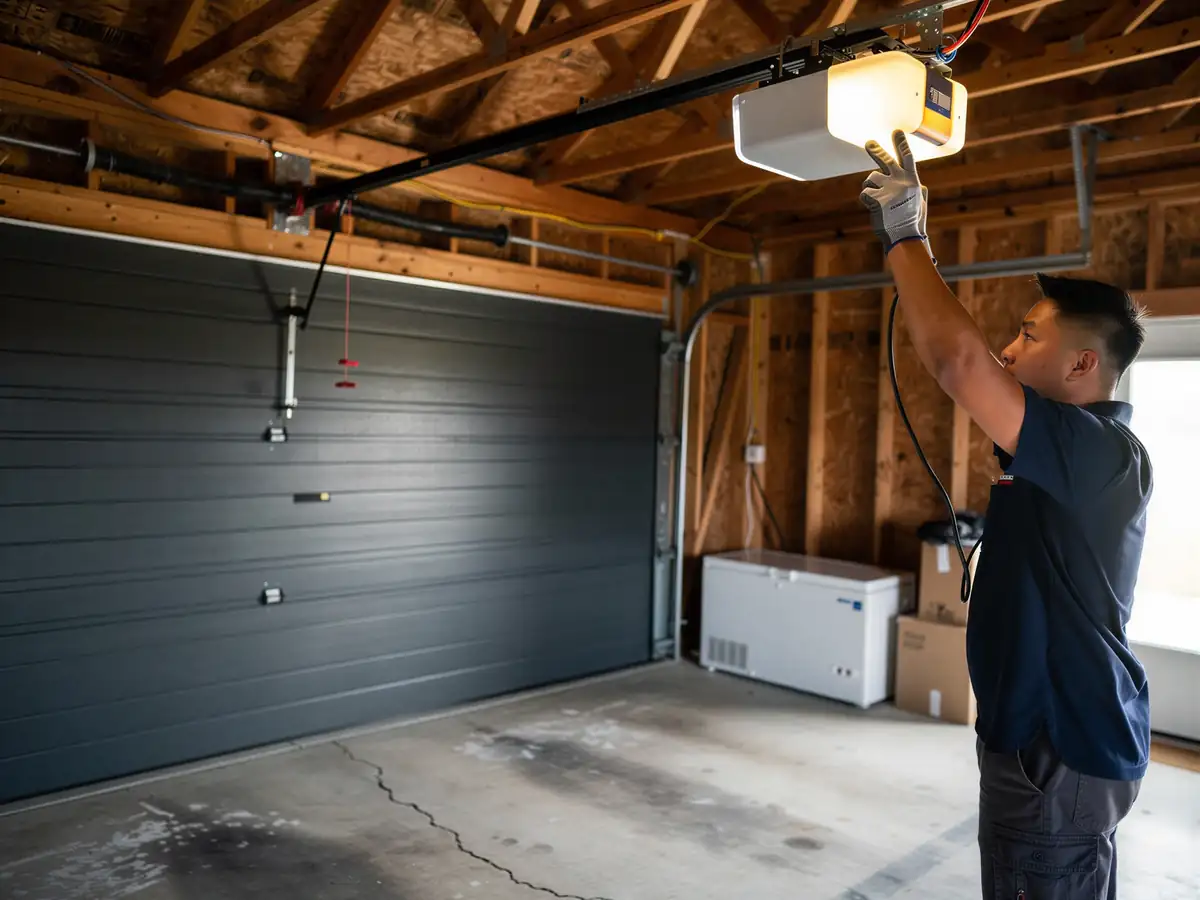
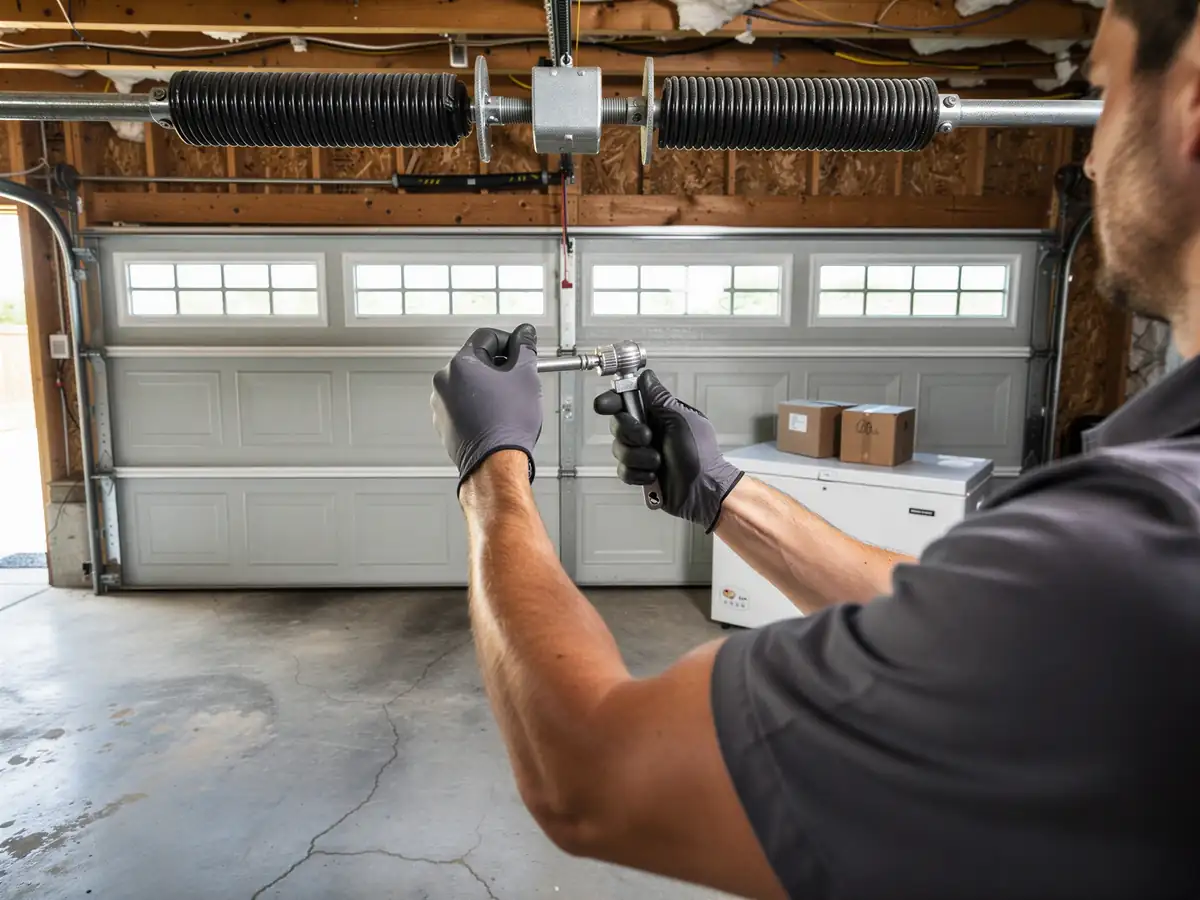
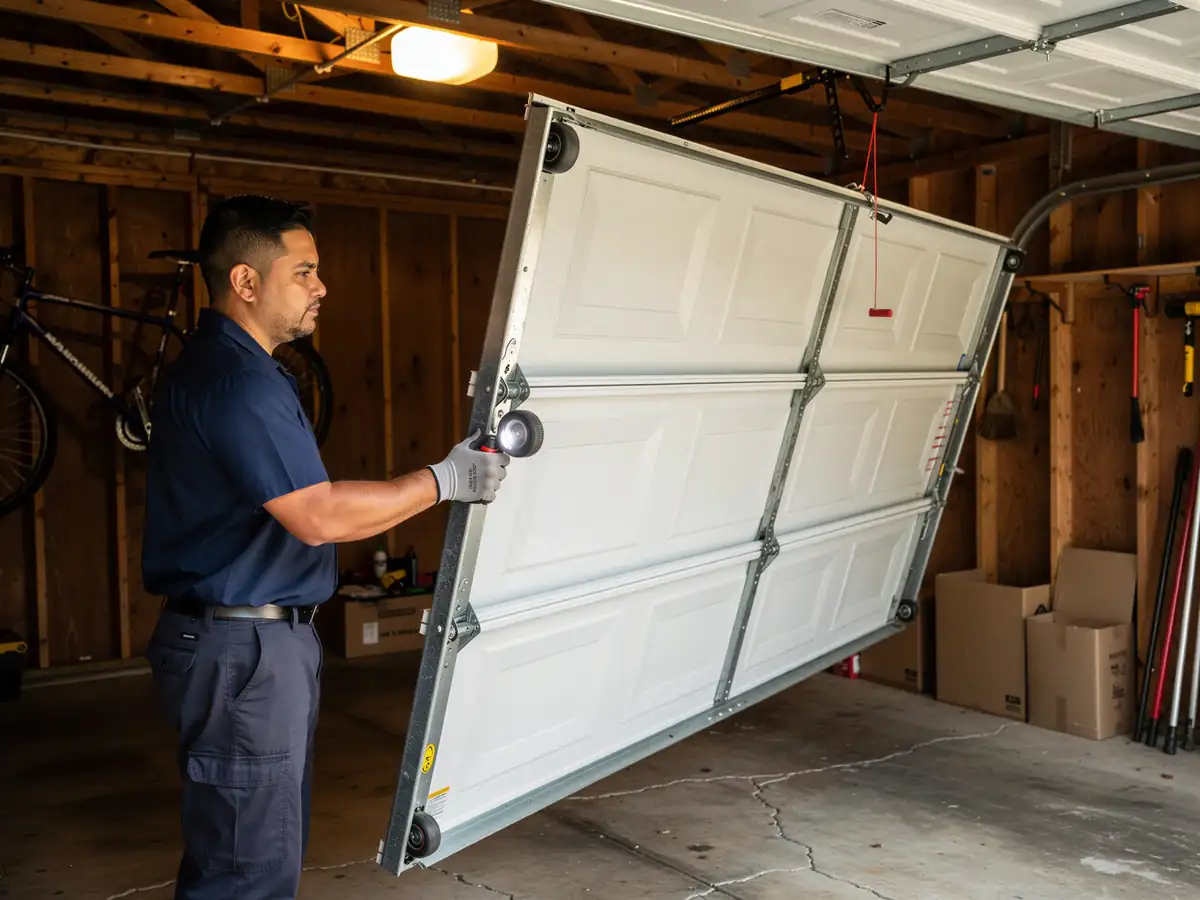
Most houses in Lucas went up around 2002, which means the openings were framed for the wider, taller doors builders were already using by then - 16-foot double bays, 8-foot clearance, steel sections with factory insulation rather than the thin single-layer panels you'd find on an older house. That's the door you're replacing, not some one-size design. On a door this size, the failure point is almost always the track and the lift system straining to move more panel than a smaller opener was ever sized for. Springs rated for an older, lighter door get swapped in during a quick fix and then fail again in a year because they're undersized for the actual weight of a 2000s-era insulated steel section. Rollers on these openings also see more side load simply because the door is wider, so nylon rollers wear faster on a double bay than they would on a single. When we install new here, we size the torsion spring, the track radius, and the opener horsepower to the door you actually have - not a generic middle-of-the-road setup. That's the difference between a new door that runs quiet for years and one that strains and squeals six months after installation.
Why This Fails Locally
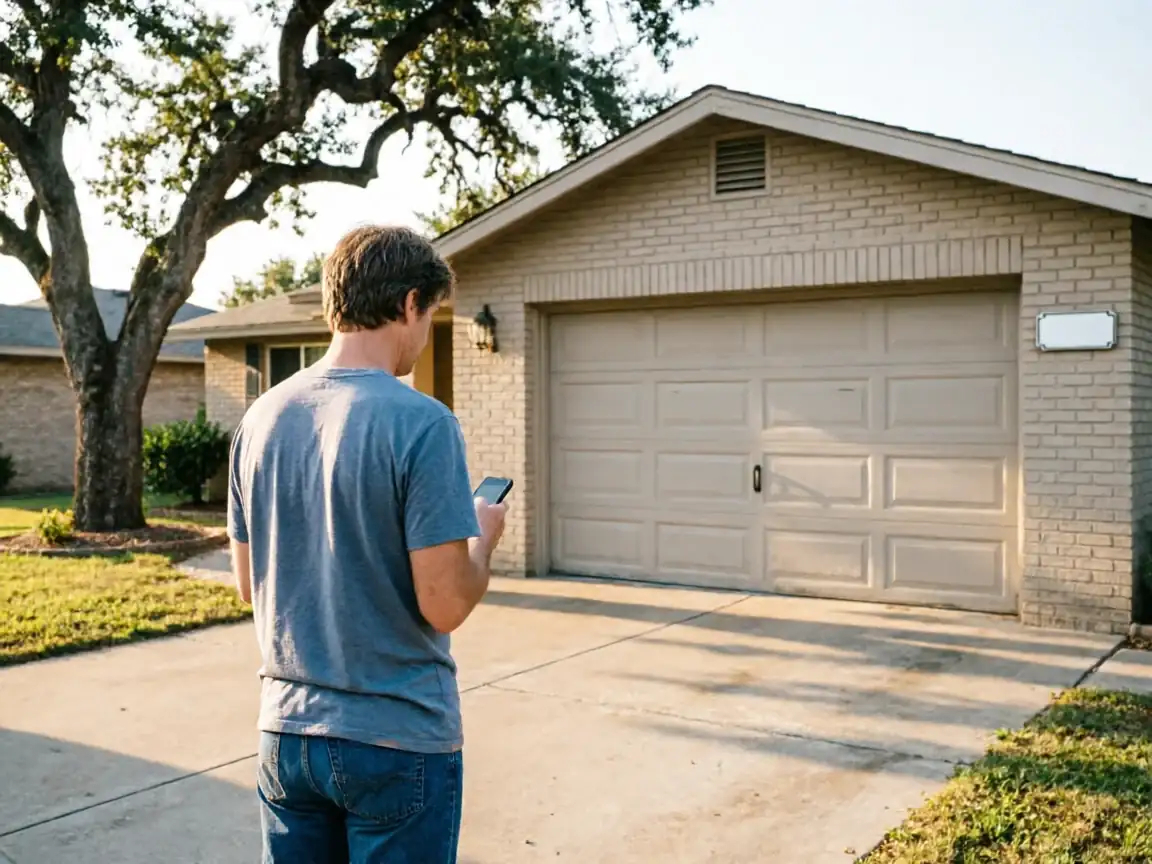
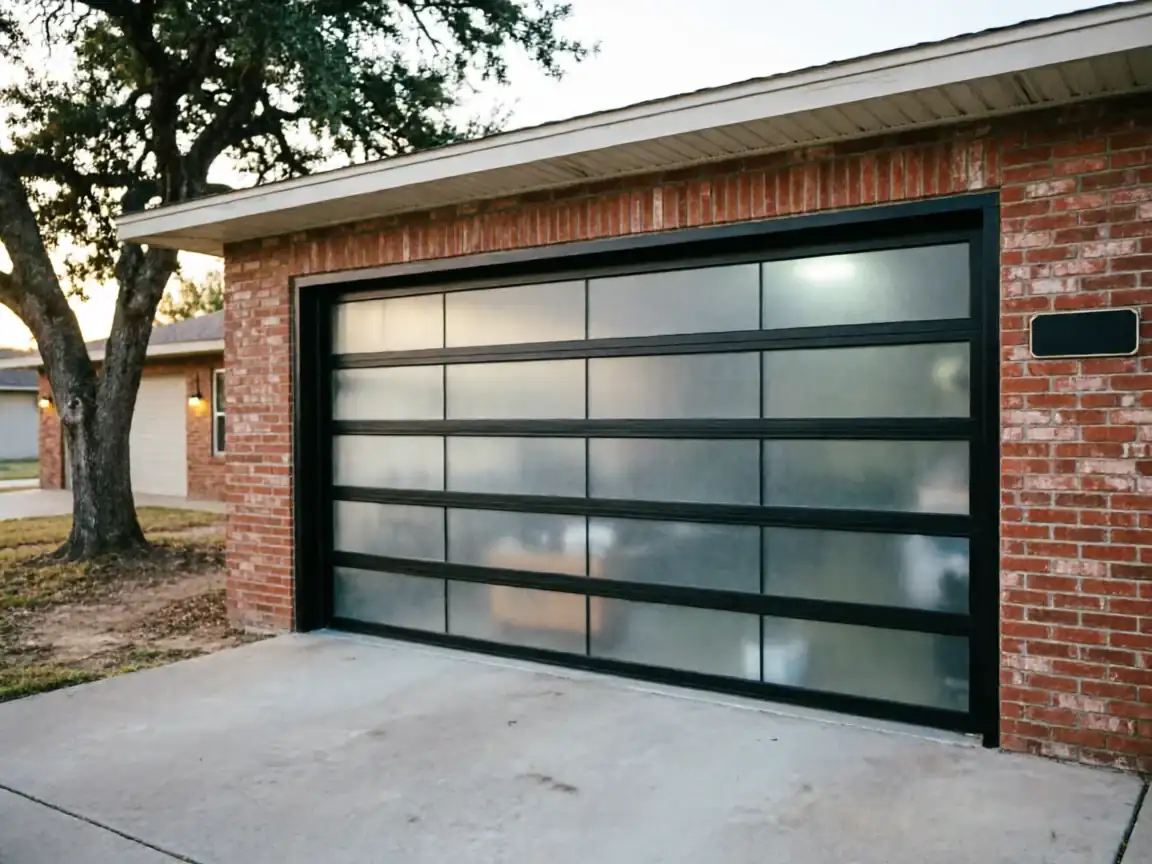
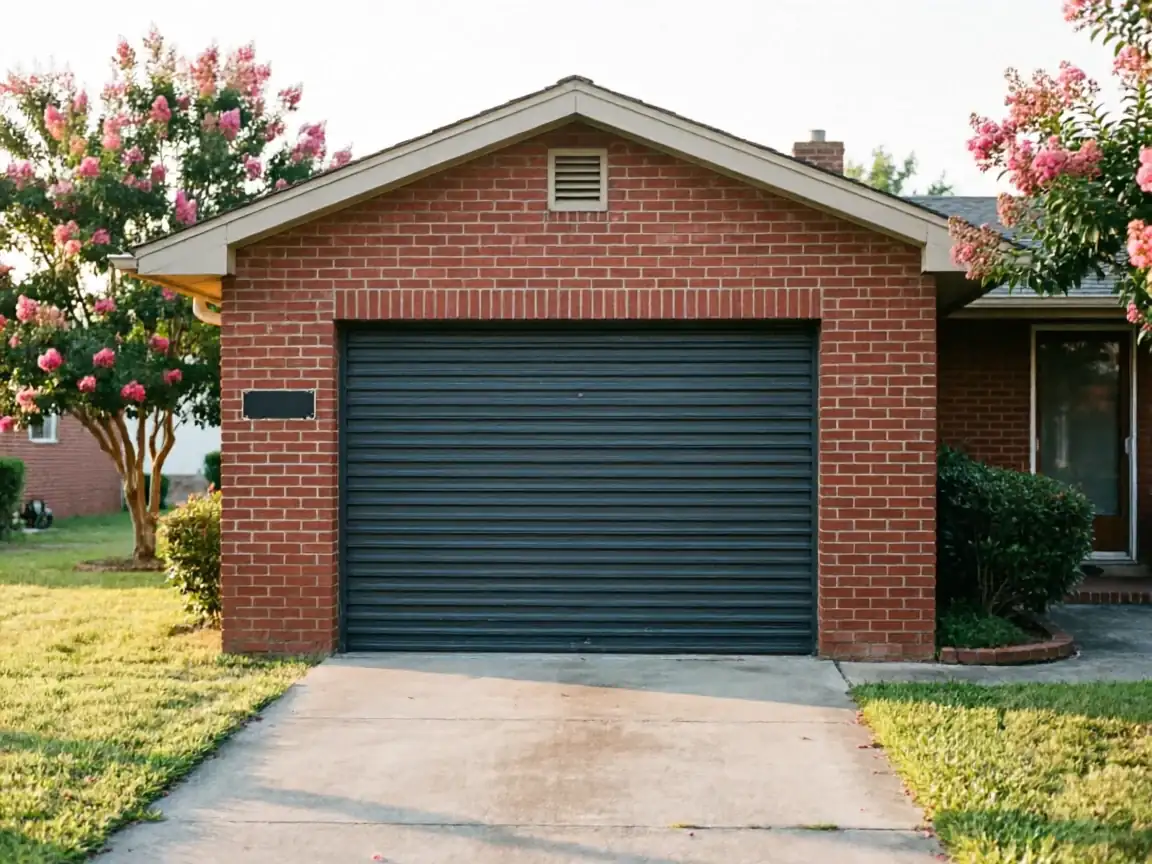
Lucas sits about 18 miles from Royse City, and the housing stock out here is noticeably newer than a lot of the smaller towns we cover closer in - most of it built in that early-2000s run rather than the older-small-town mix you see elsewhere in the service area. That matters for installation because newer framing was built to a different set of door dimensions and header heights, and a replacement door has to match that opening precisely, not just fit close enough. The climate here runs in the moderate-heat band for this region, which doesn't put the same stress on doors that true desert heat does, but steel still expands and insulation still matters for keeping a garage from turning into an oven in summer. With median household income in Lucas well above the wider service-area figure, we also see more requests here for upgraded insulation packages and quieter belt-drive openers rather than the base builder-grade door - homeowners asking for the option, not just the minimum that passes.
What You Are Seeing
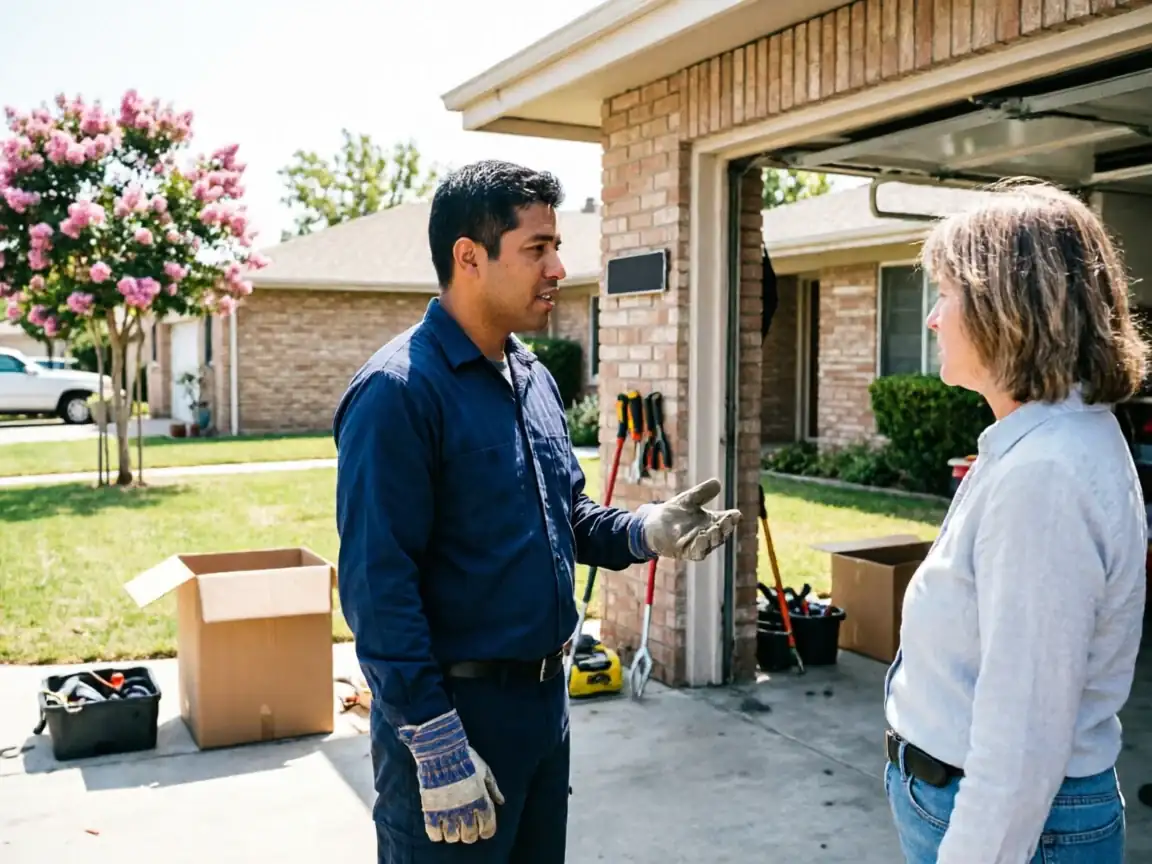
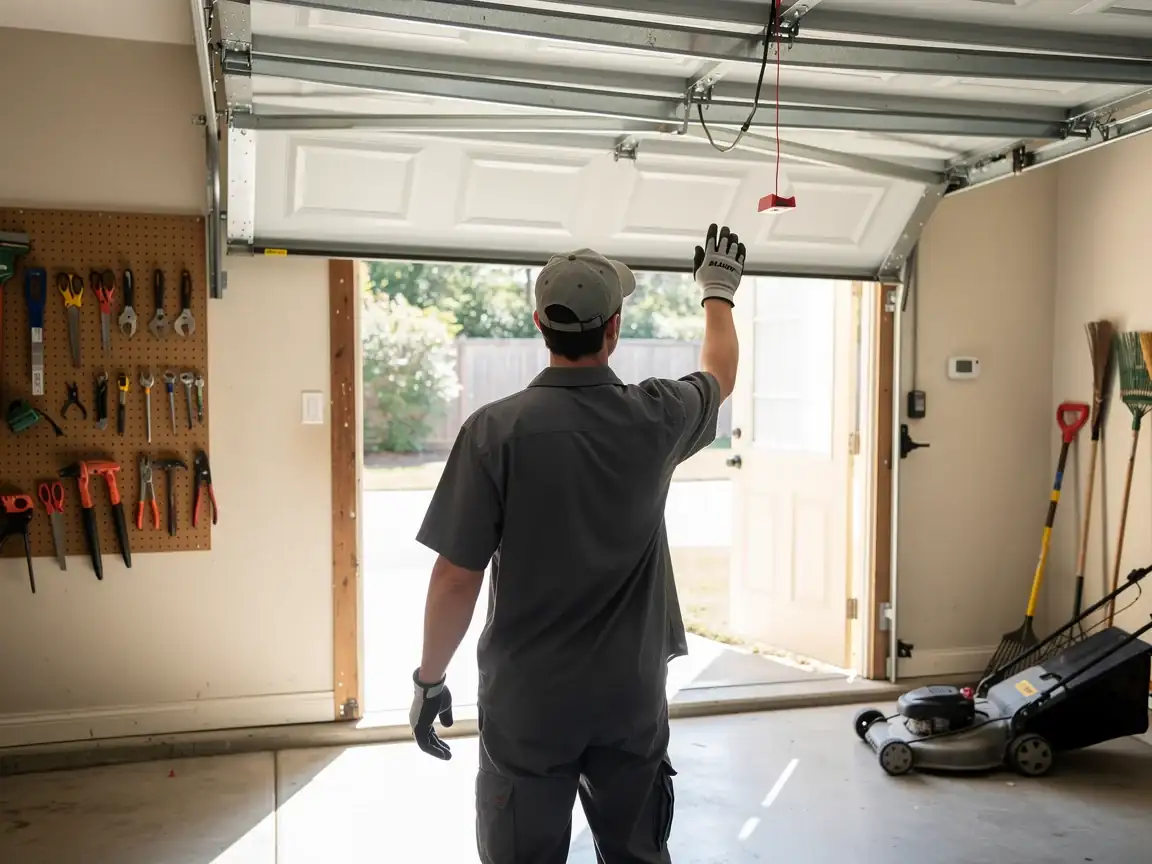
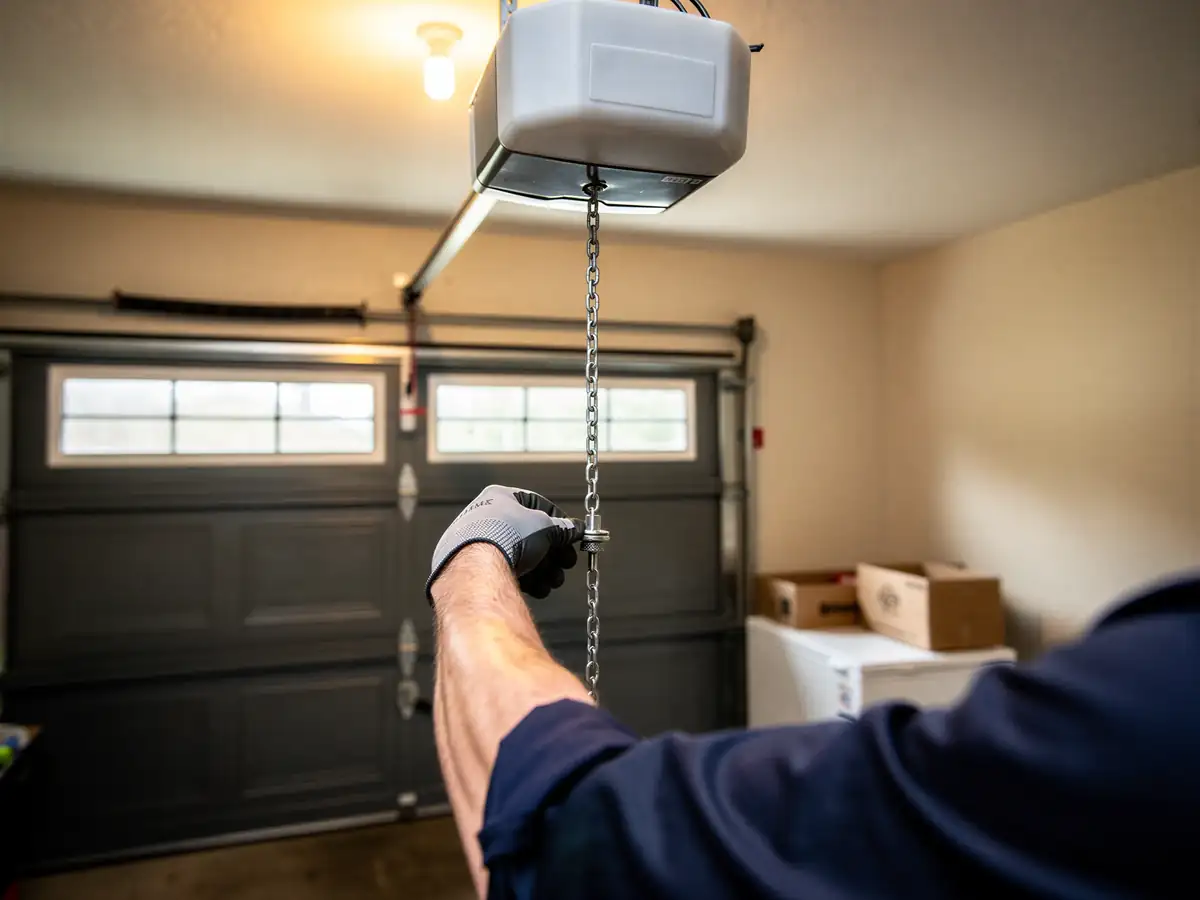
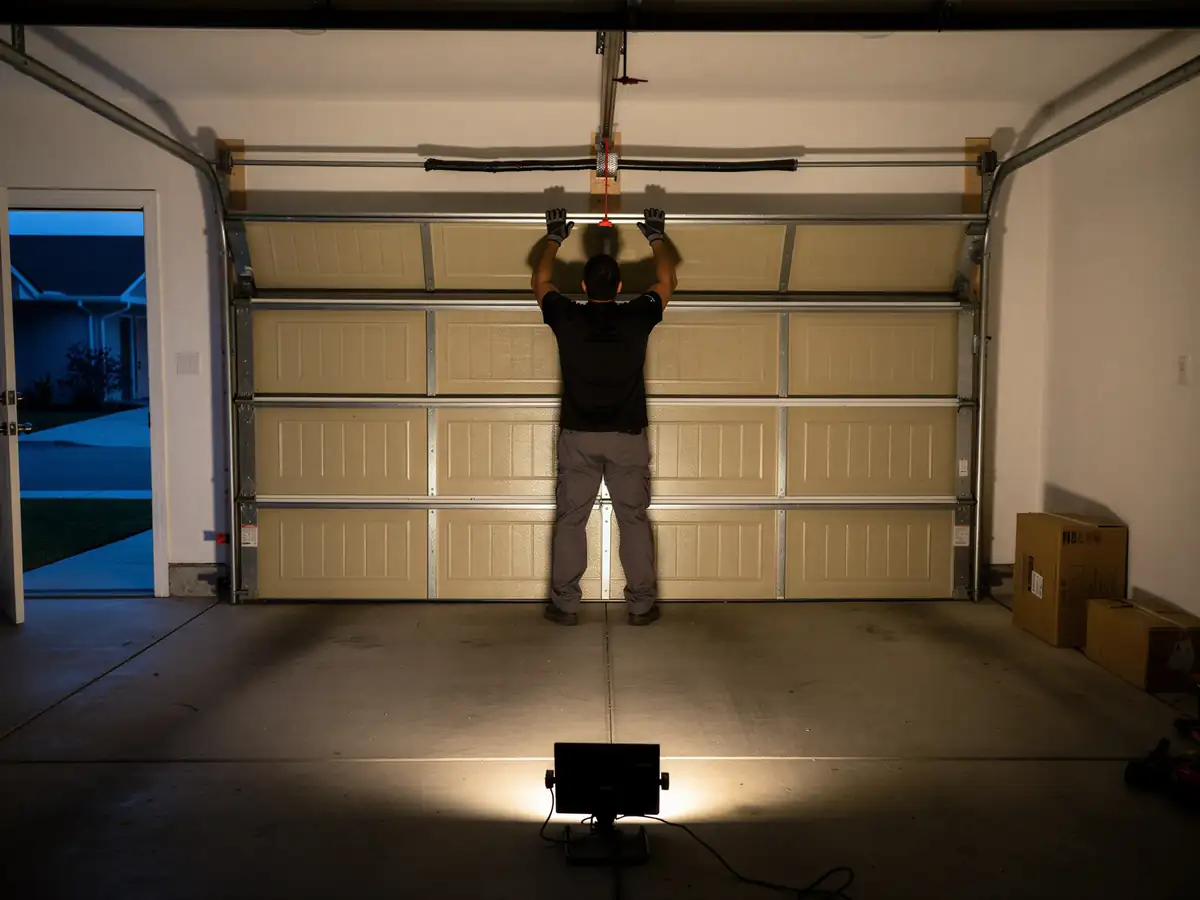
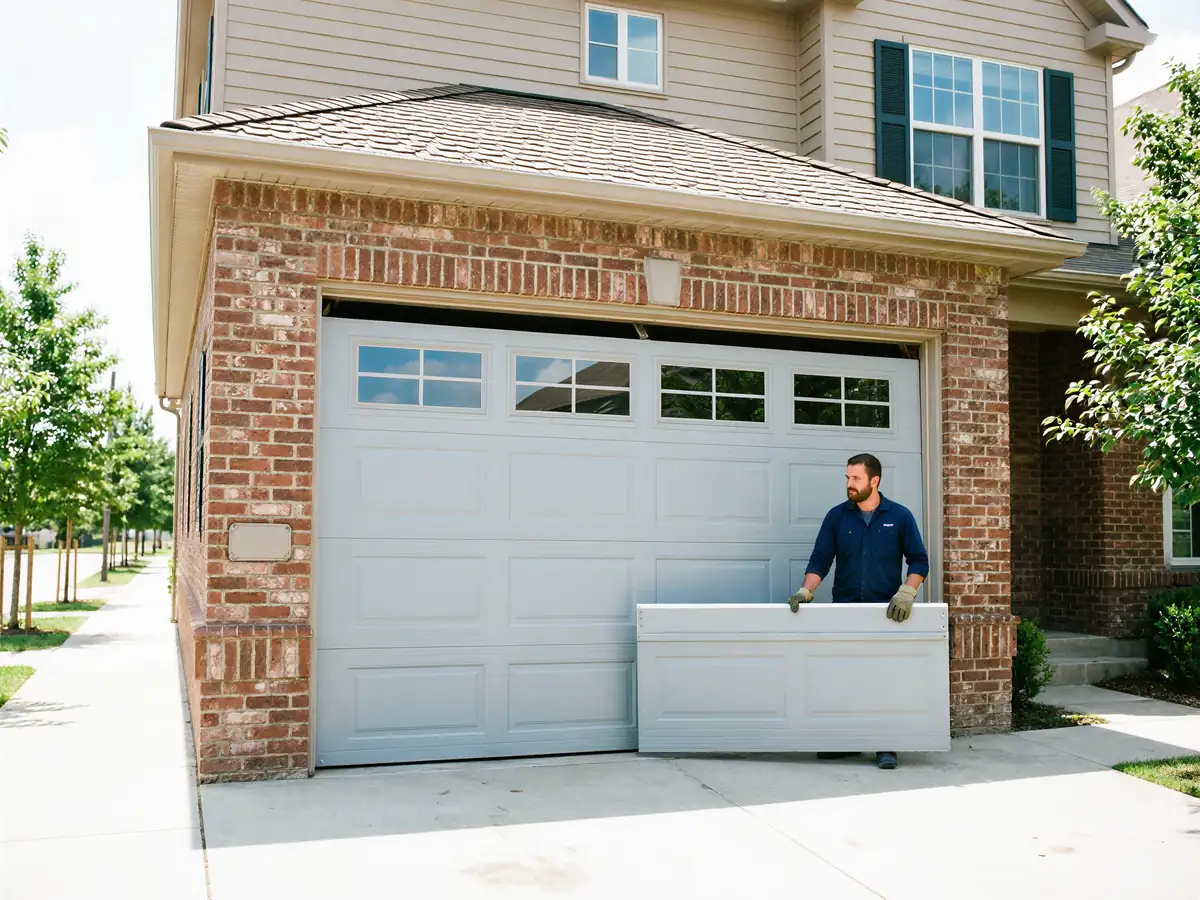
If your door is sagging in the middle, binding partway up the track, or the opener strains and reverses before it reaches the top, that's usually the door telling you it's outweighing its hardware - common on these early-2000s double-bay openings once the original springs or rollers start to go. A door that's just gotten loud, with rattling panels or a opener that groans, isn't necessarily done; sometimes it's a track alignment or roller issue, not a reason to replace the whole unit. We'll say plainly when a repair is the better call - we don't push a new install on a door that still has life left in the springs and track. But if the panels themselves are dented, delaminating, or the insulation core has broken down, that's a door that won't hold up to another round of cheap fixes, and replacement is the honest answer.