What Can Go Wrong
Royse City Garage Door Pros covers a service area where houses were built anywhere from 1971 to 2012, with the median landing around 2000. Caddo Mills sits on the older end of that range - most houses out here went up around 1985, a good 15 years ahead of the area median. That gap matters more than it sounds like it should.
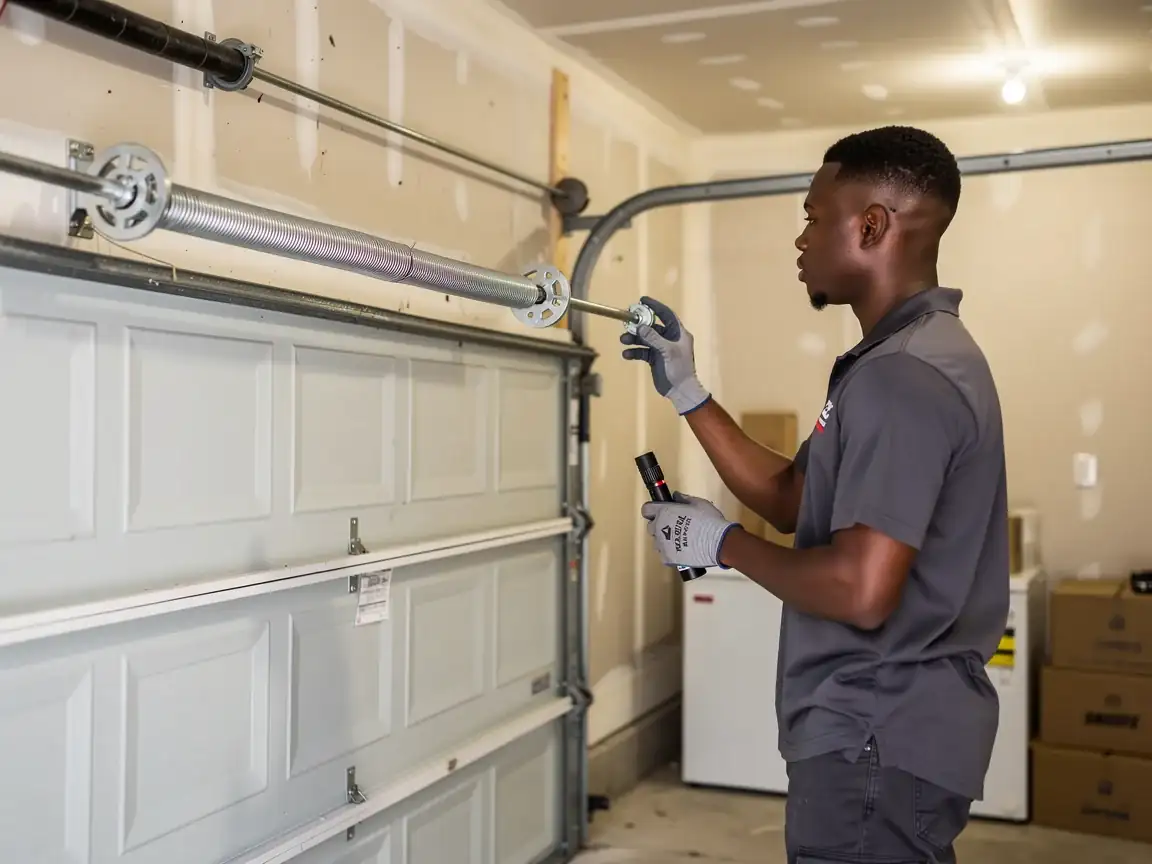
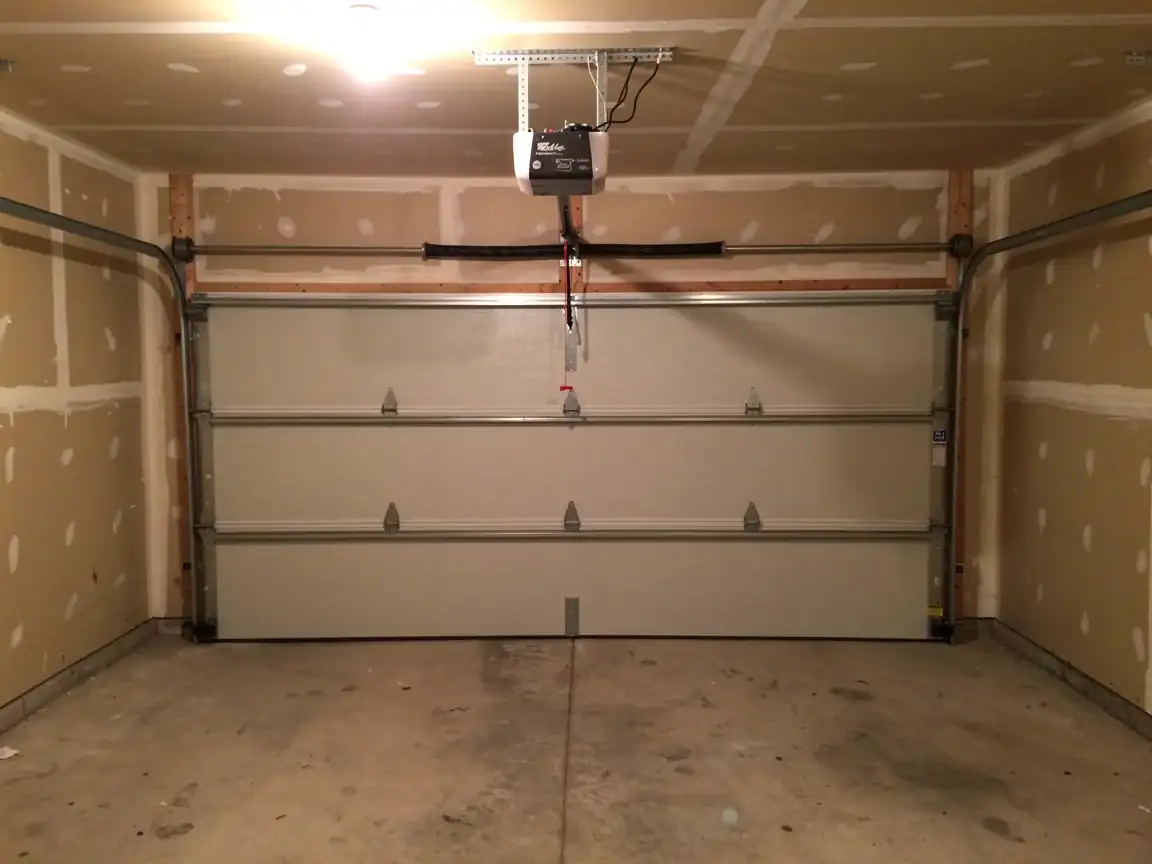
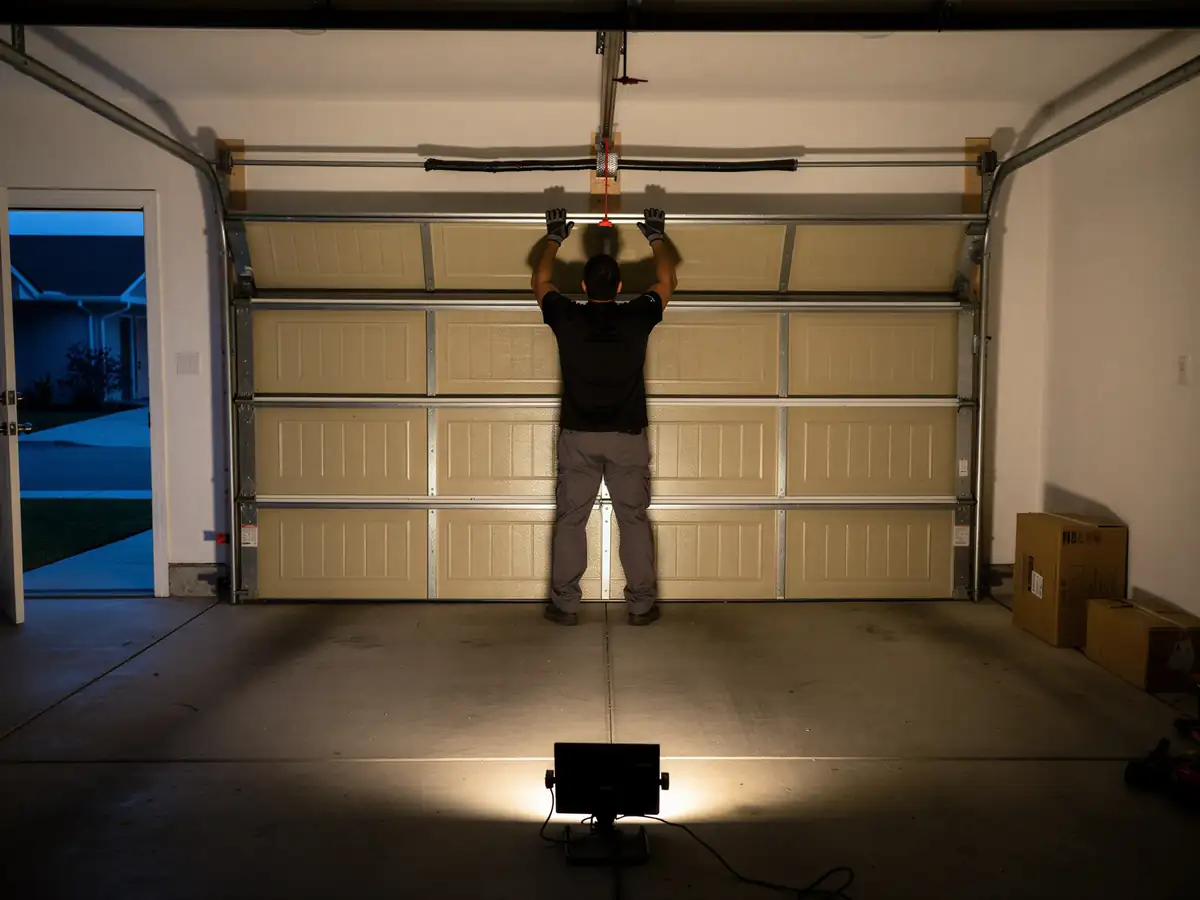
A door installed in the mid-1980s is on its second or third spring set by now, sometimes with hardware nobody has upgraded since. Extension springs over the door track were still common in that era, not the torsion bar setups that came standard on newer construction elsewhere in the service area. When one of those stretched side springs goes, the door doesn't just stop - it can drop unevenly, binding in the track or putting load on a cable that was never meant to carry it alone.
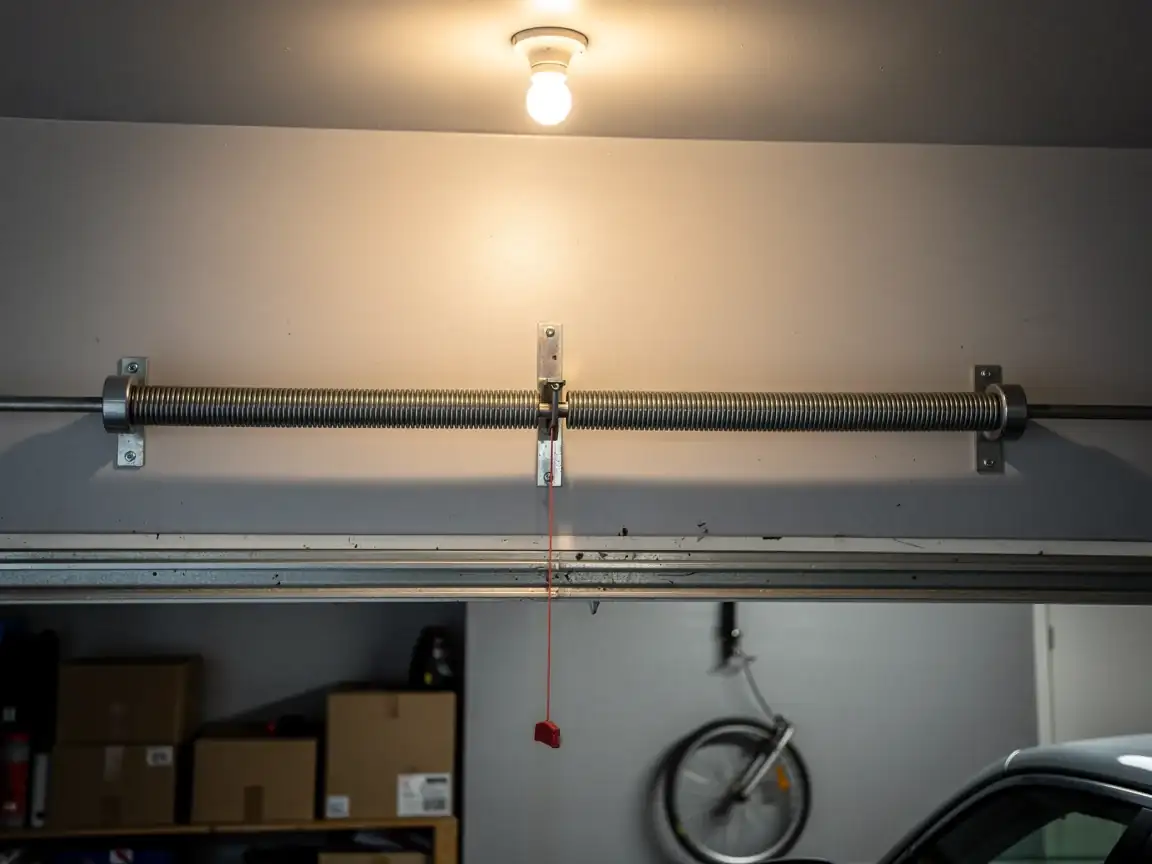
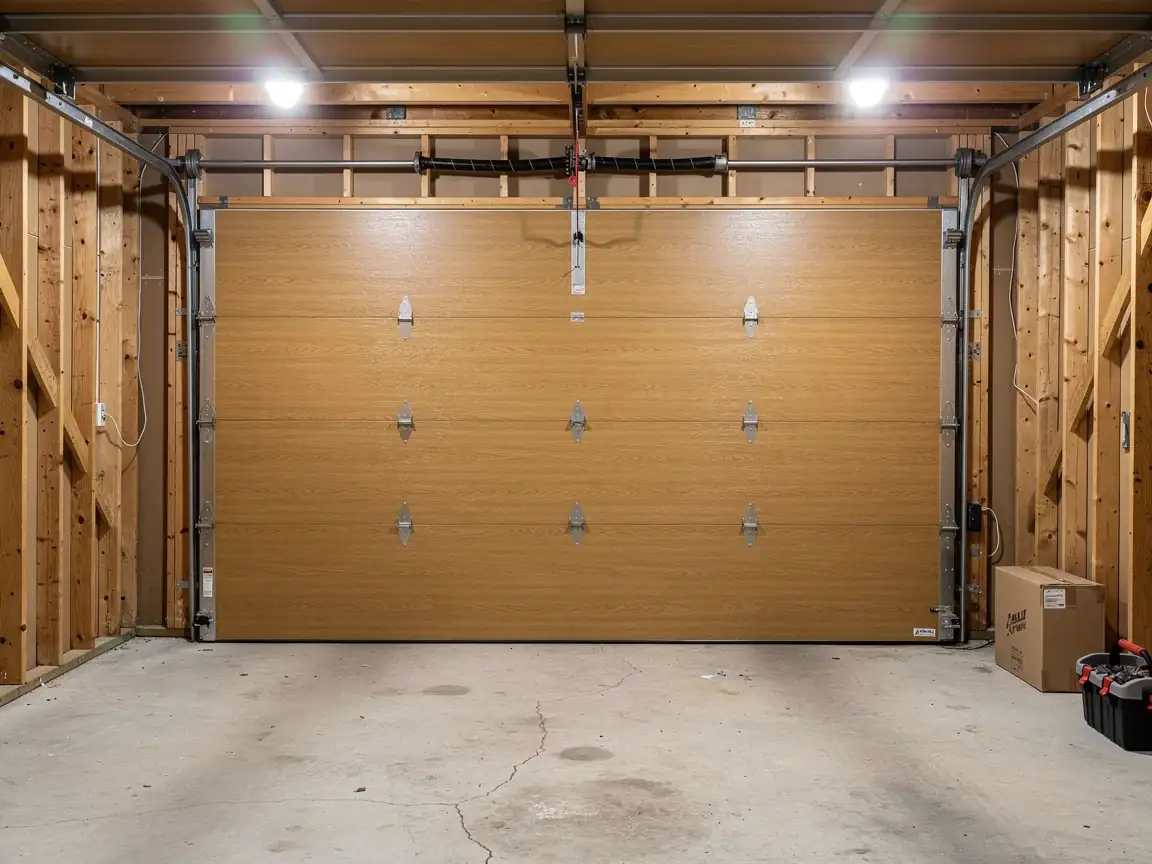
We also see broken torsion springs on doors that got upgraded at some point, since not every 1985 house still has its original hardware. Either way, the fix starts with figuring out which system is actually on the door, not assuming it matches what's standard today.
What the Fix Involves
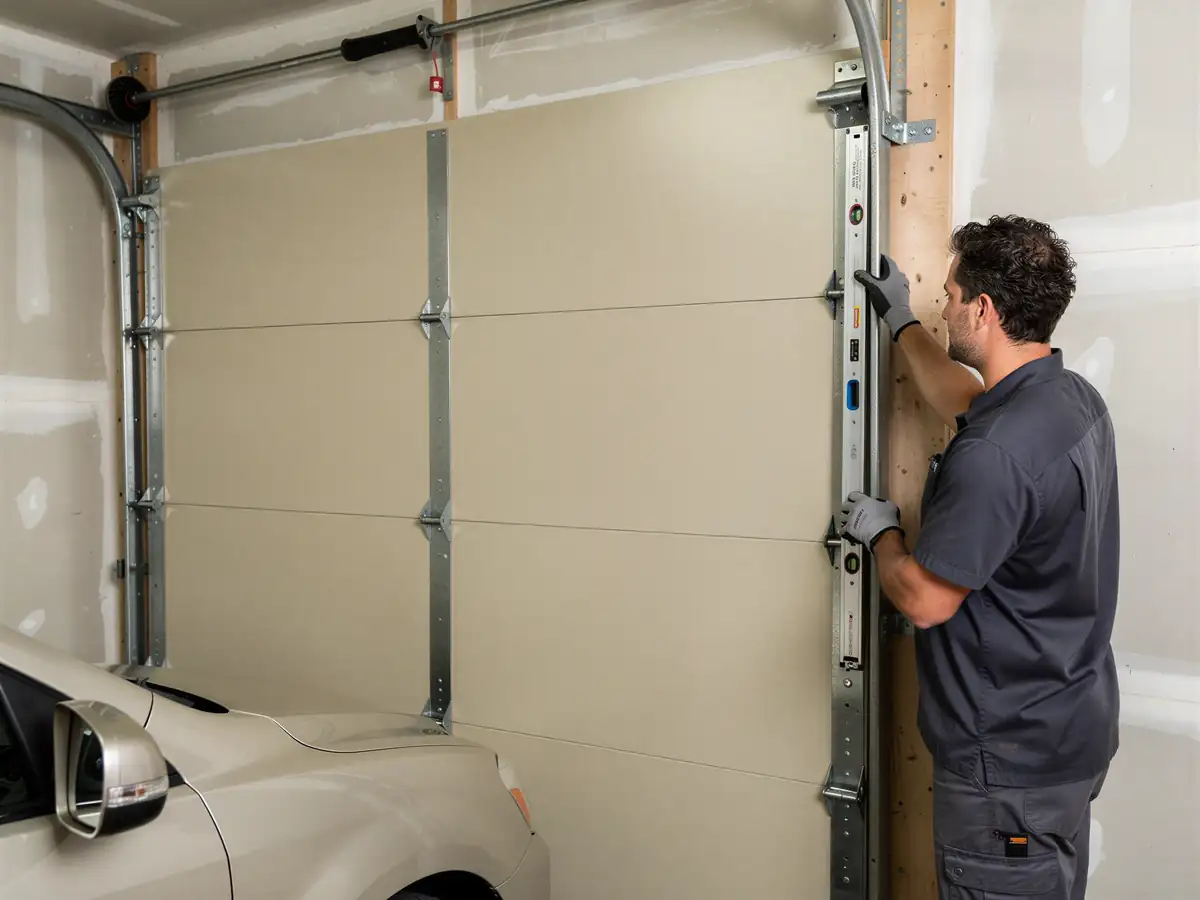
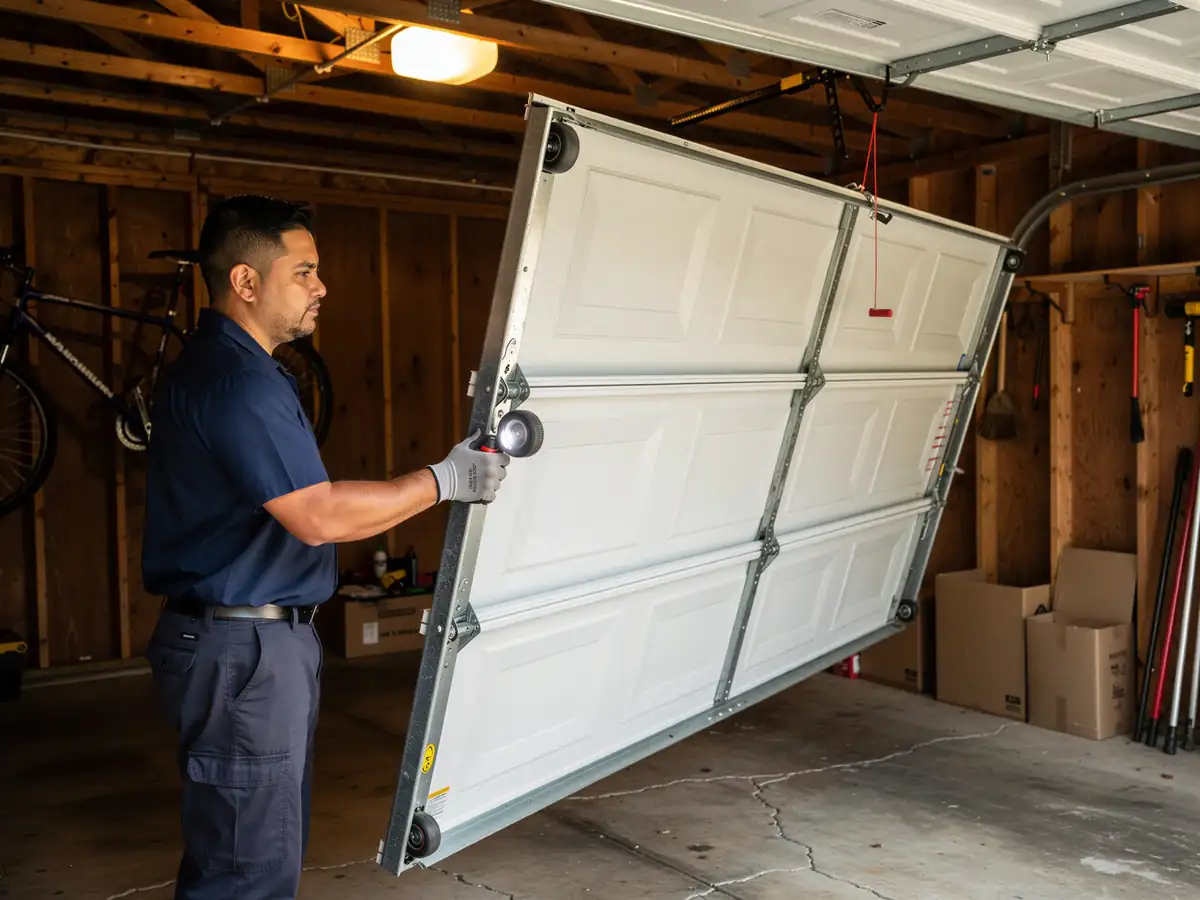
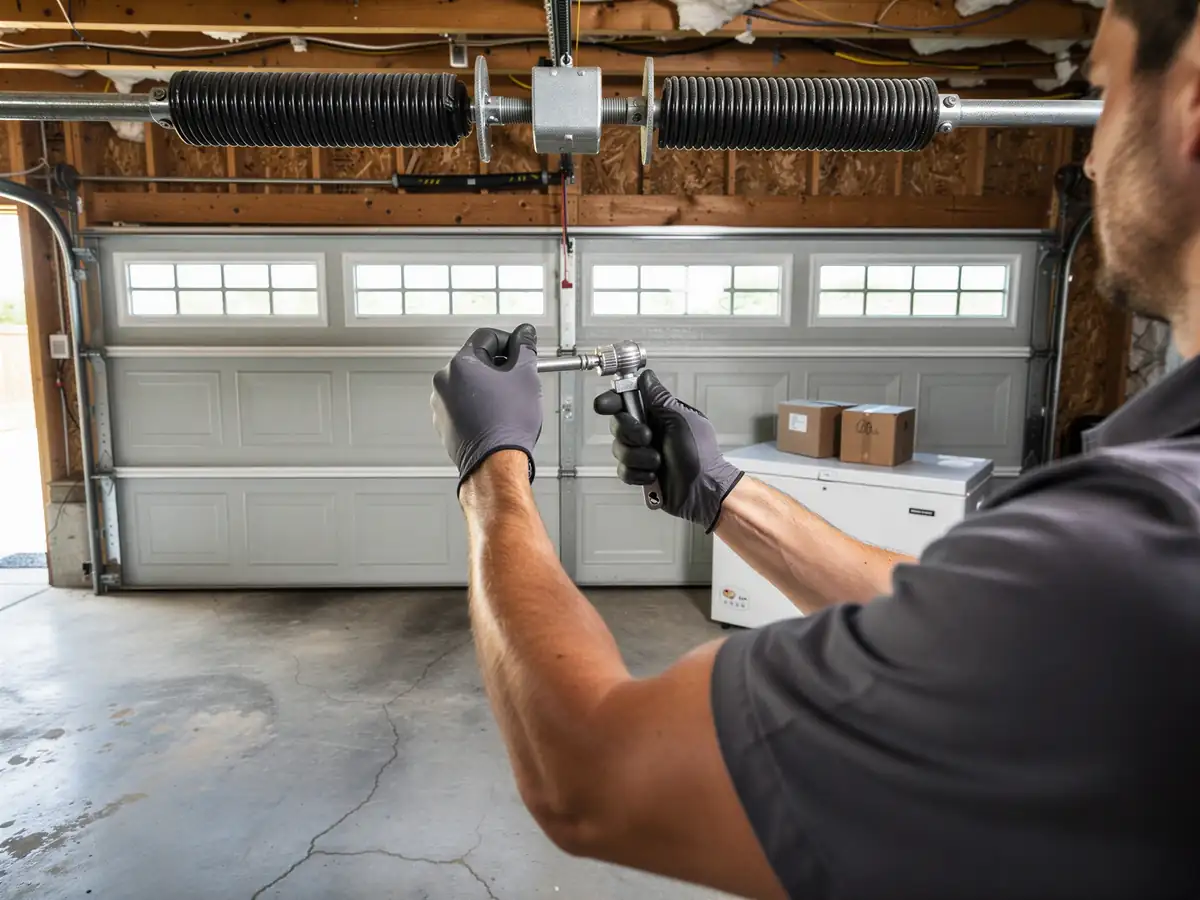
For torsion springs, the job means clamping the door, releasing wound tension safely, pulling the old spring off the shaft, and winding a replacement sized to the door's weight and height. For the older extension-spring setups still common on Caddo Mills doors from the mid-80s, it's a different process - matching stretch length and wire gauge to the door, then checking the pulley and safety cable that should be running through the spring itself.
Either way we check the cables, rollers, and the bottom bracket while we're in there, since a spring failure on an older door often means something else nearby is close to failing too. Climate here runs moderate heat, which doesn't stress hardware the way freeze-thaw cycles do elsewhere, but UV and heat still dry out lubrication and stiffen rollers over 35-plus years faster than most owners expect.
The DIY Question
Torsion springs store enough force to break a finger or worse if you don't know how to release them
Extension springs are a little more forgiving to look at but still dangerous under load. We don't recommend either as a homeowner job, full stop.
What you can safely do yourself
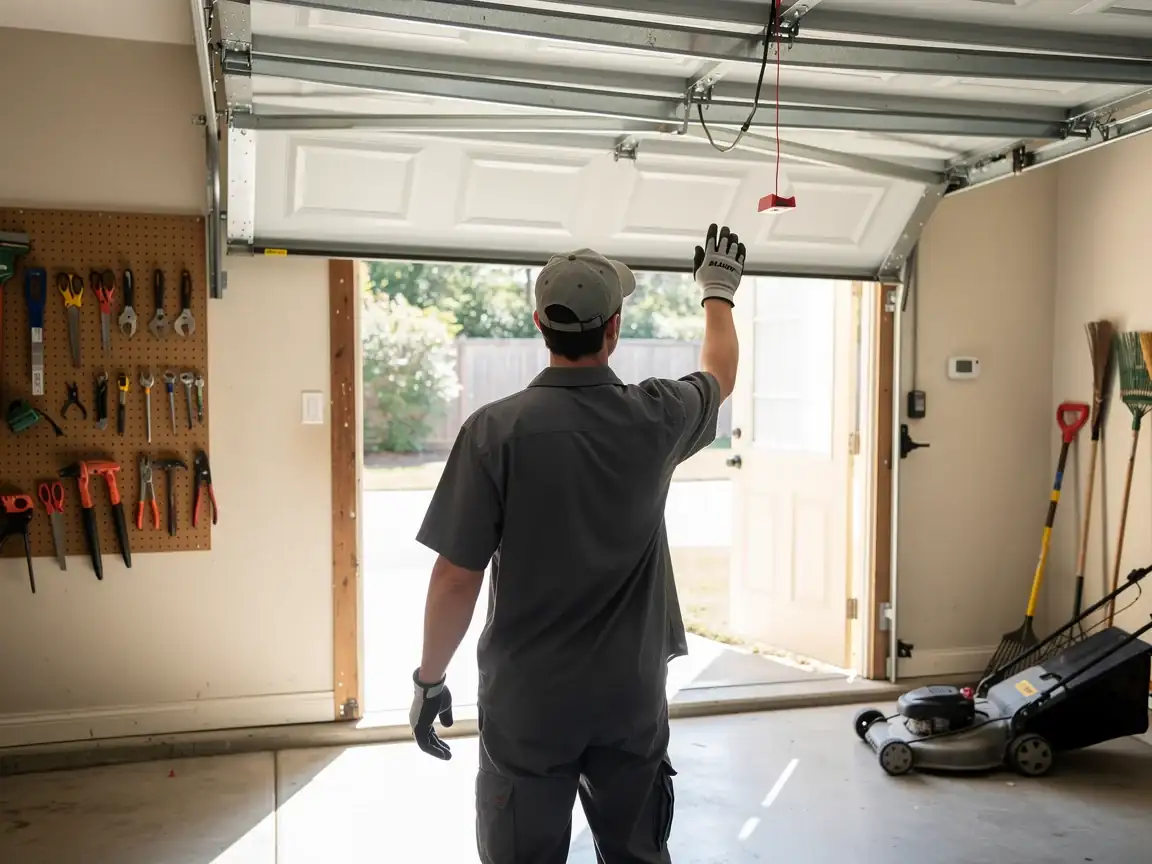
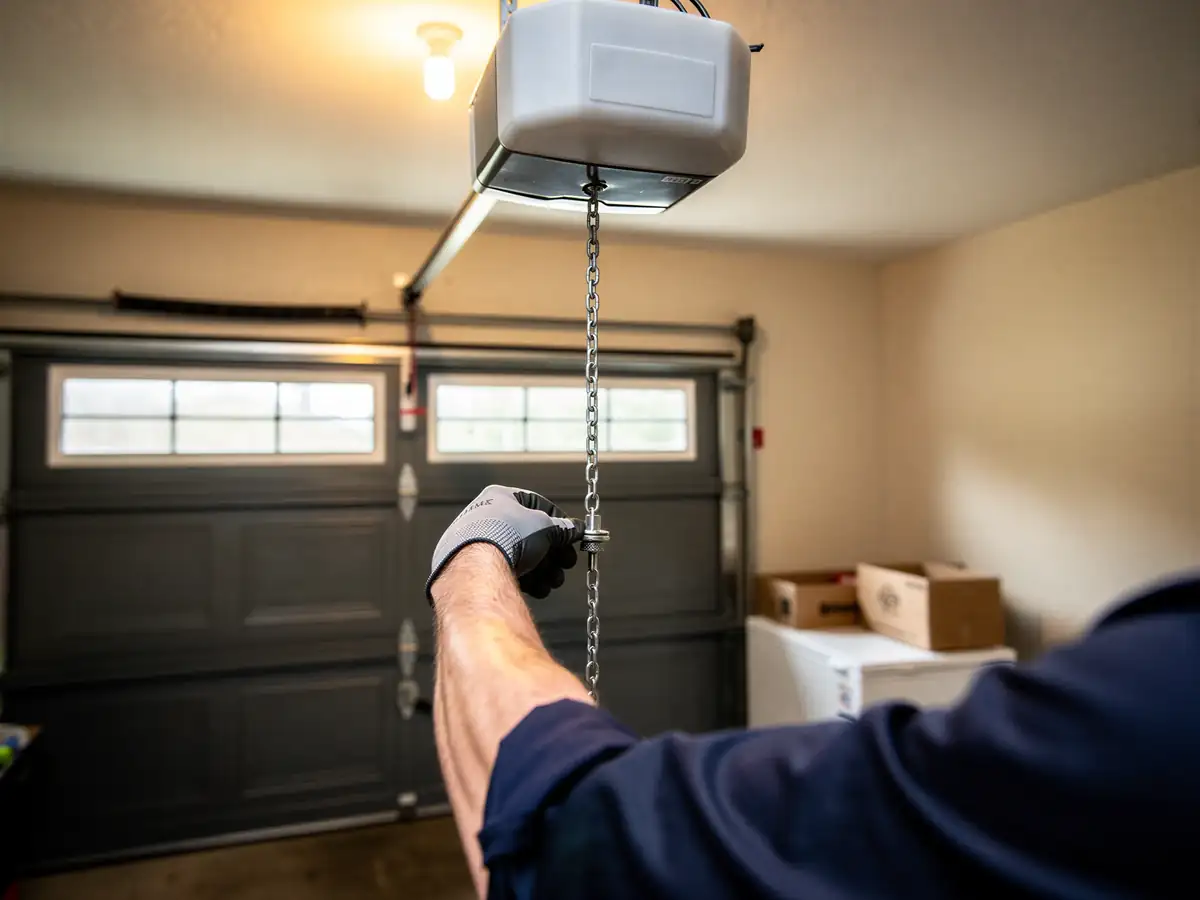
Pull the disconnect handle, try lifting the door by hand, and see how it moves. If it's heavy, uneven, or won't stay up, that's your spring telling you it's done. Don't force the opener to do what the spring should - that burns out a motor trying to lift dead weight, and now you've got two repairs instead of one.
How to Book
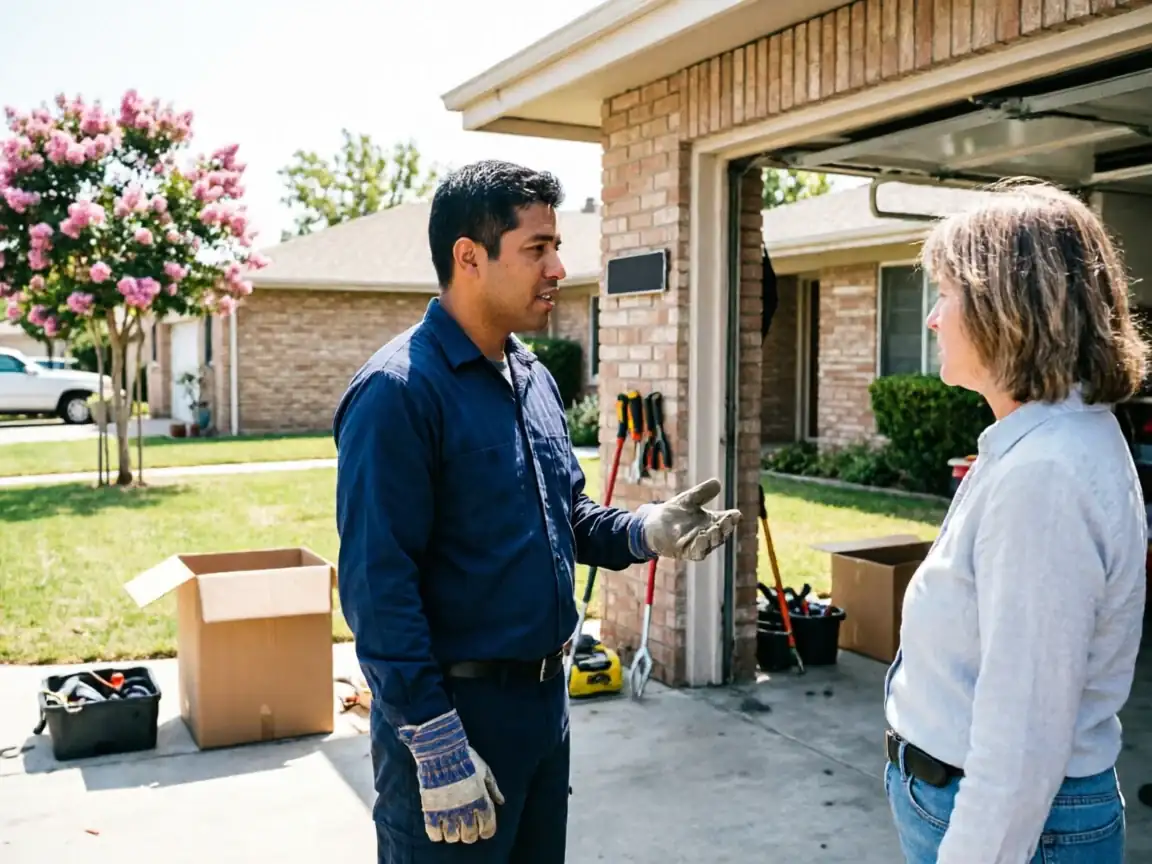
We're based in Royse City and run trucks out to Caddo Mills, about 8 miles from the shop. There's no local branch or drop-in counter here - a call gets you on the schedule and a truck comes out with spring stock sized for both torsion and older extension setups, since we never know which one we'll find until we're looking at the door.
What You Are Seeing
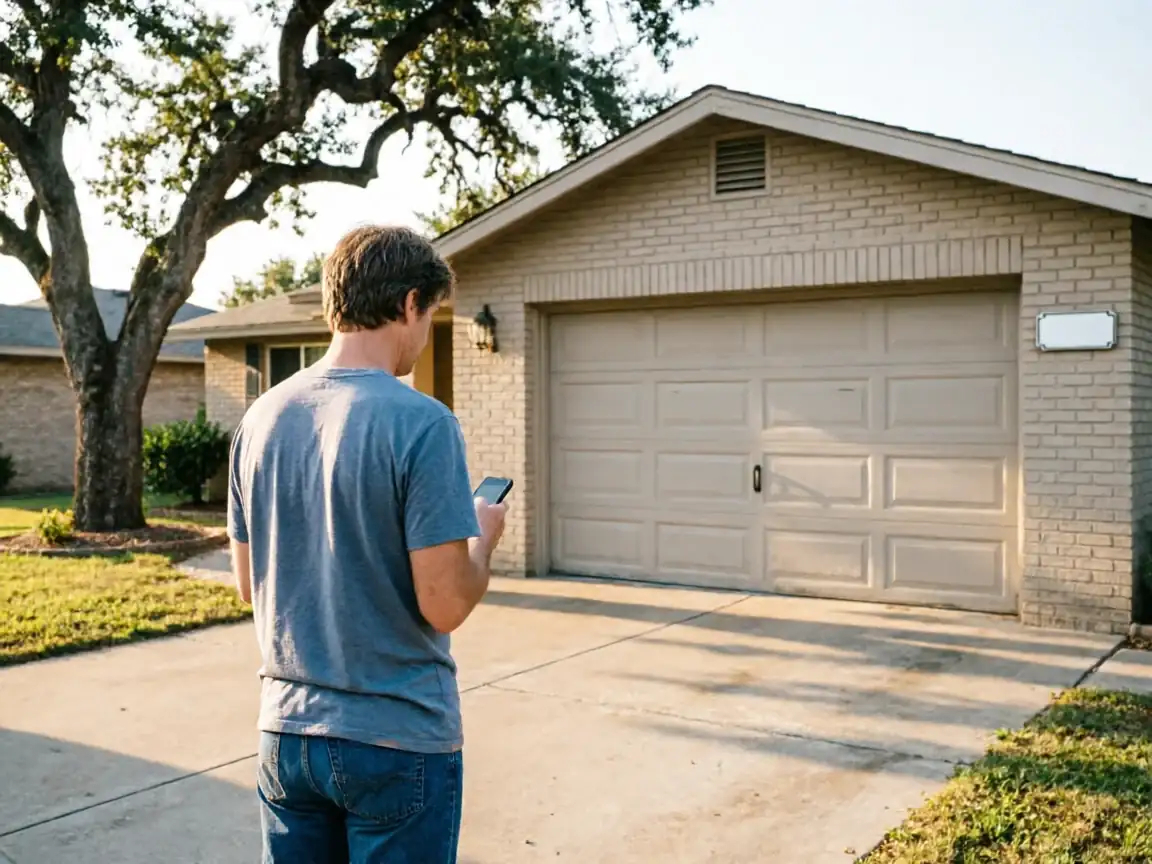
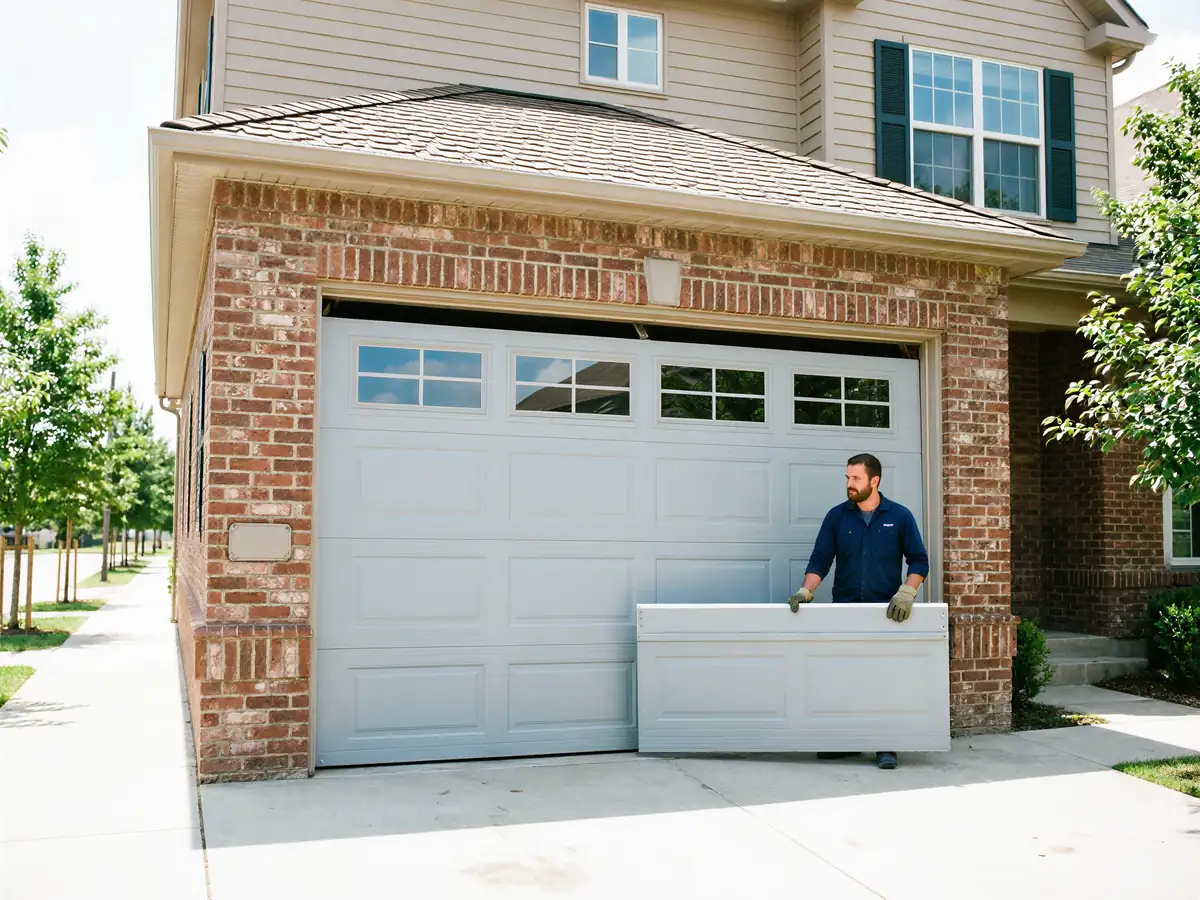
A door that slams down instead of lowering smoothly, a loud bang followed by the door refusing to open, or a visible gap in a coiled spring above the door are the usual signs. On older extension-spring doors, watch for a spring that's stretched permanently out of shape even with the door closed - that's a spring near the end of its life, not mid-failure yet.
Caddo Mills' household count runs smaller than the wider service area - a few hundred homes against the roughly 20,700 households and 17,500 owner-occupied houses spread across the whole territory we cover. That's not a reason we'll see your door any slower, but it does mean the specific hardware we stock has to account for a narrower, older range of builds rather than the newer-construction torsion setups that make up more of the area median.