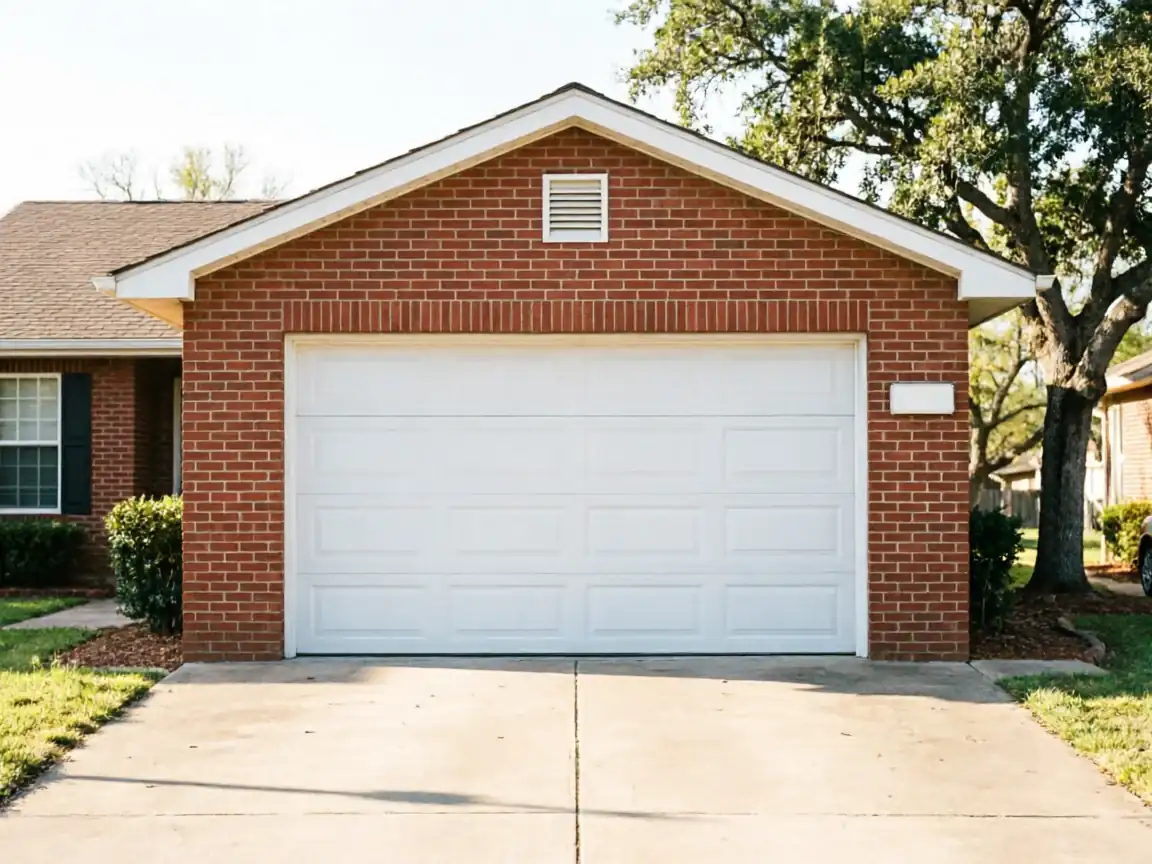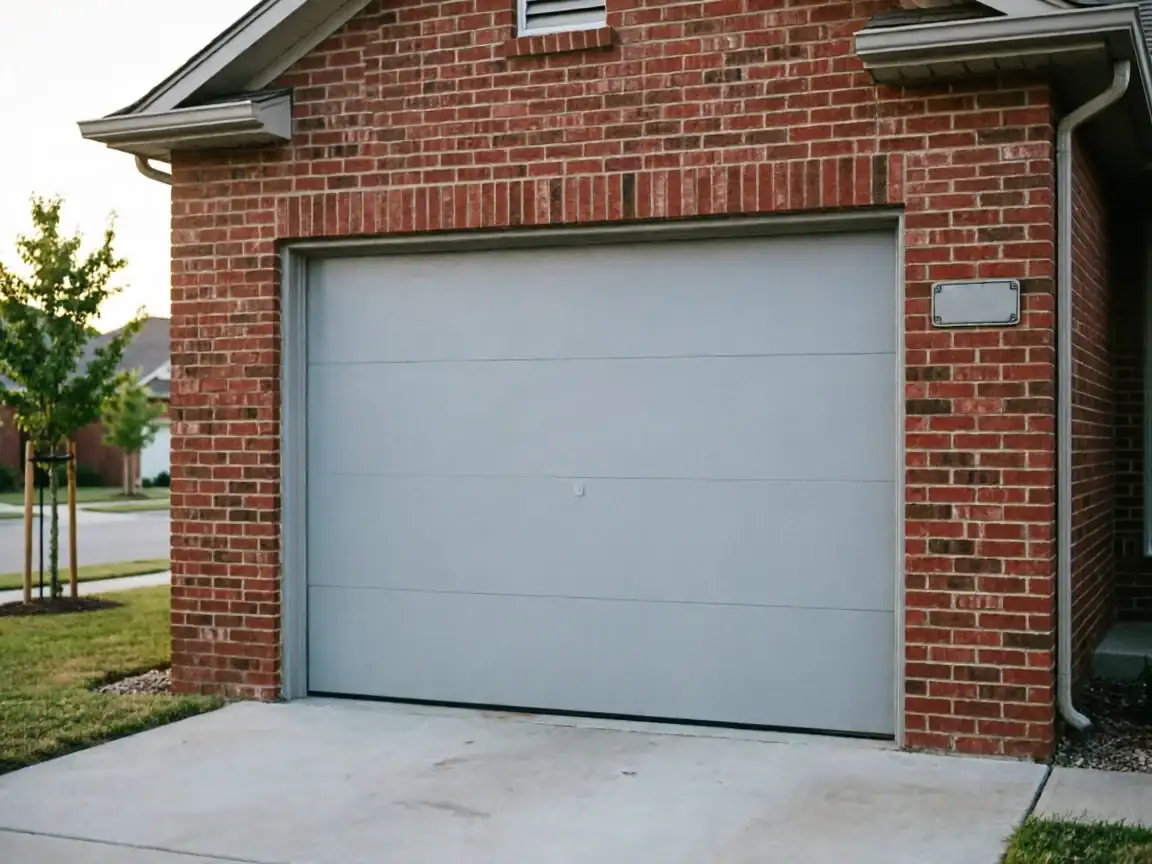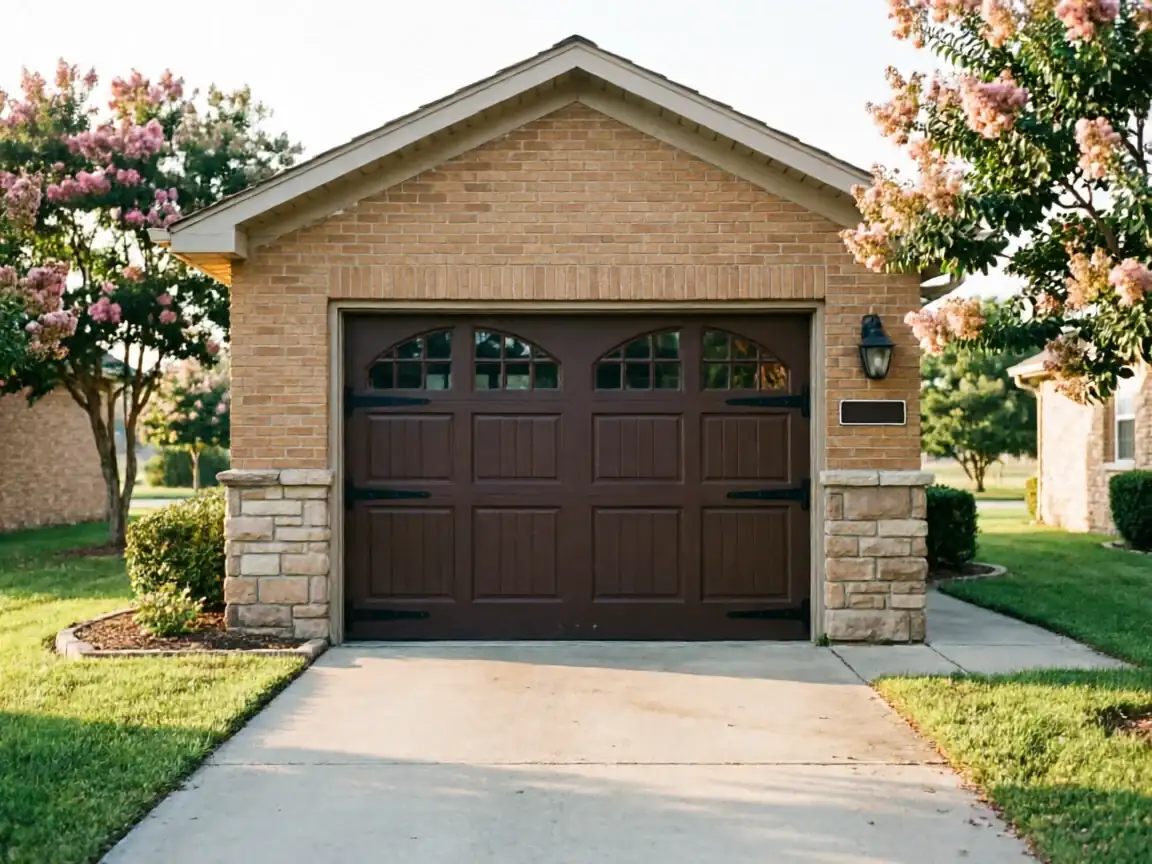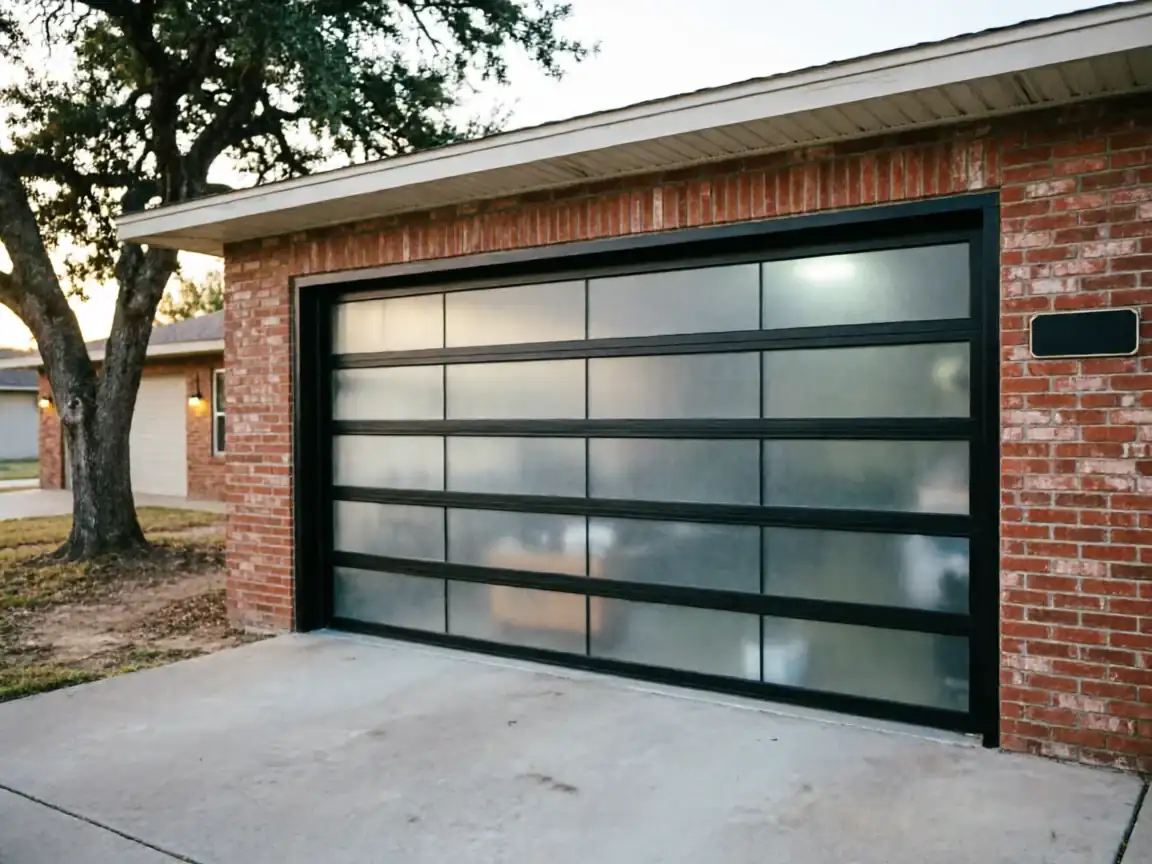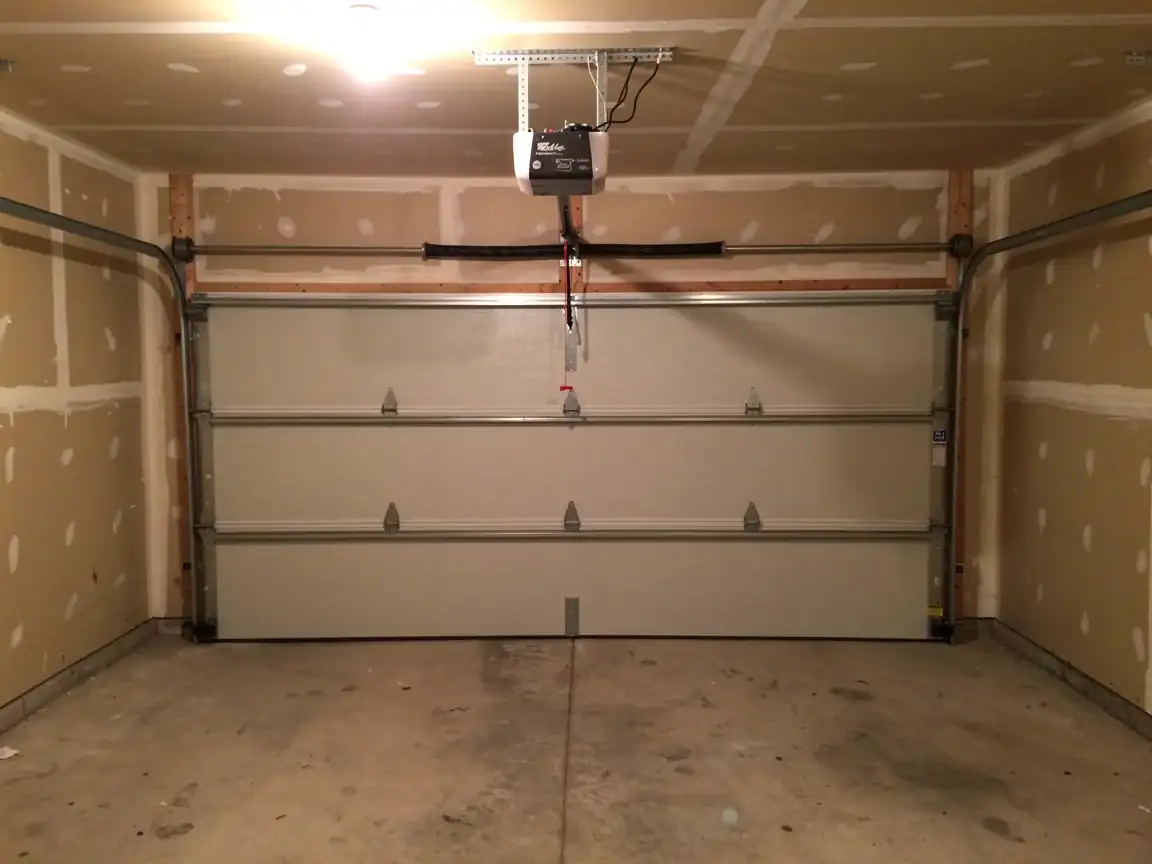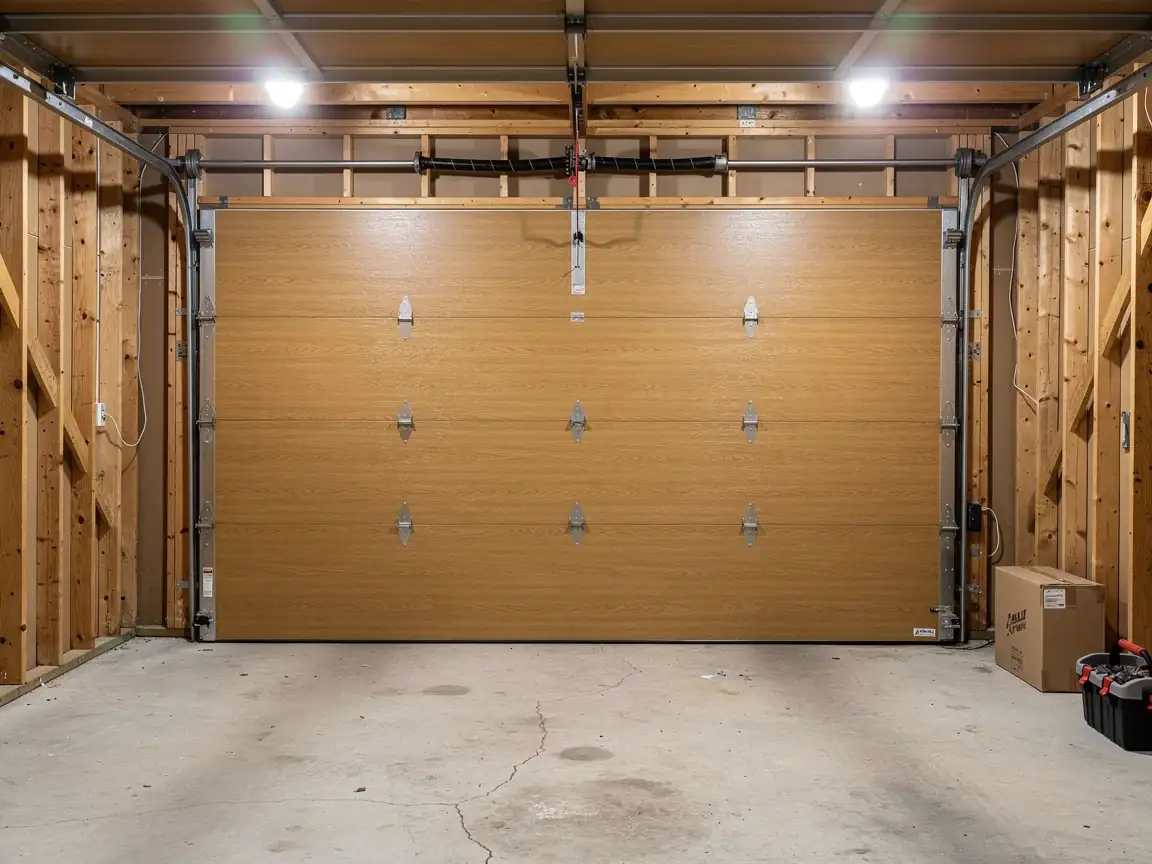
What You Are Seeing
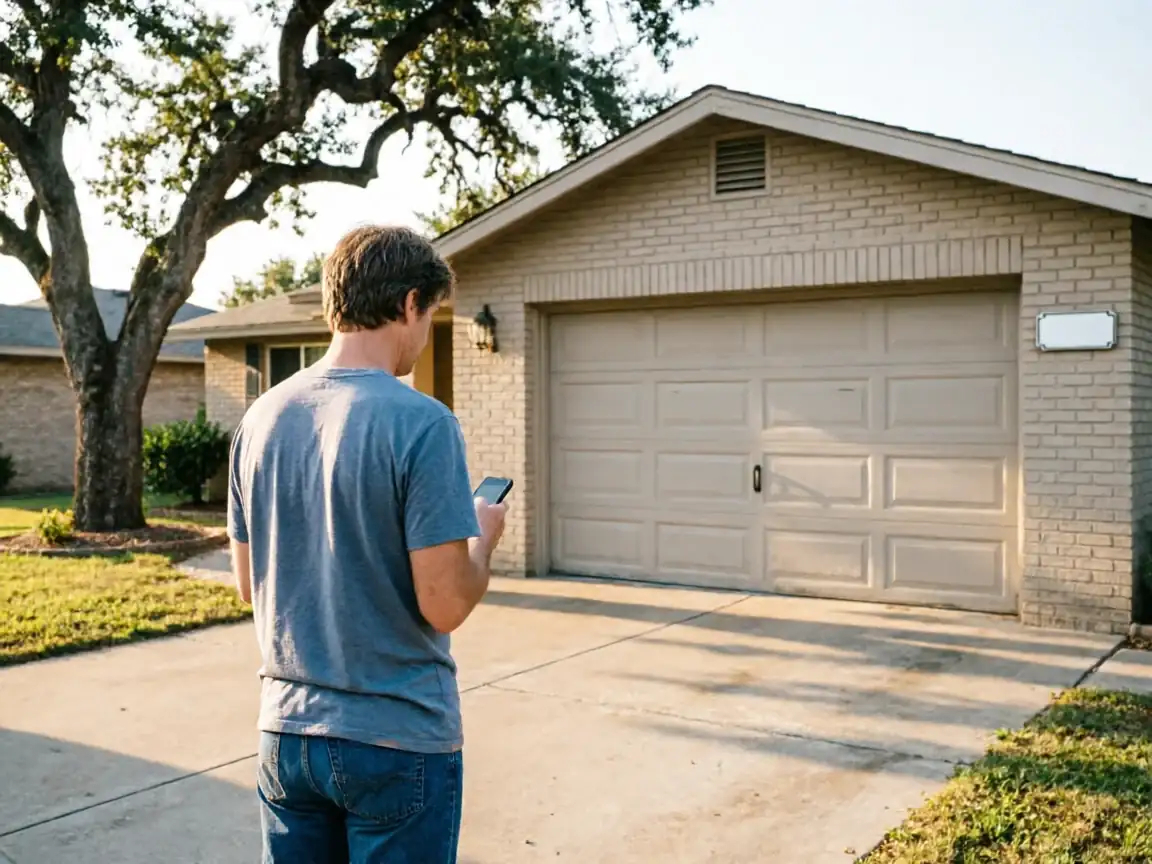
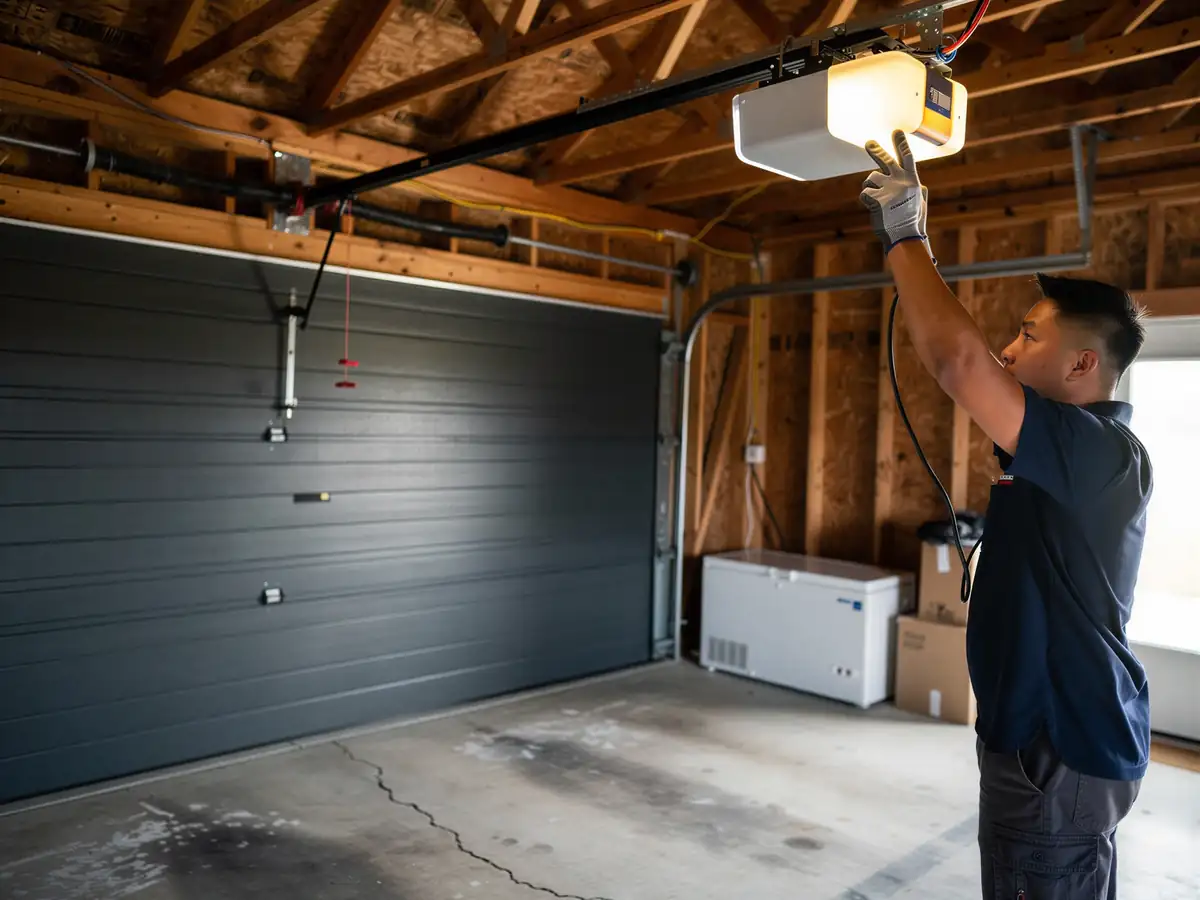
Farmersville is a town of 1,414 households, small enough that a single broken spring or opener failure is a noticeable chunk of the week's call volume, not background noise. That matters for what shows up at the door. Most of the wider service area's housing dates to the 2000s, built on modern torsion hardware and newer opener electronics. Farmersville's own median build year sits back in 1971, three decades older than that. A door put up in the early 70s was likely upgraded once already, maybe twice, which means we're as often chasing a mismatched replacement spring or an opener bolted onto an old bracket as we are fixing something original.
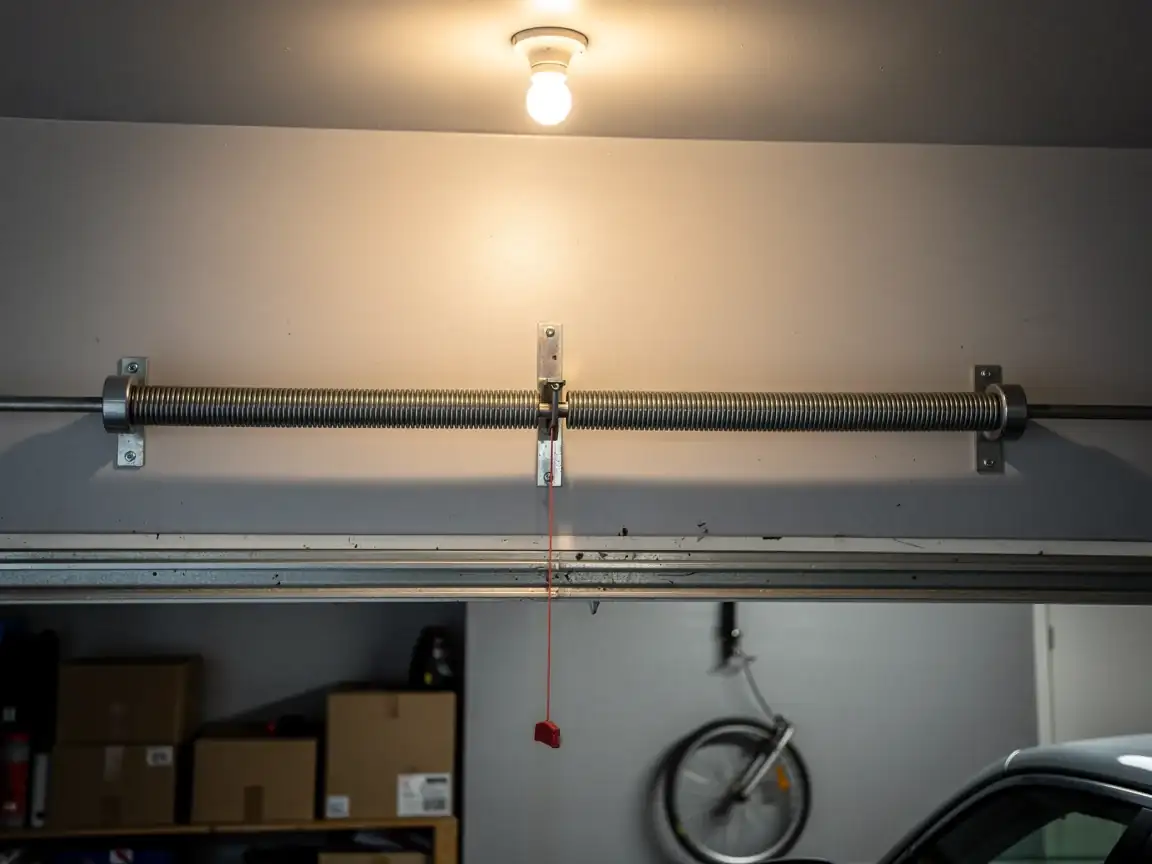
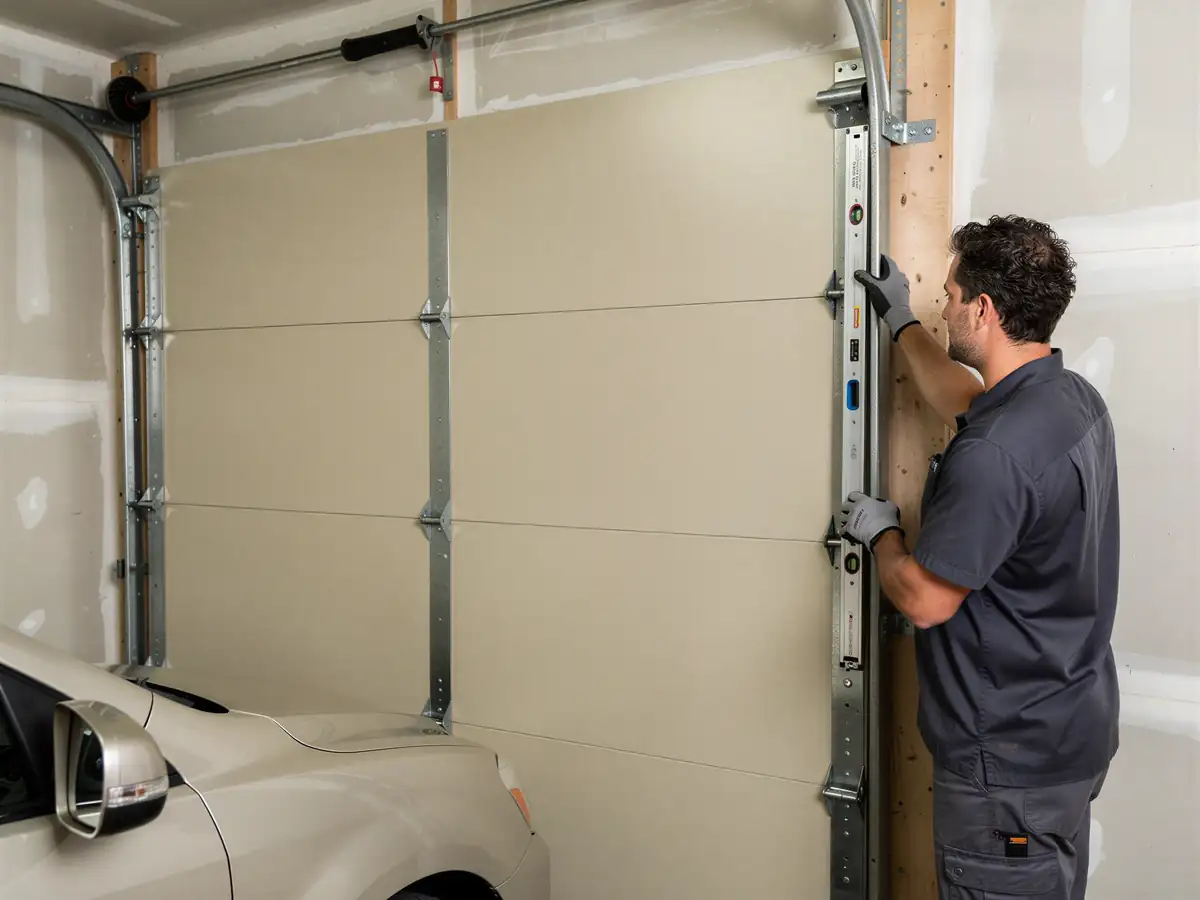
What that looks like in practice: a torsion spring sized for a lighter door than the one actually hanging on it, a safety sensor added later and wired loose, rollers worn oval instead of round because nobody's greased them in years. None of this is dramatic. It's just older hardware carrying loads it wasn't built for anymore, on a door that's been patched rather than replaced. We see it a lot in towns this age and this size.
Time on the Job
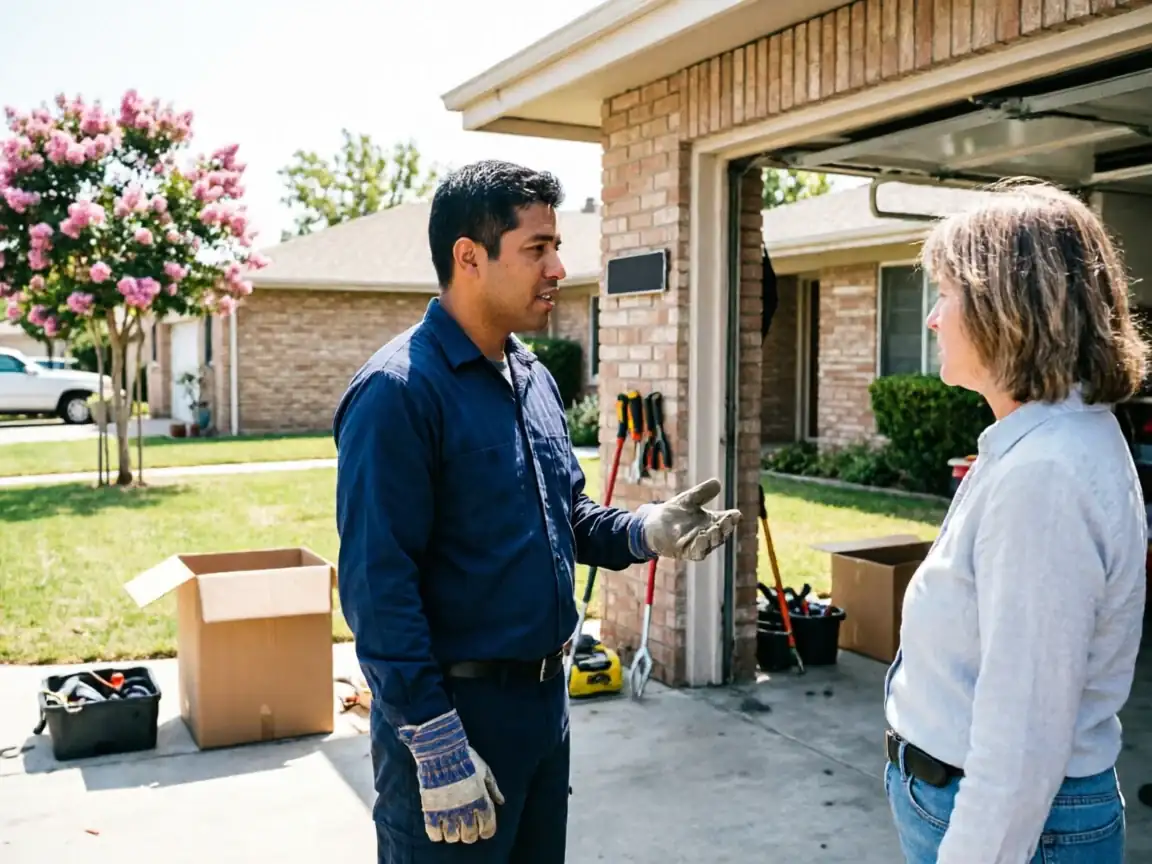
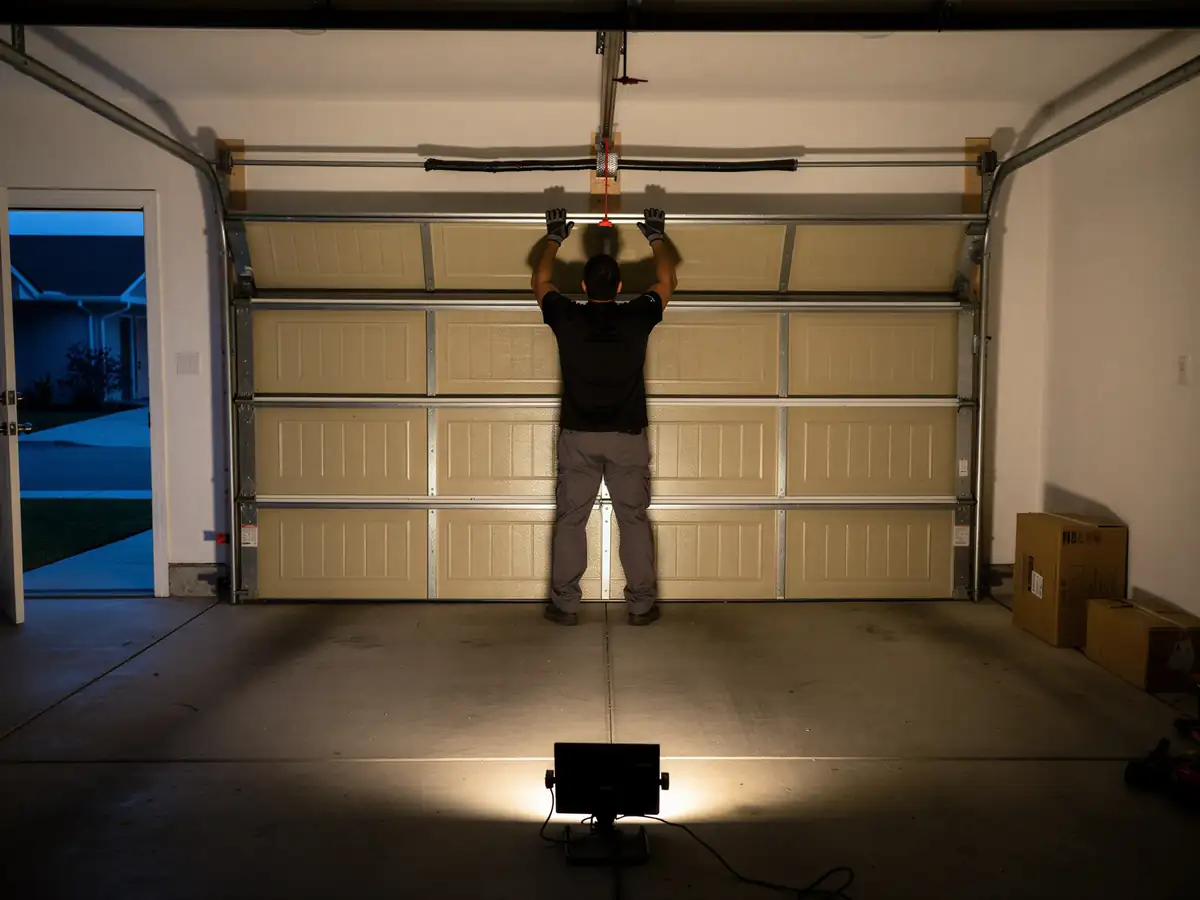
We run out of Royse City, 13 miles from Farmersville, which means we don't have a branch here and we're not going to pretend otherwise. When we take a Farmersville call, we're loading the truck and making the drive past Nevada and Union Valley to get to you, same as we would for any job this far out. We don't quote a same-day window as a blanket promise for this stretch of the service area - that depends on what's already on the schedule that day and what's in the truck.
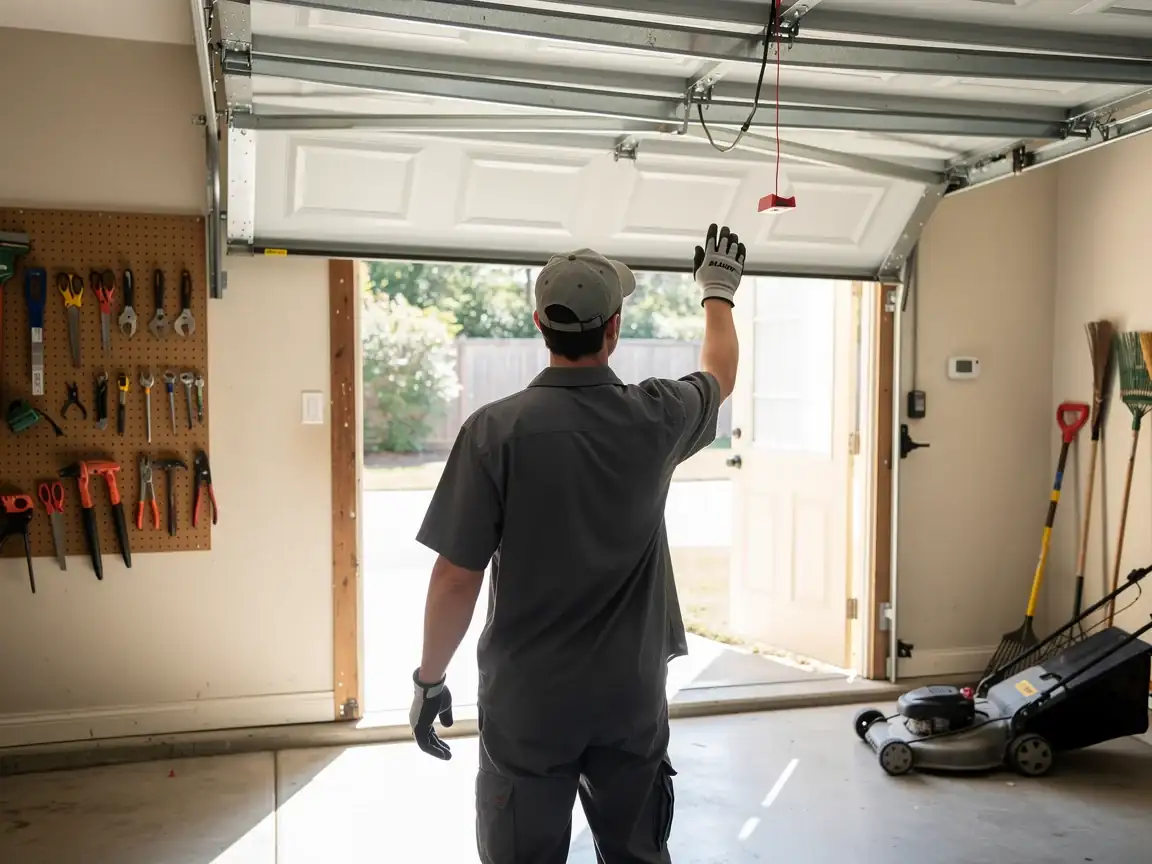
What we can tell you is that most spring and opener jobs here get diagnosed and fixed in one visit once we're on site. The exceptions are the ones where the hardware is old enough, or mismatched enough, that we need a part we don't carry stock of - more on that below. If that's the case, we'll tell you straight instead of guessing at a timeline we can't back up.
What the Fix Involves
On a door built around 1971, the first thing we check isn't the spring
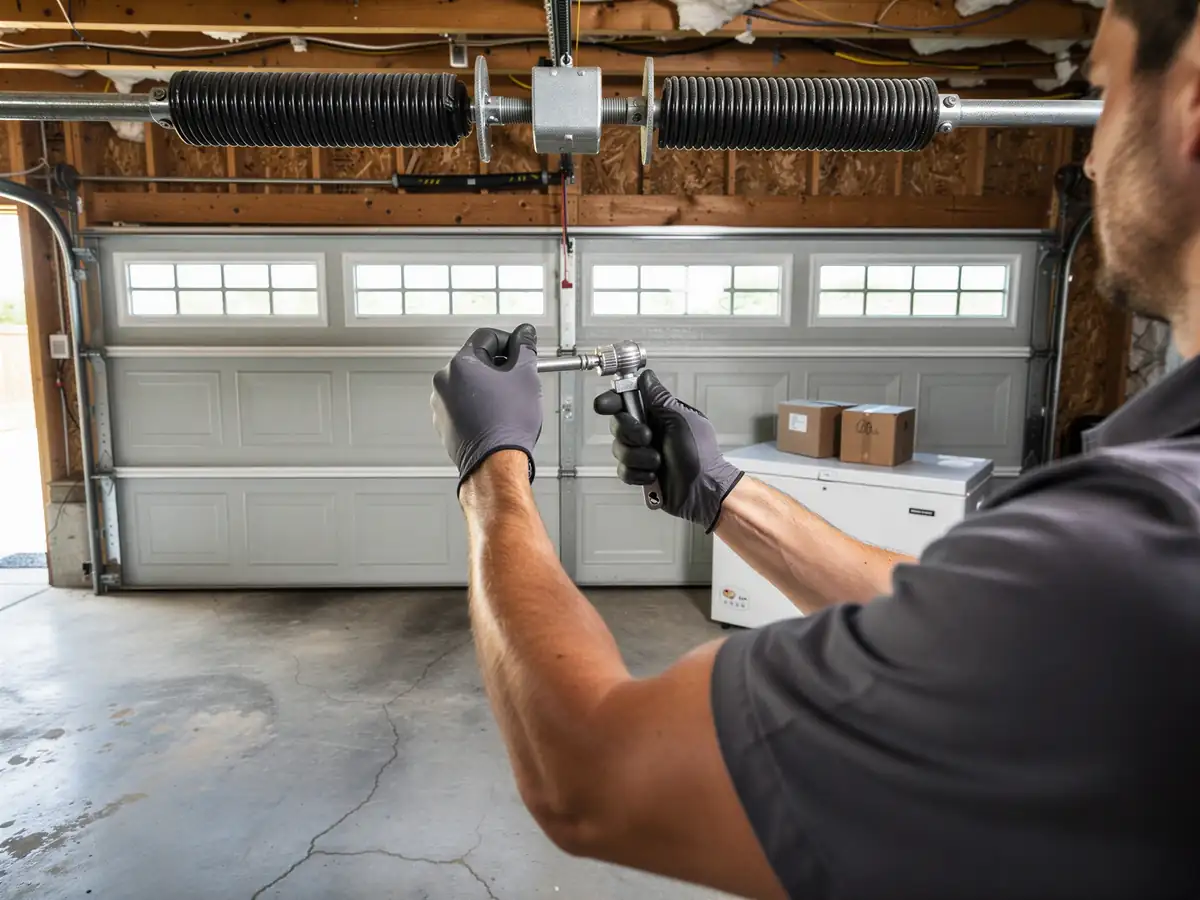
It's whether the spring on the door now is even the right one. A lot of these doors have had at least one replacement spring installed over the decades, and it's common to find one rated for a lighter panel than what's actually hanging. That shows up as a door that's hard to lift by hand or one that slams down instead of easing closed.
The region sits in a moderate heat band, and that's not nothing for a door this old
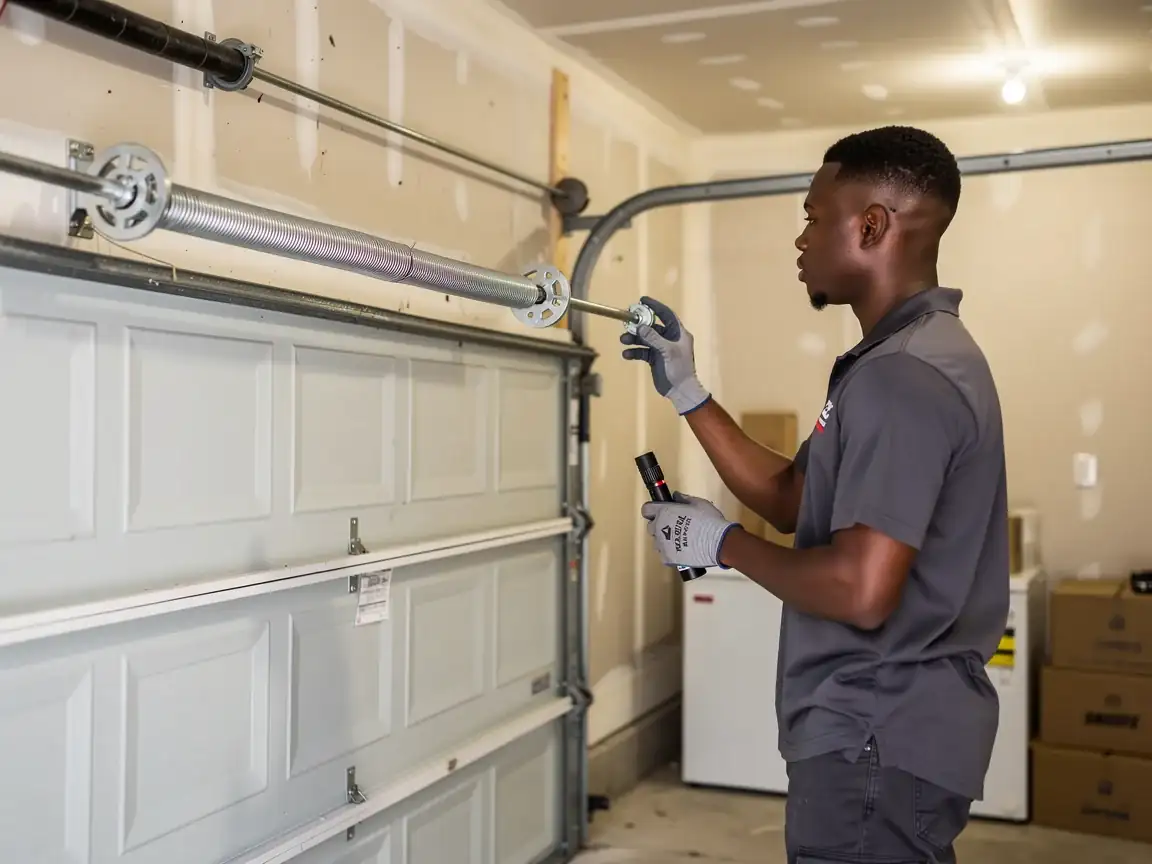
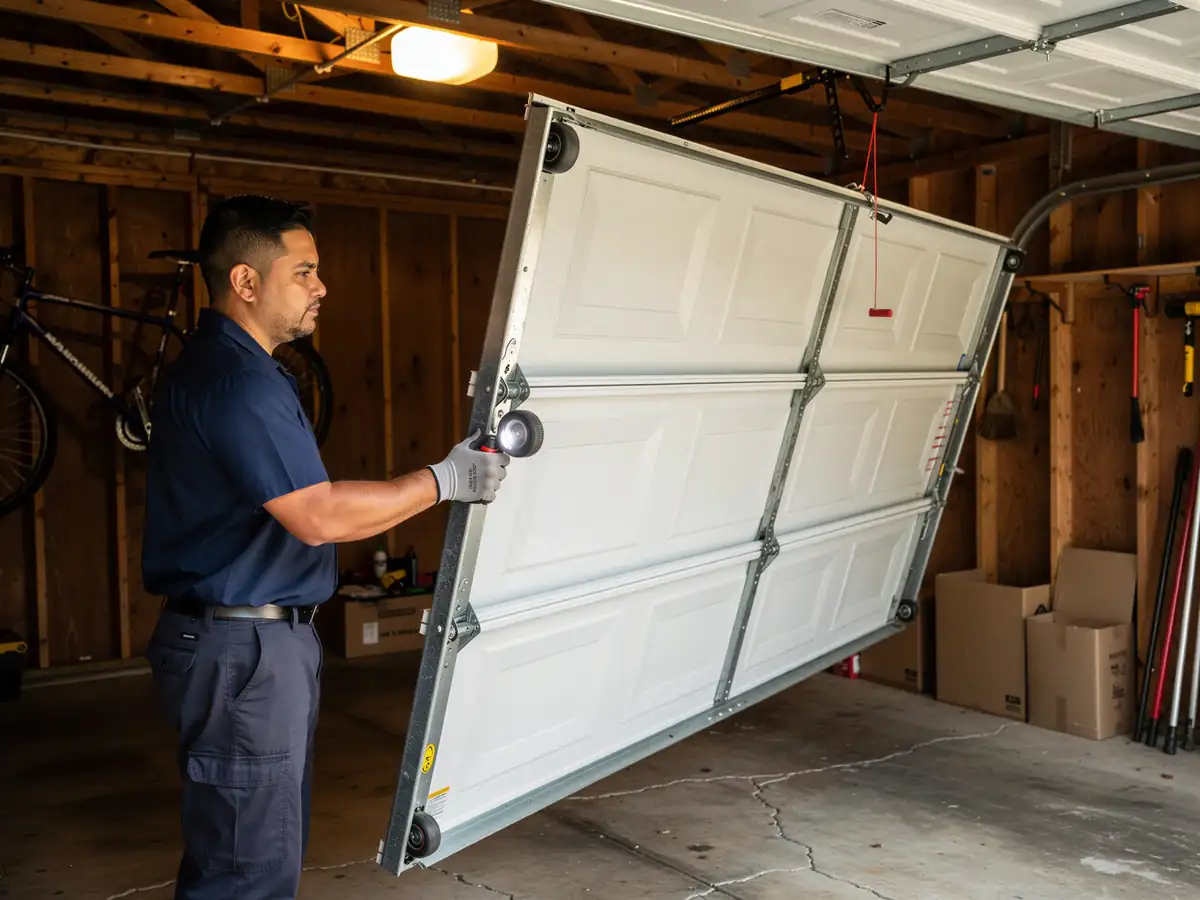
Steel torsion springs lose tension faster under repeated heat cycling, and a 1971-era opener motor that's already well past its expected service life doesn't get any help from a hot garage. We check spring tension against actual door weight, inspect the track for the kind of warping that comes from decades of thermal expansion, and test the opener's force settings rather than assuming factory defaults are still right. On older doors we're also looking for cables fraying near the drum - a cheap part that's easy to miss until it snaps.
Parts We Carry
We stock the common torsion spring sizes, standard rollers, cables, and the hardware that covers most doors from the last twenty-some years. That covers a good share of what we see on this side of the service area. What we don't stock is every spring size and bracket pattern that went into a door hung in 1971 - some of those parts are discontinued, and on a handful of older Farmersville jobs we've had to order a part rather than carry it on the truck.
Here's the honest version: with household income in Farmersville at $47,016, well under the broader service area's $117,428, most owners here are better served by a straight repair than a full door swap, and that's usually what we recommend when the opening and track are still sound. But if a part has to be special-ordered, that adds a day or two to the job, and we'll say so up front instead of letting you assume it's in stock. Full replacement only makes sense when the door itself, not just the hardware, has given out.