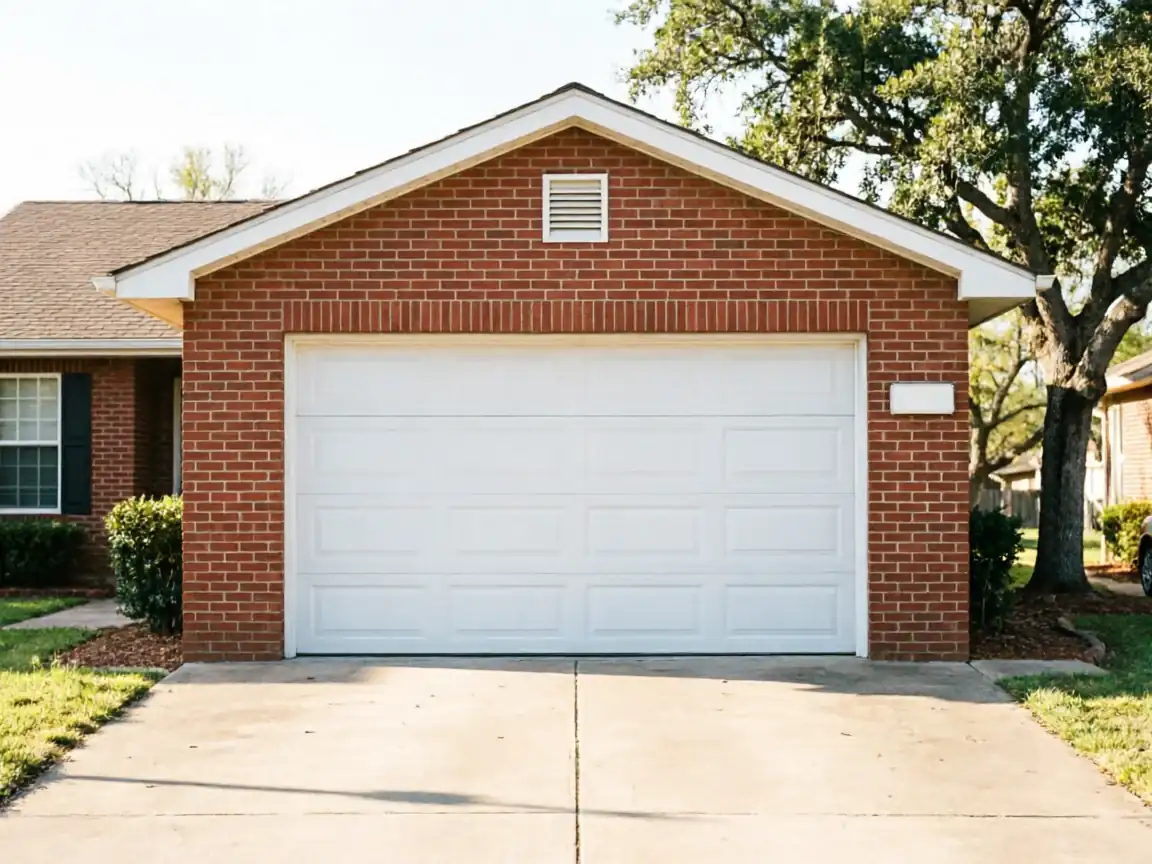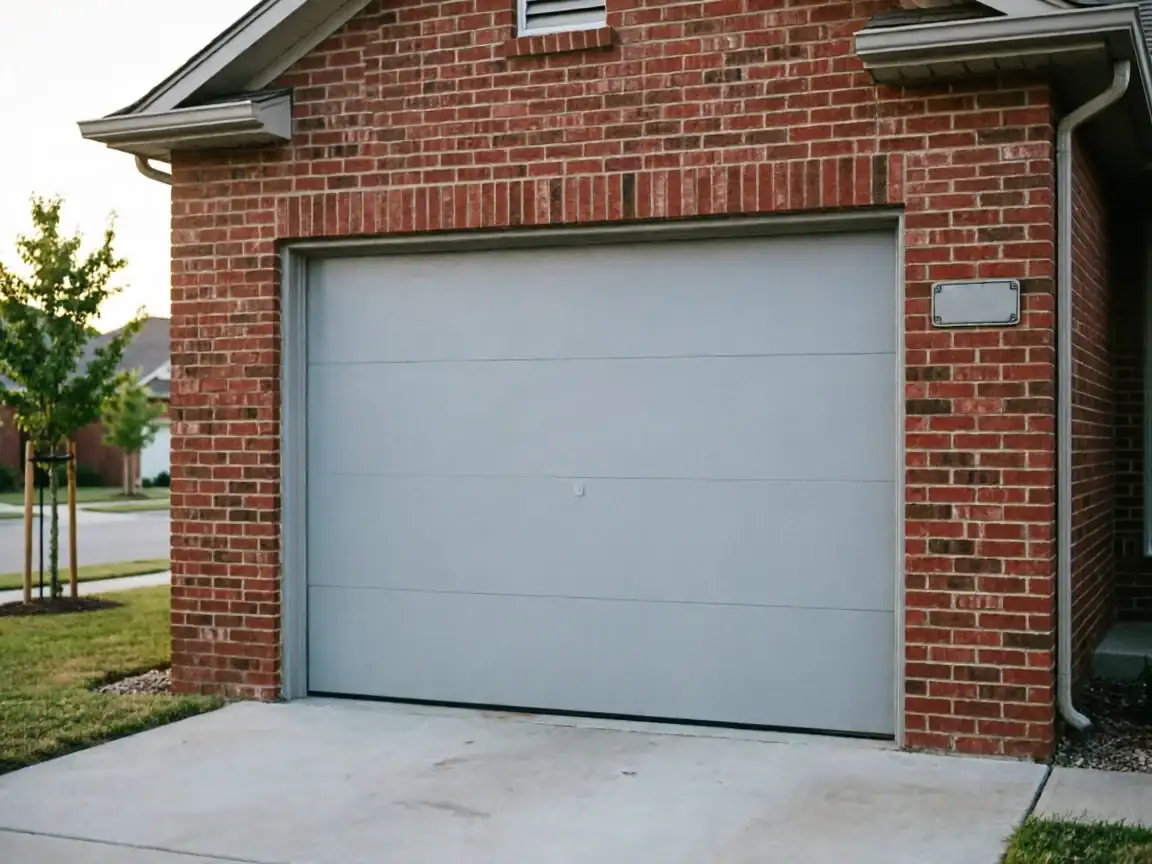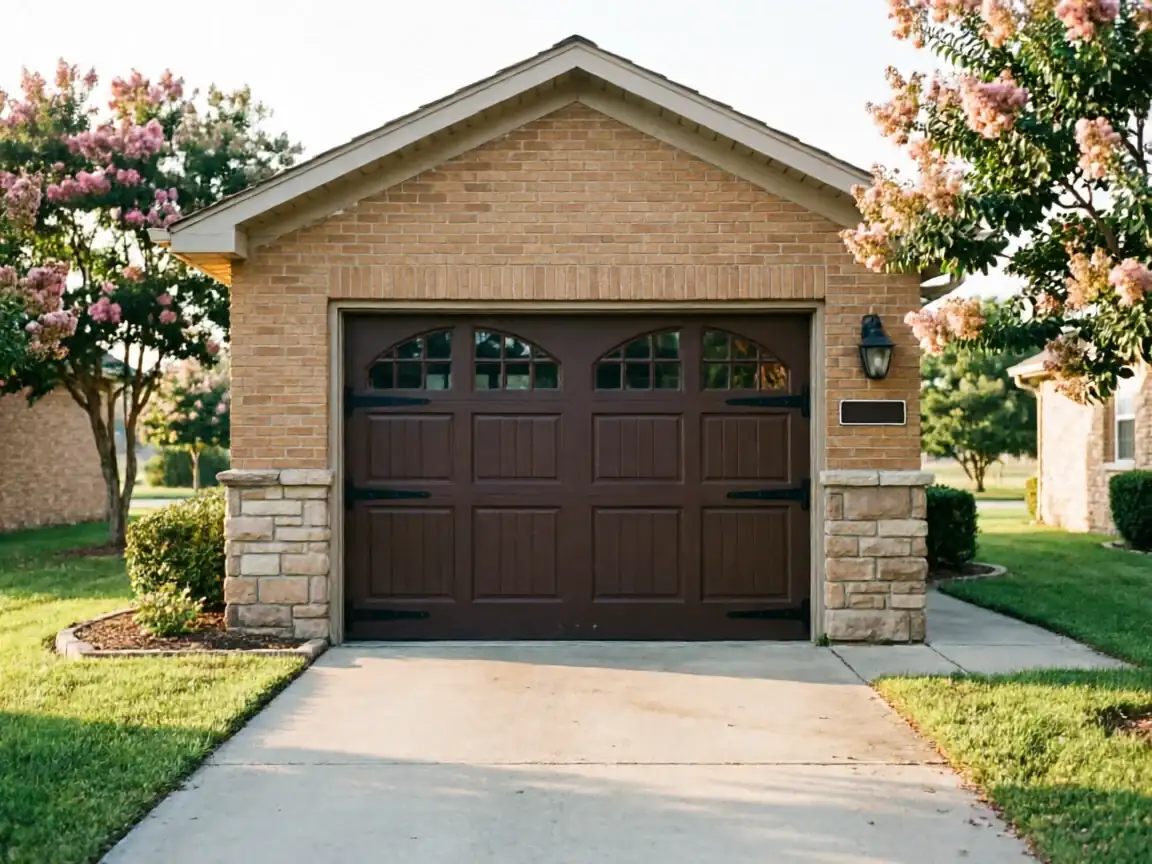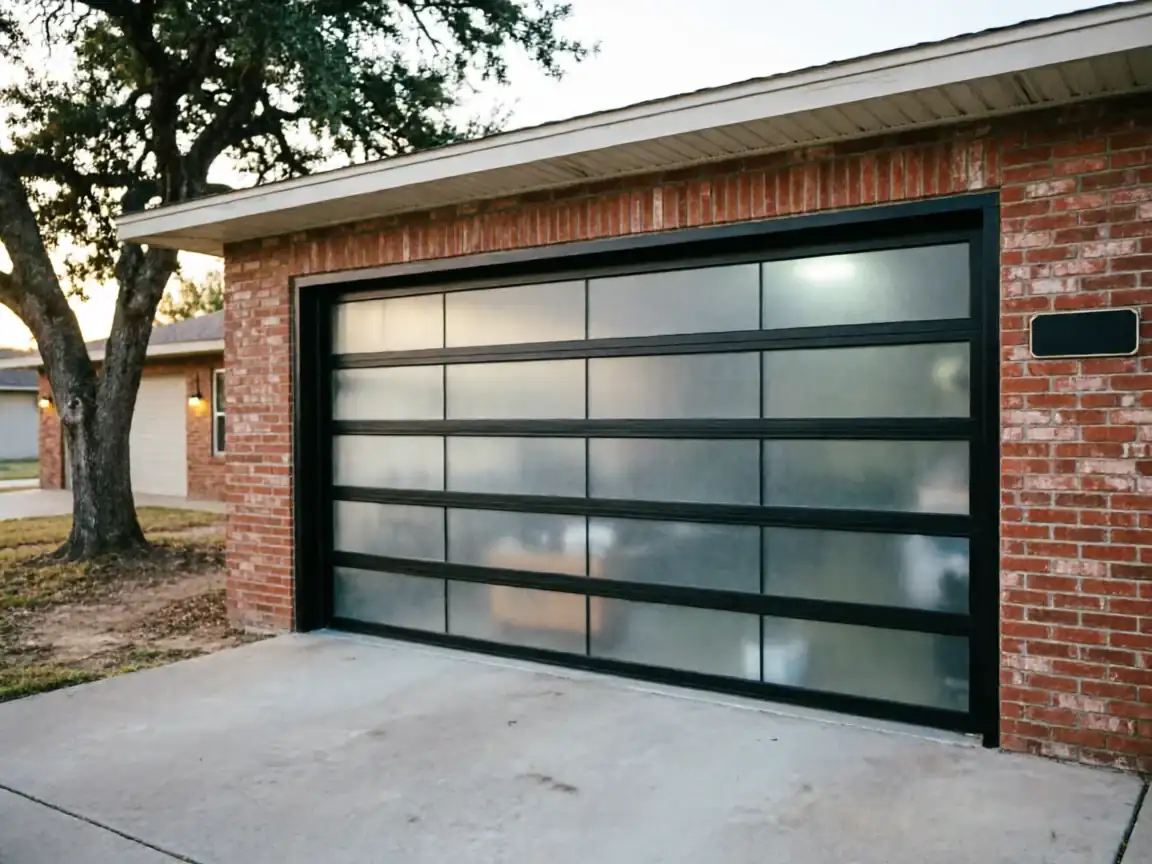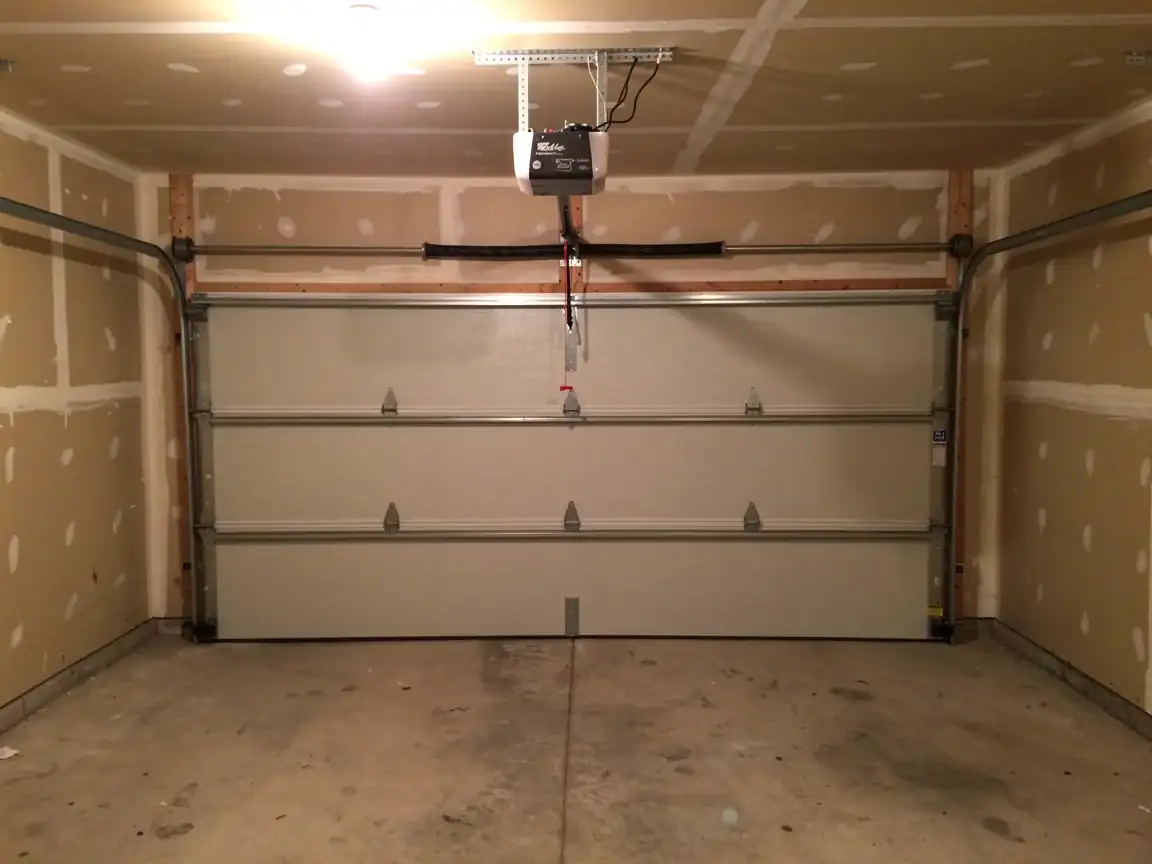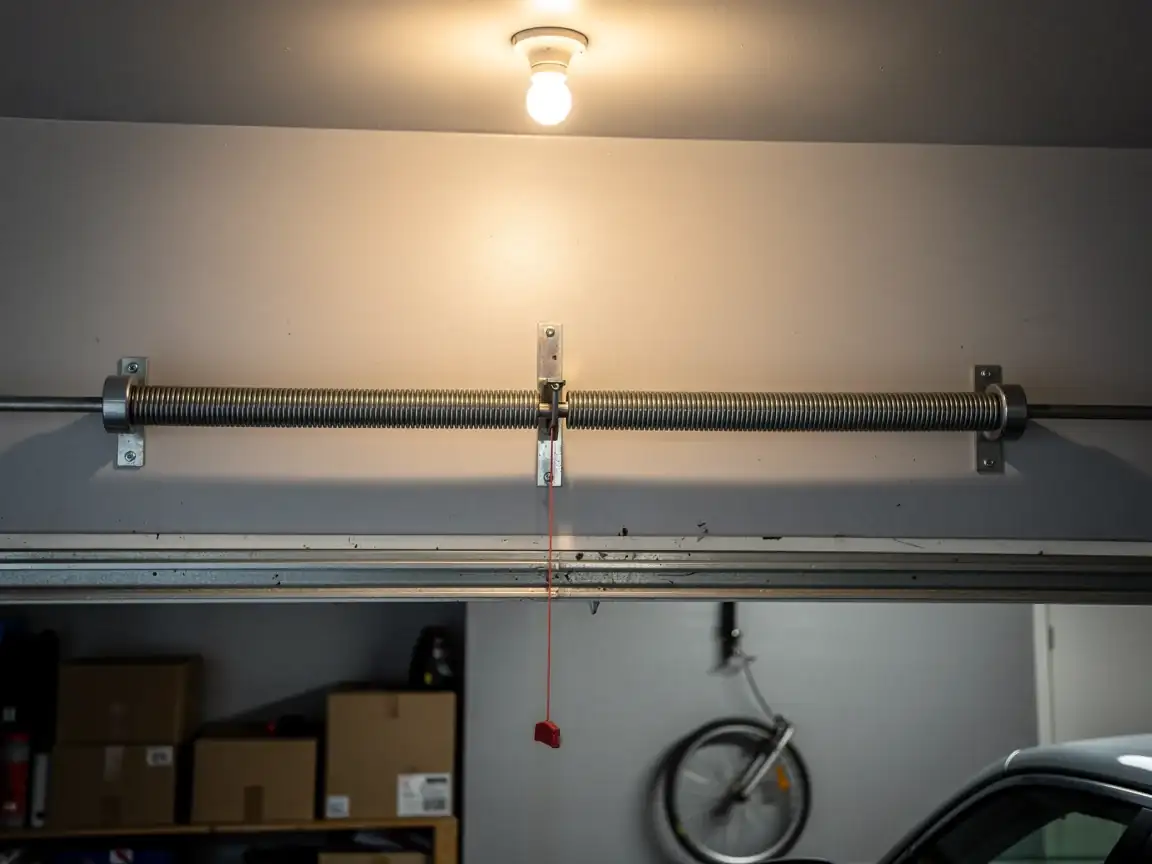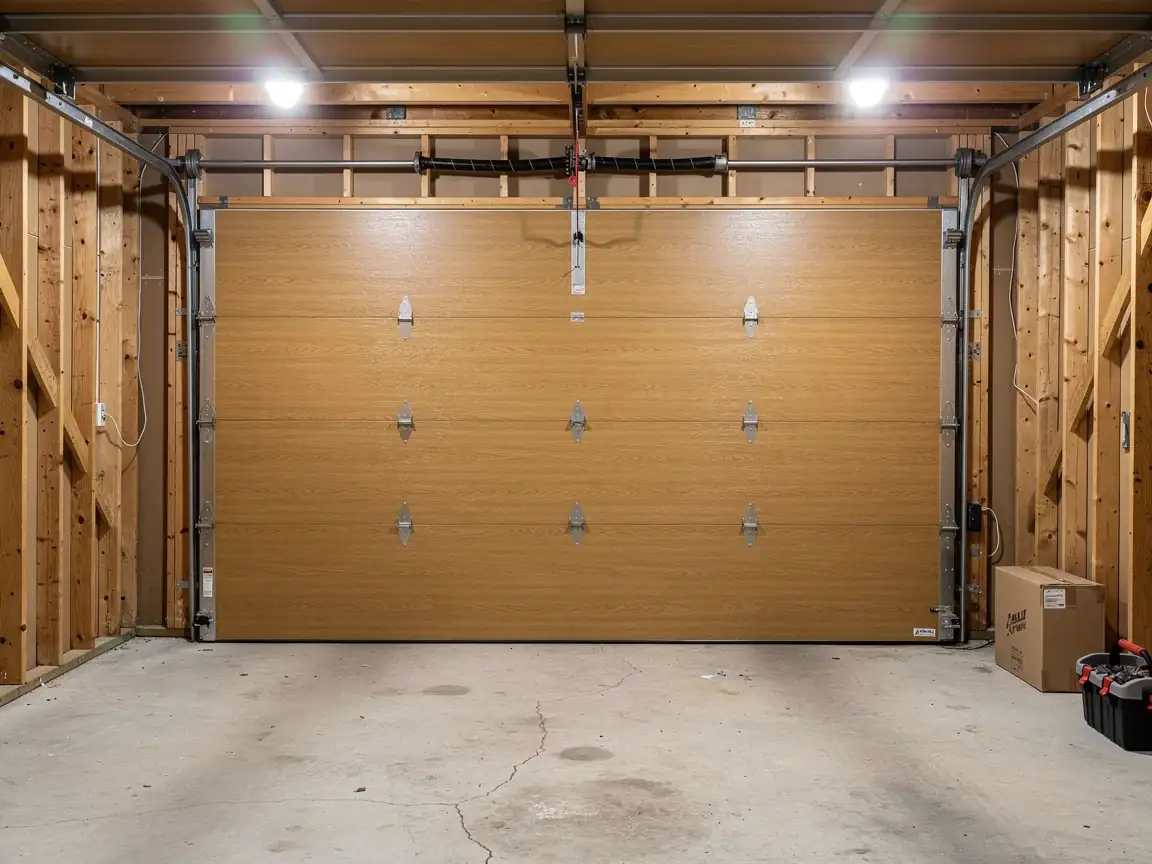
What You Are Seeing
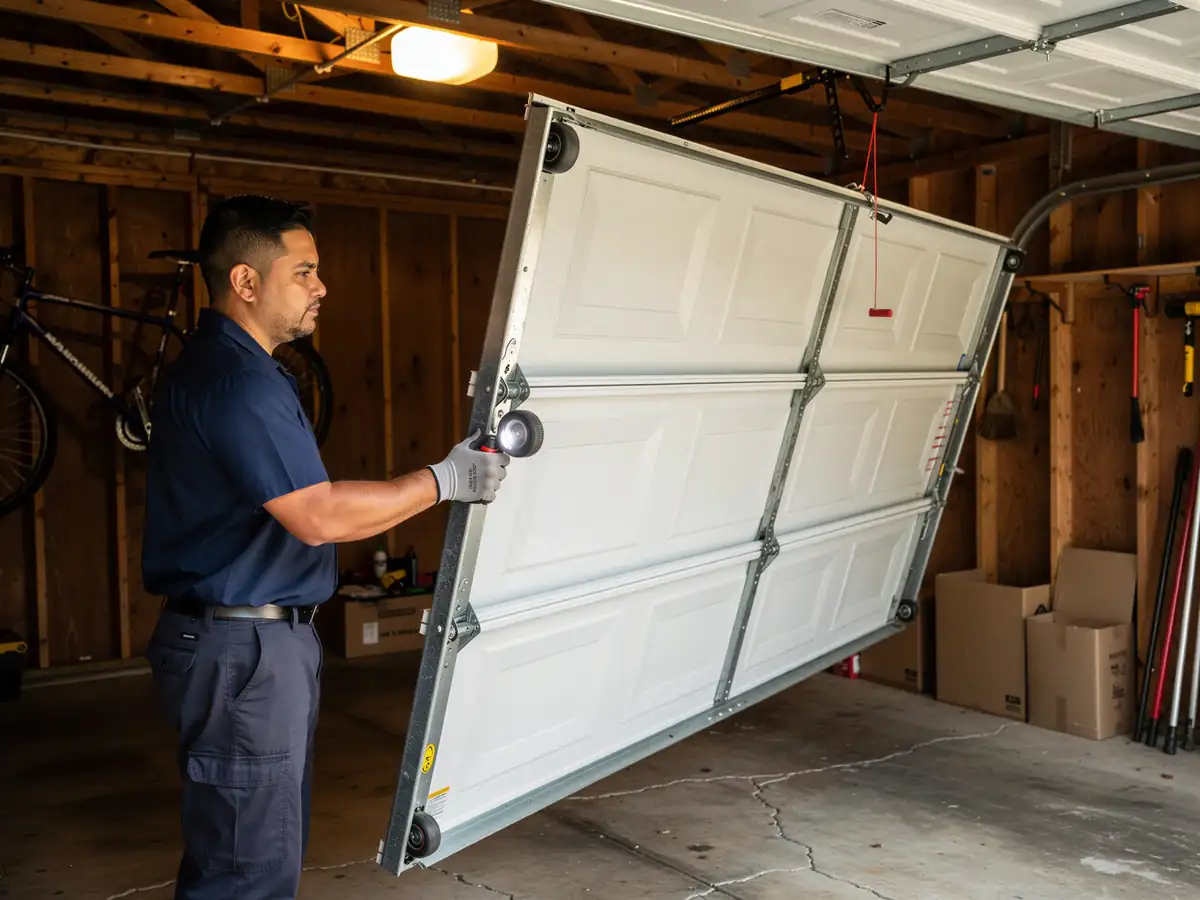
The call we get from Farmersville is almost always the same shape: a spring that let go overnight, or a cable that frayed through and dropped one side of the door at an angle. That's not random. The median home here was built around 1971, which puts a lot of Farmersville garages on the first or second generation of torsion hardware that ever went into a residential door. Steel fatigues. A spring rated for a certain number of cycles doesn't care how well you maintained the rest of the house - it just reaches its count and breaks, usually on the coldest or hottest morning of the week.
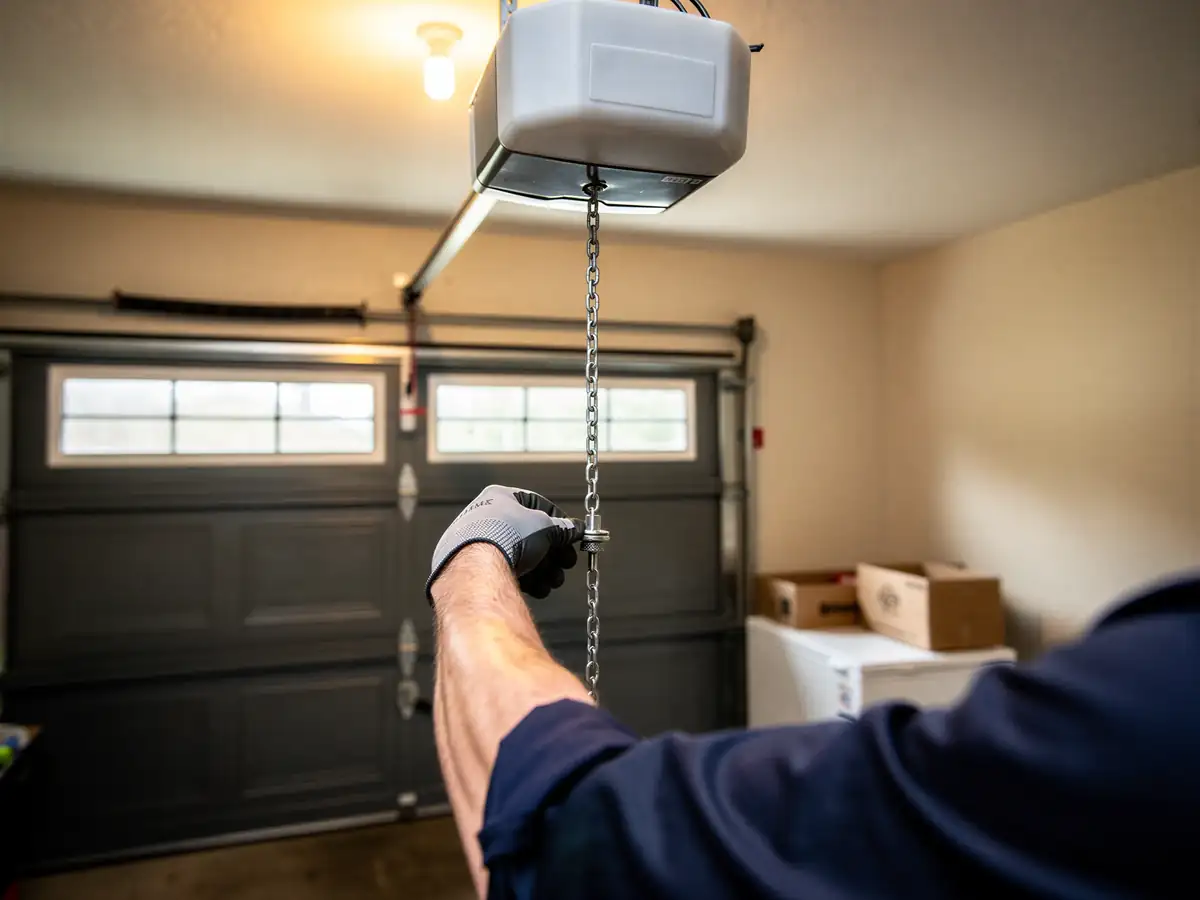
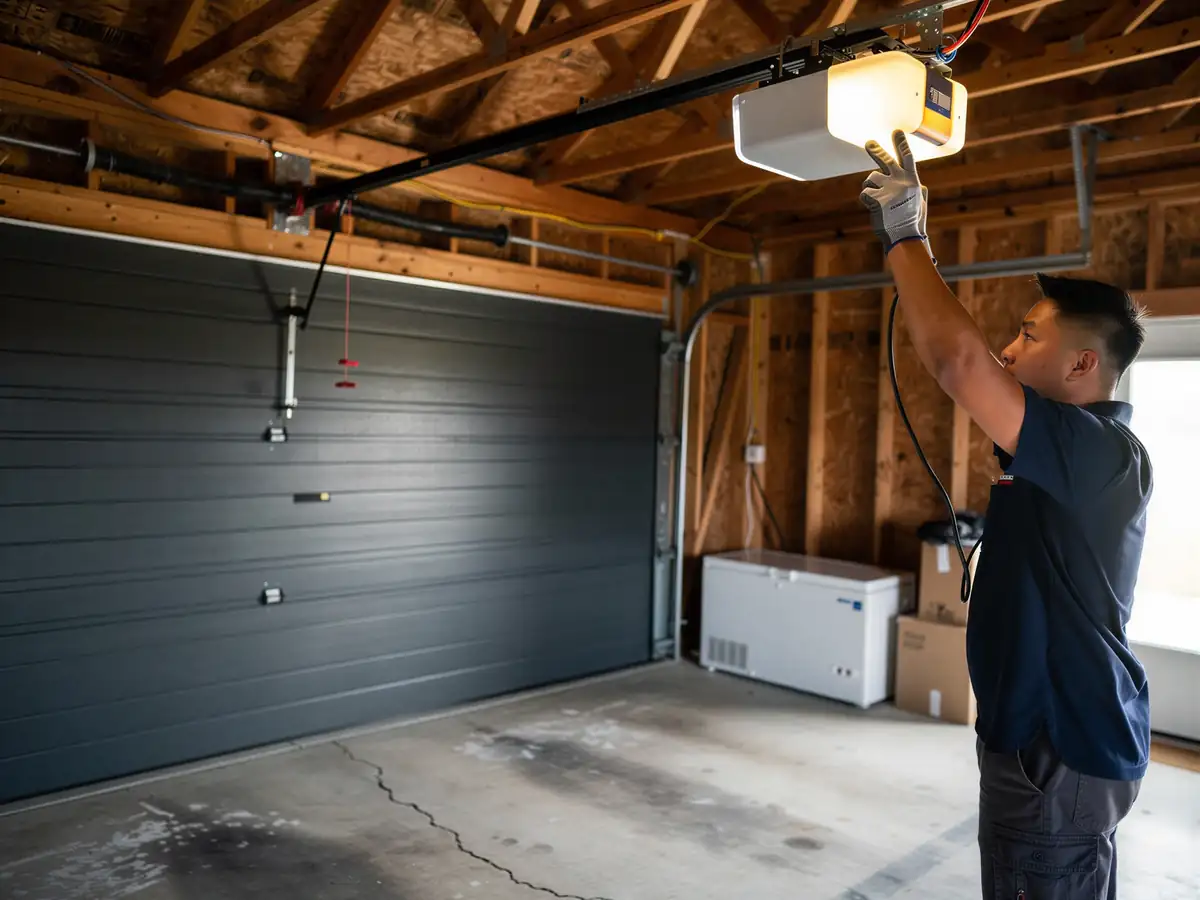
If your door won't budge, makes a bang before it stalls, or hangs crooked with one cable slack and one taut, that's a broken spring or a failed cable, not an opener problem. If the opener runs but the door doesn't move, the issue is almost always in the spring or track, not the motor. We see both on 1970s-era Farmersville doors more than we see opener failures, because the hardware is simply older than what's going into newer subdivisions nearby.
Time on the Job
We're not based in Farmersville - we run out of Royse City, about 13 miles away. That distance is part of being honest about what we can promise: we don't claim a local depot or a guaranteed arrival window here, because we'd be making that up. What we can tell you is that a broken spring or snapped cable on a standard double door is a job we handle on-site in one visit once we're there, parts in the truck.
Farmersville is a smaller market than Royse City itself - about 1,414 households against the roughly 20,700 across our full service area - so we're not rolling through constantly. That means it's worth calling as soon as you notice a problem rather than waiting, so we can plan the drive out and get it done in one trip instead of two.
What the Fix Involves
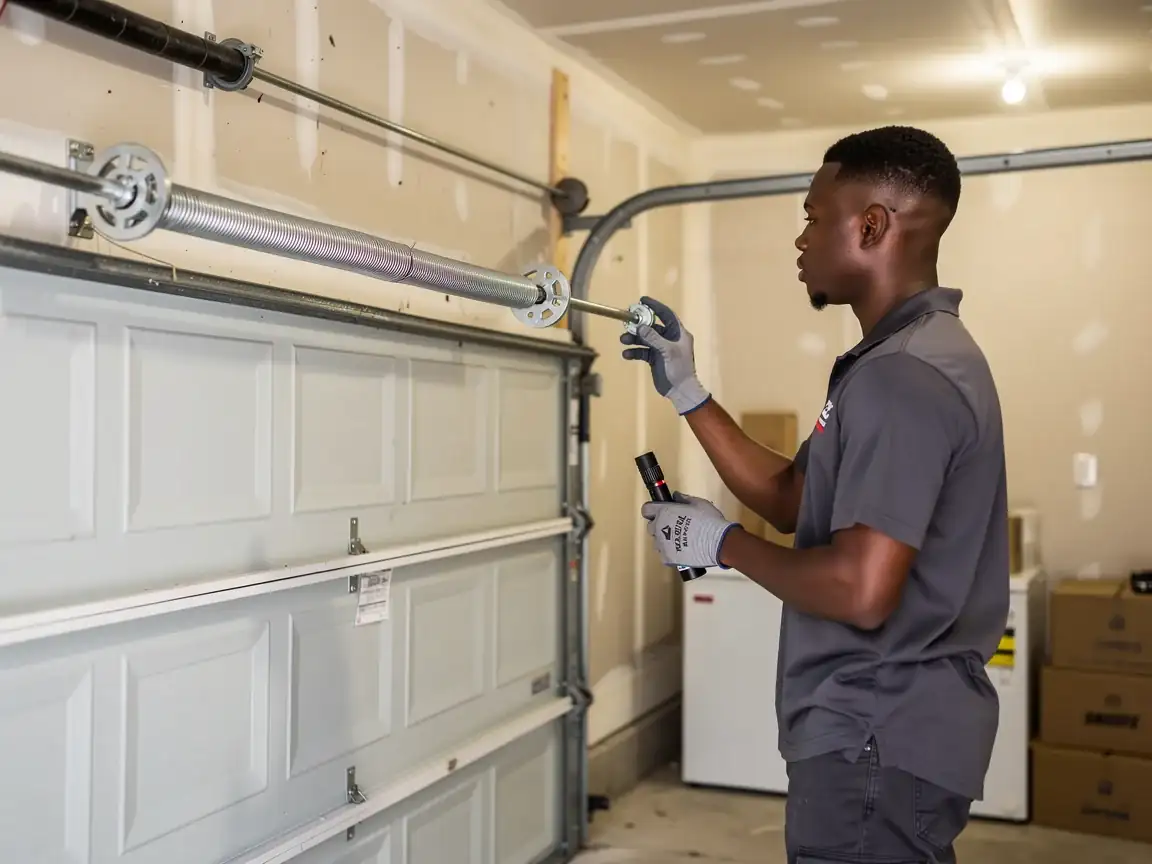
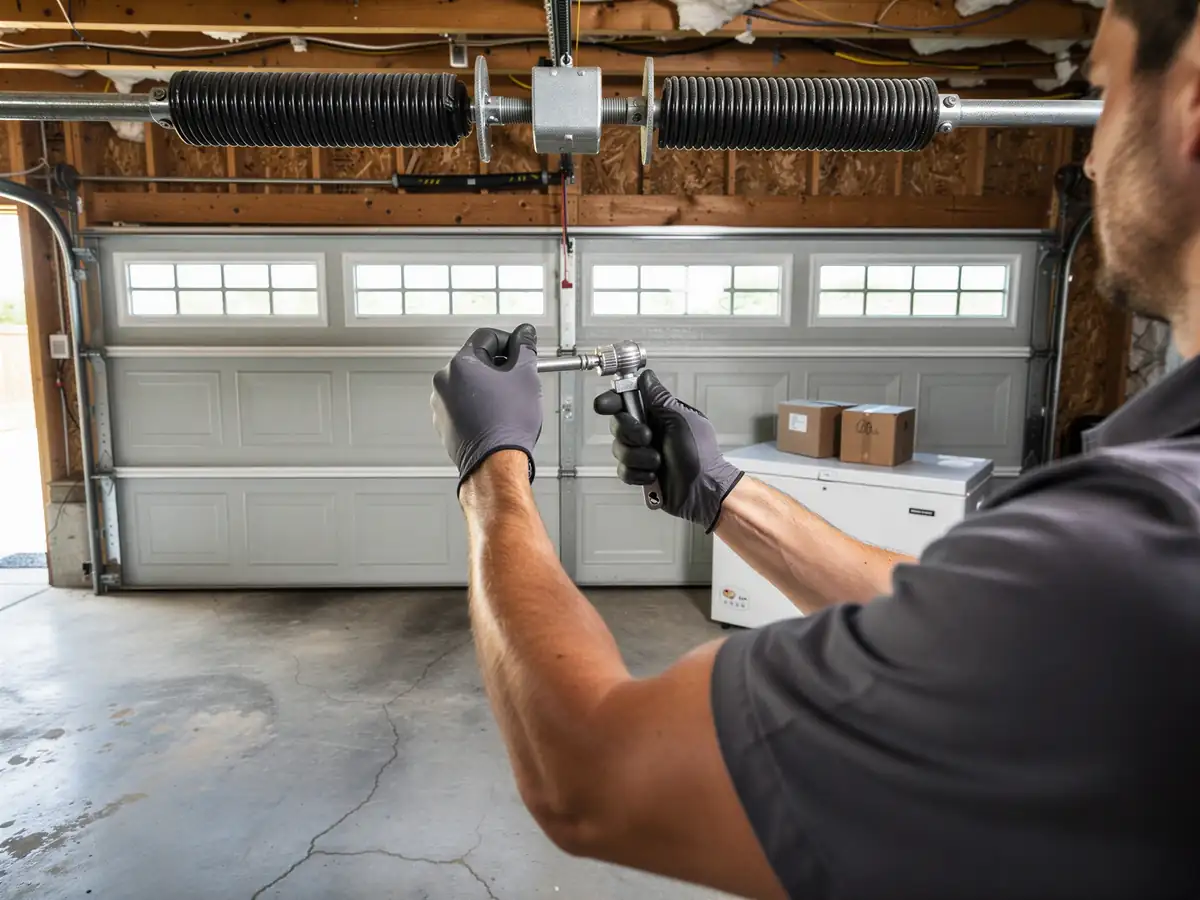
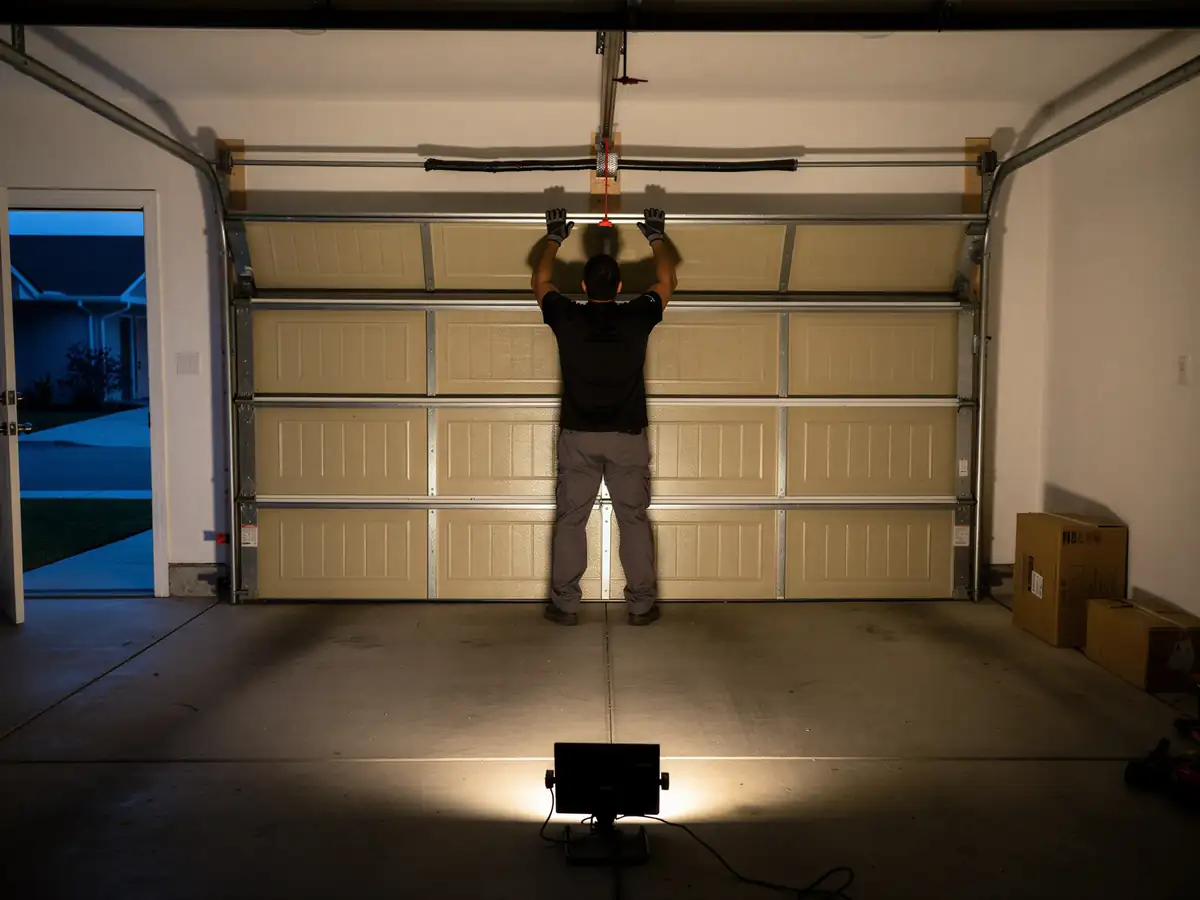
On a torsion spring replacement, we unload the door
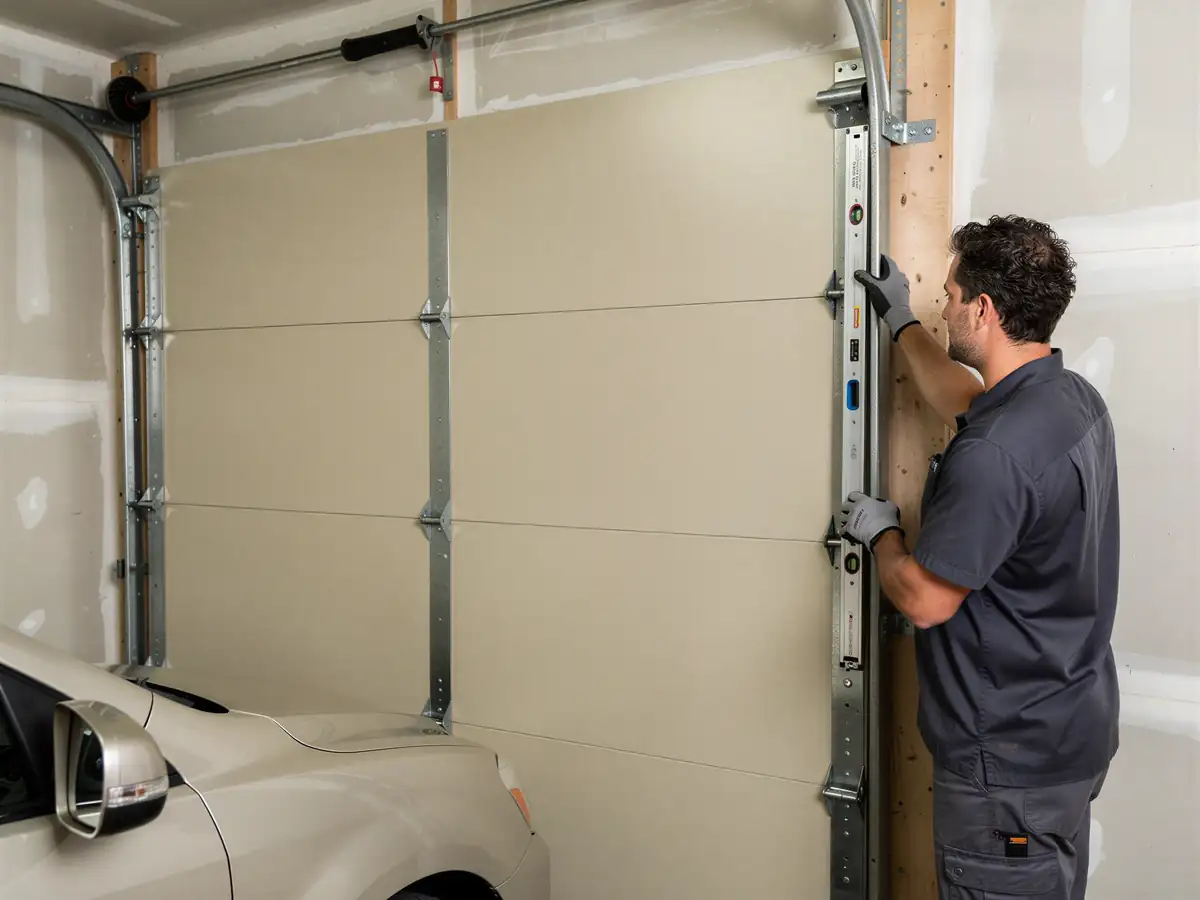
Clamp the track, release tension safely, and swap the spring for one matched to your door's weight and the opener's lift capacity. On older Farmersville doors from the early-70s building wave, that often means re-measuring rather than assuming the replacement spring matches what's on the shaft now, because wind and wire gauge weren't standardized the way they are on doors built after 2000.
A cable replacement is simpler but has to be done on both sides even if only one cable failed
Since the other one is usually close behind it on the same age and use cycle. Heat is the other factor we watch for here - our climate band runs moderate for cycling stress on metal, which shortens the working life of springs and cables compared to a milder region, and a door that's already 50-plus years into its hardware life doesn't have much slack left.
Parts We Carry
The truck carries standard torsion springs in the common residential winds, galvanized lift cables, rollers, and hinges - enough to cover the large majority of broken-spring and broken-cable calls on sight. What we don't always carry is a match for an original one-piece door panel or odd-width track from a house built in that early-70s stretch; those sometimes need a special order, and we'll tell you straight if that's the case rather than jury-rig something that won't hold.
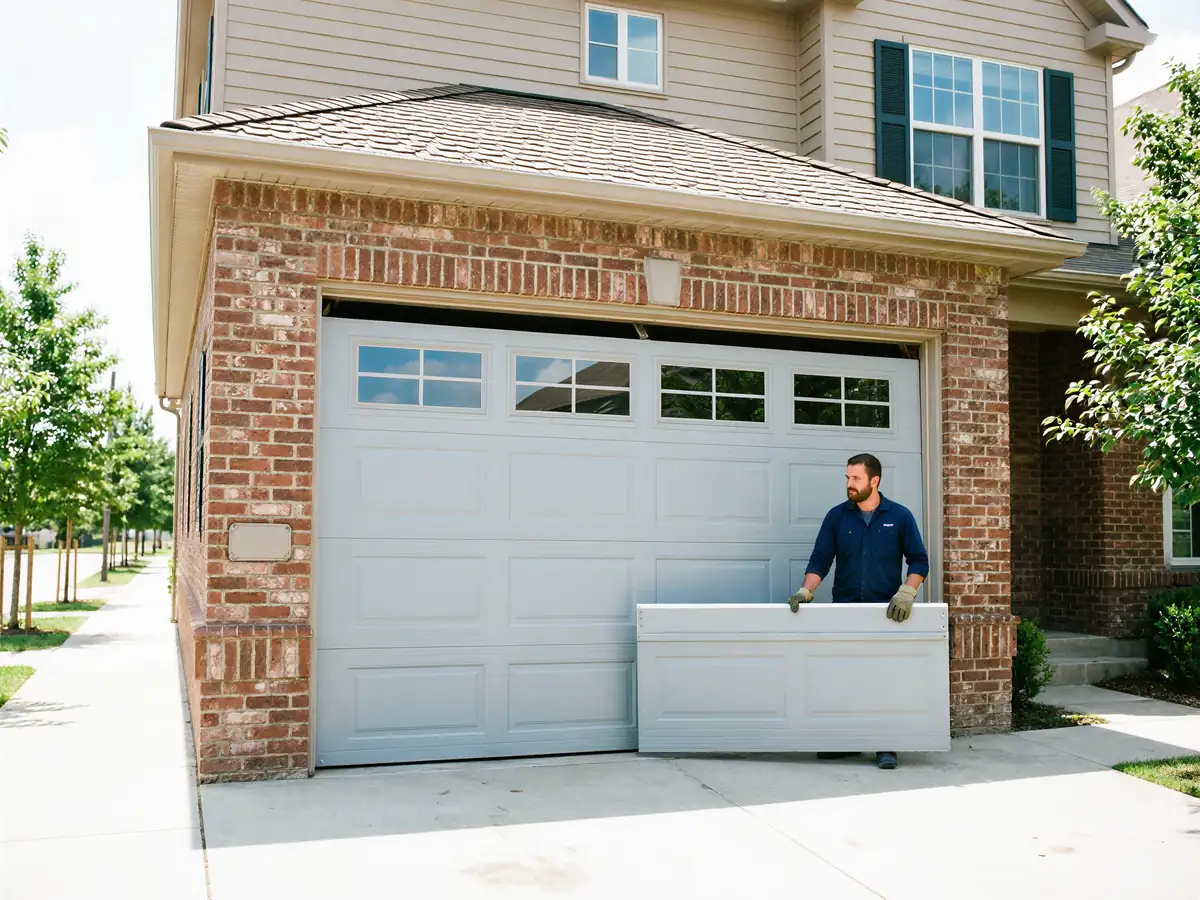
If your door is original to a house from that era and the spring failure has taken a panel or track with it, replacement of the whole door is sometimes the more honest answer than a patch repair, and we'll say so instead of running up a repair bill on hardware that's past its working life anyway.